… When Music Has The Answer?
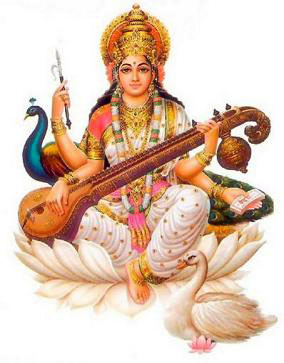
The learning experience in Indian vocal music is rather interesting. The teacher first introduces the student to the swaras and its relationship with the Supreme who is responsible for this invaluable gift to humankind. This relationship elevates the concept of swara from being treated in performance as a frequency, sound, voice, timbre, notation, note and tone. Swara then, is a superset which in itself is transcendental, but many of its sets just mentioned are its physical identifiers. The word swara has an entire etymology and that could be discussed another time.
 Knowledge Of Swaras
Suffice it to state here that swara, the musical, has no equivalent, at least in the English language; it is entirely of Vedic and hence, indigenous origin and needs to be understood using old Sanskrit etymology. Etymology is a science developed in India, which is reflected in Yaskacharya’s interpretations of Vedic names; there were many before him.
The Saptak
The teacher then brings in the notion of diversity in swaras with the introduction of the seven-swara organism called saptak. Diversity is also the first introduction to the student with an aptitude for music, of the recognition of the existence of potential for innovation in this saptak. This recognition is the small spark which holds the key for the student to harness her genius within.
A Good Teacher
The good teacher slowly but definitely prods the student to explore these innovative possibilities with the new found knowledge of the saptak. Ideally, some musical combinations called phrases are given to the student to be repeated so that she gets into the groove and starts automatically creating her own sphurana or phrases. But these phrases are not the ‘be all and end all’ of musical innovation. Believing so would lead to lack of variety in vocal art music performances and an opportunity to so-called ethnomusicologists to conclude that there is no extempore improvisation in Indian music.
Tenets Of Indic Art
According to the tenets of Indic art, all art must be an offering to the Lord. It follows that one does not sing for oneself. But it is also not singing for others. In both cases, there is a strong possibility of the performance failing to reach God who resides in a dimension other than the physical. With due respect to scientists involved in detecting the so-called God particle, no collider, however large, can ever detect God because, after all, it is attempting the right thing in the wrong way.
Another dimension
God relates to humans, not to machines. It is only through extra-sensory human perception that He can be seen and experienced. Rishis of the region realised that God cannot be seen with the help of the physical apparatus; therefore, they simply shut their eyes and taught the world how to meditate and reach those dimensions only perceptions.
Meditate On The Subtlest
Music is indeed meditating on the subtlest. The path to God cannot be destructive like the collider – polluting, ridden with side-effects, involving billions of dollars, and thousands of people.
 Sadhana through Swara
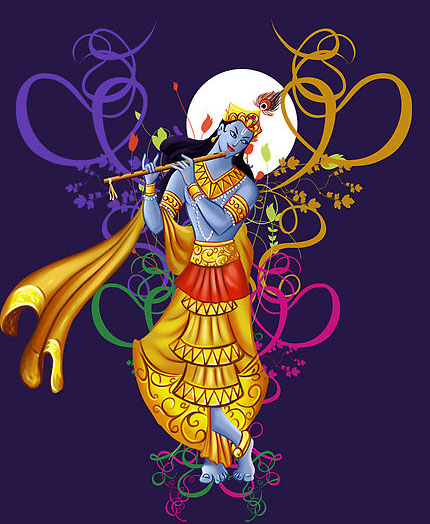
God is a subjective experience possible only when a sadhana or act of reaching the other dimension is done using the sadhana (the material available to reach there) of extra-sensory capacities gifted to humans. Swara is one such which serves like a medium through which the subtlest could be reached. Therefore, what has been reached through colliders cannot be God.
Waterfall of spiritual bliss
When sphurana starts in music, it is a waterfall of spiritual bliss. The teacher then trains the student to place her new, effervescent experience into perspective of time and space. She is taught to sing in temporal cycles, so that she is able to bind that spiritual dimension in a real space-time frame. Thus, the student learns to repeat her experience over and over again.
Practical Sadhana
This is the science of music which many believe is art, but in essence is practical sadhana.
– SUBROTO ROY, The writer is a post-doctoral researcher of music