Mata Bhumih Putroham Prithivyah, Earth is my mother, I am her son
~ Atharva Veda, 12-1-12
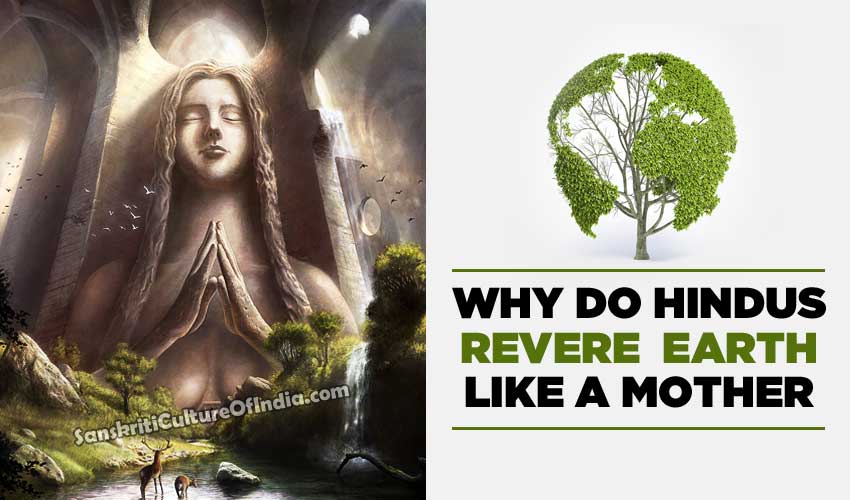
While the mainstream Western philosophy of Nature sees Nature as mere “resources” for human consumption, the Vedic seers advocate for a caring and reciprocal attitude. They see nature-human relation as mother-child relation. The verses of the Vedas reveal deep respect towards the Earth, just as a child is ever committed to his/her mother. The mother is considered the first Guru of the child.
That the Earth ensures well-being of all of us is illustrated in the hymns addressed to Her. As the Earth is construed as mother caring for Her off-springs, the Nature is regarded as intrinsically or inherently valuable, draws respect as well.
The concept of Mother Earth advocated in the Vedas, particularly in Bhoomisukta, is unique. The Mother Earth, adorned with mountains, hills, plains, heights, slopes, forests, plants, herbs, and treasures, takes care of every creature that breathes with things that are strength-giving and nourishing. She gives shelter to all the seekers of truth, who are tolerant and have understanding. She is the source of all creativity, and we all depend upon Her for our growth and meaningful existence.
We are inseparable from Earth, our body constituting of minerals that are an integral part of everything within the environment. The food we eat, the water we drink, the clothes we wear, the very air we breathe – we are dependent on this world. Most of us don’t realize how much we are indebted to Mother Earth for every single moment of our lives.
With this thought in mind, it is customary for many Hindus to touch the ground with reverence first thing in the morning as they are stepping out of bed. This practice gives us an opportunity to convey our gratitude to Mother Earth and to God, who created this universe.
We have no choice but to walk on Earth from the time we wake up to the time we fall asleep. To show our respect and apologize for this helplessness, Vishwamitra Smriti contains the following prayers:
समुद्रवसने देवि पर्वतस्तनमण्डले ।
विष्णुपत्नि नमस्तुभ्यं पादस्पर्शं क्षमस्वमे ॥
Oh Mother Goddess, the one who is covered with oceans as her garments and mountains as her bosom
The Consort of Lord Vishnu, please forgive us for touching You with our feet.
When we revere Mother Earth, we also revere our motherland – Our Matrubhoomi, Our Janma Bhoomi, Our Karma Bhoomi.