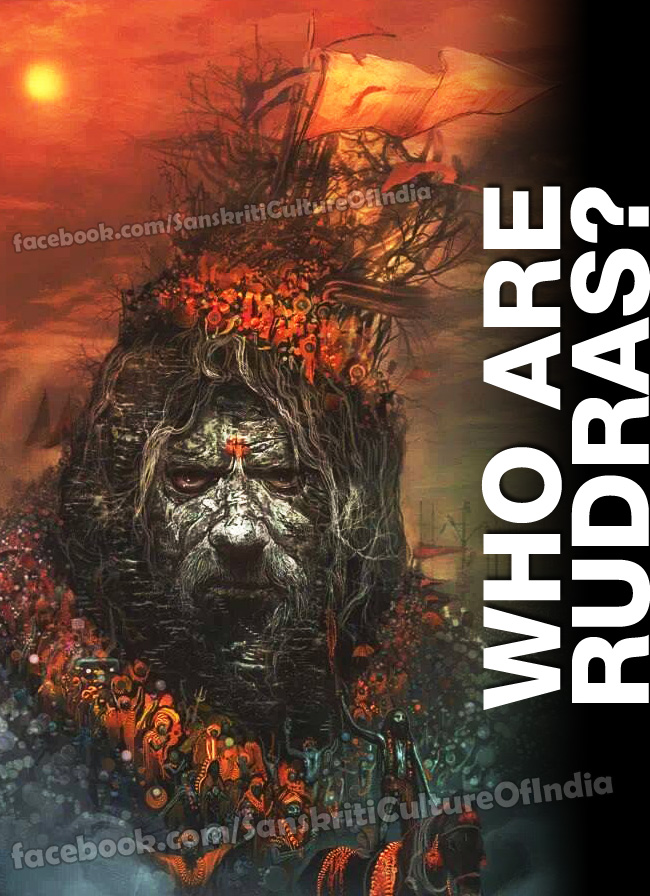
Literally speaking, Rudra means the howler or the one who is red in color. The Rudras are often identified with Maruts, the Vedic gods of storms and tempests. They are said to be eleven in number and born to Kashyapa and Aditi.
They are associated with Lord Siva, as his followers and part of His retinue (siva ganas). Siva, the Destroyer, is also known as Rudra in the Vedas. Rudra is the Lord of the Rudras. Also described as Rudra Siva, He is red in color, fierce in nature and described in the Vedas as the Prince of the Rudras. In the body Rudras represent the vital breaths, while Rudra represents the Self (atma).
They are mentioned with some variations in their names, qualities and appearance both in the epics and the Puranas, which described them as gods of both malevolent and benevolent nature, who wear tiger skin, matted hair and garland of snakes around their necks.
In the Bhagavadgita, Lord Krishna says that among the Rudras He is Siva. The Matsya Purana lists the names of the eleven Rudras, who assist Vishnu in fighting the demons, namely Kapali, Pingala, Bhima, Virupaksa, Vilohita, Ajesha, Shasana, Shasta, Shambhu, Chanda and Dhruva.
The Vishnu Purana lists them as Manyu, Manu, Mahmasa, Mahan, Siva, Rtudhvaja, Ugraretas, Bhava, Kama, Vamadeva and Dhrtavrata. The Rudras and Maruts are gods of commonality, who share among themselves some common features and distinctions. The Rudras are fierce by Nature, while the Maruts are gentler and benevolent. The
Vedic hymns show an attitude of both reverence and fear towards Rudra, whom they describe as “strong, most bounteous, excellently wise,” who is “the lord of sacrifice, hymns and balmy medicines,” and pray to him for joy, health and strength.They beseech, Aditi, the Mother Goddess, Mitra, Varuna and Soma to make more amenable and benevolent as he was believed to be the cause of diseases and death.
The seeds of rudraksha, meaning rudra eyed, is derived from rudra. They are used as prayer beads in meditations and religious chanting and chains of rudrakshas are also worn by devout Hindus around their necks for the purification of the mind and body.
~ Jayram