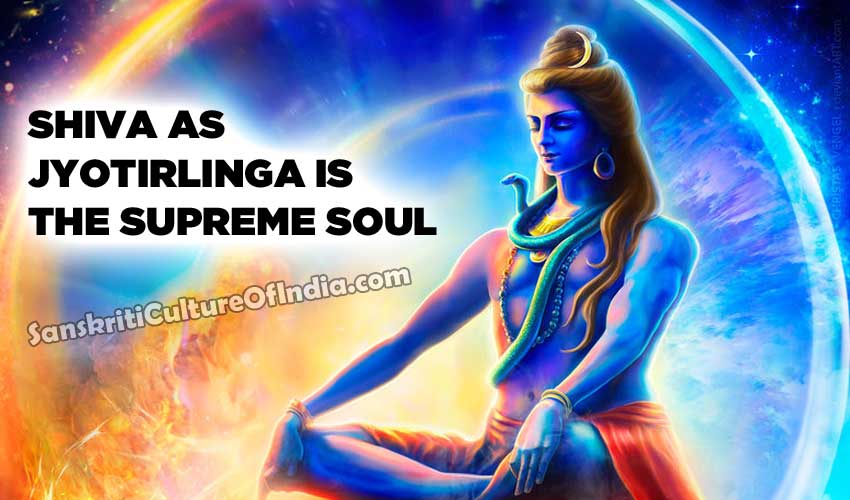
The term ‘Shiva’ is a confluence of two syllables, ‘Shi’ and ‘Va’, meaning the ‘redeemer of sins’ and ‘liberator of sufferings’. The Shvetashvetara Upanishad says, “Shiva is more minute than the minutest”. He is often considered to convey a divine dot, a point or seed of cosmic creation, sustenance and conclusion. In numerical counting, the devout Hindus says ‘Shiva’ instead of uttering ‘one’ which points to His position in the universe as the originator. Shivapurana mentions the oval flame or jyotirlinga form of Shiva.
The Sanskrit suffix linga signifies mark, sign, symbol, quality or characteristics of an entity that has two phonetic parts: lin or laya and gam or agaman respectively, referring to the process of destruction and recreation which Shiva epitomises. Shiva is effulgent and beyond three attributes of sattva, rajas and tamas. With rajas in the form of Brahma, He creates; with sattva in the form of Vishnu, He preserves, and with tamas in the form of Rudra, He destroys. When the world is in darkness of ignorance Shiva appears in the form of a column of light, Jyotirlinga, in front of deities Brahma and Vishnu.
In the race to prove their superiority they try to fathom the column of light, but fail. Shiva, along with all human souls, dwells in the supreme abode of divine illumination and complete silence. It is called Shanti Dham or Param Dham and is located amidst the sixth element of sacred light, far beyond the physical universe. Localised in incarnated bodies through successive births and interaction with material world, humans experience entropy and complete loss of all available energy they pray for divine intervention and help.
In human ignorance, Jyotirlinga Shiva descends on earth in the corporeal body of Prajapita Brahma and reveals His sacred knowledge about soul, supreme soul, world drama, law of karma and raja-yoga meditation for recharging human souls by linking their minds to the supreme source of spiritual energies. His divine knowledge, revealed through Brahma, gives us insight to see the self and other beings as soul (tiny conscient point of divine light in the forehead) and to experience its innate and.original qualities of purity, peace, love, bliss, knowledge, power and happiness.
The regular practice of such soul consciousness would make you so light, positive, peaceful, blissful and powerful that your meditation and contemplation become effortless. Cultivation of soul consciousness would also foster essential unity, harmony and brotherhood of mankind under the spiritual fatherhood of one incorporeal Supreme Being.
By seeking the companionship of Supreme Soul Shiva in meditation, we need not make special efforts to weed out unwanted, negative and harmful personality traits, habits, leanings and dependencies as they would automatically not only get sublimated in the subtle fire of intellectual communion or yoga of our inner self with the divine being, but would also be substituted with the natural, pure, positive, healthy and benevolent qualities, powers and proclivities.
~ B K Sushant