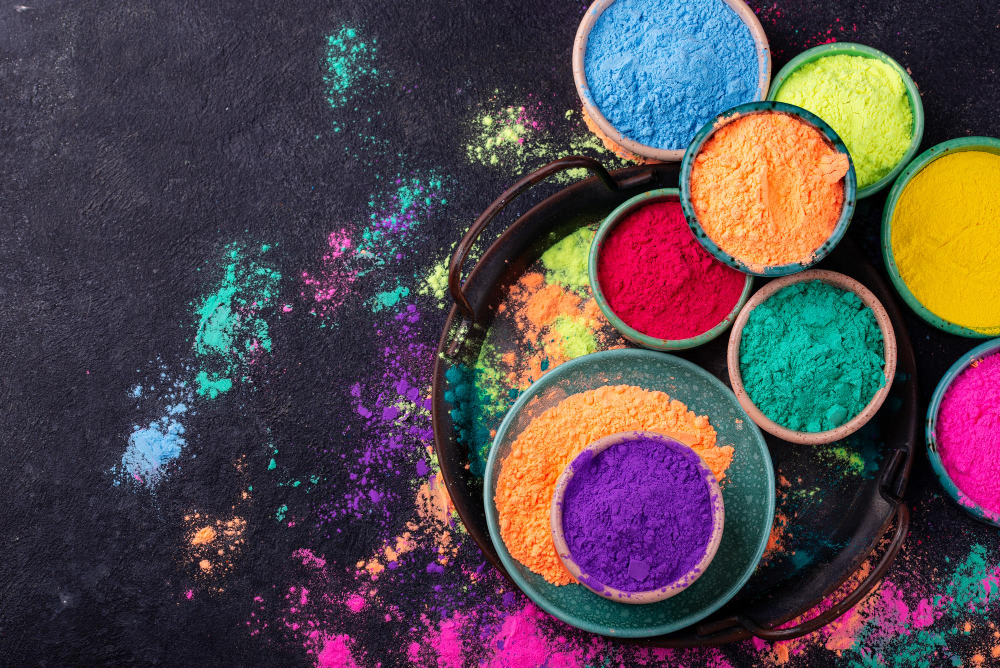
Holi, the festival of colors, is celebrated with great enthusiasm across India. However, the way it is observed varies significantly across different states, each adding its own cultural and traditional flavor. From Lathmar Holi in Uttar Pradesh to the royal celebrations of Rajasthan, let’s explore how Holi is uniquely celebrated across India.
1. Lathmar Holi – Barsana & Nandgaon, Uttar Pradesh
🔥 Highlight: Women playfully beat men with sticks.
In Barsana and Nandgaon, Holi is not just about colors—it is a recreation of a divine legend. According to folklore, Lord Krishna, along with his friends, visited Barsana to tease Radha and her friends (Gopis). In response, the women of Barsana chased them away with sticks (lathi).
🔹 Celebration Highlights:
- Women (Gopis) armed with sticks chase men from Nandgaon.
- Men (Gwalas) protect themselves with shields.
- The event is filled with folk music, songs, and dance.
🗓 When? 5-7 days before Rangwali Holi.
📍 Where? Barsana & Nandgaon, Uttar Pradesh.
2. Royal Holi – Rajasthan
🎭 Highlight: A grand, royal celebration with processions and folk performances.
Holi in Rajasthan is a regal affair, especially in Jaipur and Udaipur, where the royal families lead the festivities.
🔹 Celebration Highlights:
- Elephant Festival in Jaipur – Decorated elephants, camel races, and tug-of-war contests.
- Mewar Holika Dahan (Udaipur) – The Maharana leads a grand procession to light the Holika bonfire.
- Traditional Ghoomar and folk music performances.
🗓 When? A day before Rangwali Holi.
📍 Where? Jaipur, Udaipur, Jodhpur.
3. Shantiniketan Basant Utsav – West Bengal
🎭 Highlight: A cultural Holi festival with dance, poetry, and music.
Inspired by Rabindranath Tagore, Basant Utsav (Spring Festival) in Shantiniketan is a poetic and artistic version of Holi.
🔹 Celebration Highlights:
- Students wear yellow sarees and kurta-pajamas, signifying spring.
- Traditional Rabindra Sangeet (songs by Tagore) are performed.
- The celebration is graceful and elegant, unlike the usual rowdy Holi.
🗓 When? Same day as Holi but starts in the morning.
📍 Where? Shantiniketan, West Bengal.
4. Rang Panchami – Maharashtra & Madhya Pradesh
🎨 Highlight: Holi celebrations continue five days after the main festival.
In Maharashtra and parts of Madhya Pradesh, Holi is celebrated in a unique way, known as Rang Panchami.
🔹 Celebration Highlights:
- People play with colors and gulal on the fifth day after Holi.
- Palkhi (processions) are carried out in rural areas.
- The festival marks the spiritual cleansing of the land and soul.
🗓 When? 5 days after Holi.
📍 Where? Pune, Indore, Nashik.
5. Holla Mohalla – Punjab
💪 Highlight: A warrior-style Holi celebrated by Sikhs.
Holla Mohalla, started by Guru Gobind Singh Ji, is a three-day festival where Sikhs showcase martial arts, horse-riding, and war games. It is considered a symbol of bravery and courage.
🔹 Celebration Highlights:
- Gatka (Sikh martial arts) demonstrations.
- Mock battles, sword fights, and horse riding.
- Langars (community kitchens) serve free food to thousands.
🗓 When? The day after Holi.
📍 Where? Anandpur Sahib, Punjab.
6. Phaguwa – Bihar & Jharkhand
🥃 Highlight: Traditional folk songs, bhang, and rustic Holi vibes.
In Bihar and Jharkhand, Holi is called Phaguwa, and it is celebrated with great enthusiasm. Bhang (cannabis-infused drink) is widely consumed, and people sing Phaguwa folk songs while playing Holi.
🔹 Celebration Highlights:
- Bhang and thandai consumption.
- Rustic Holi songs (Phaguwa Geet).
- Community feasts with dahi-vada and gujiya.
🗓 When? Same day as Holi.
📍 Where? Patna, Ranchi, Gaya.
7. Yaosang – Manipur
🕺 Highlight: A six-day-long festival blending Holi with traditional Manipuri culture.
In Manipur, Holi is merged with the indigenous Yaosang festival and includes traditional Thabal Chongba dance, where men and women dance in a circle under the moonlight.
🔹 Celebration Highlights:
- Thabal Chongba dance performances.
- Folk music and sports competitions.
- Procession to Krishna temples.
🗓 When? 6-day celebration starting on the full moon of Phalguna.
📍 Where? Entire Manipur.
8. Dol Jatra – West Bengal & Odisha
🎶 Highlight: A spiritual Holi dedicated to Radha-Krishna.
In Bengal and Odisha, Holi is celebrated as Dol Jatra, where idols of Radha-Krishna are placed in beautifully decorated palanquins and paraded through the streets.
🔹 Celebration Highlights:
- Devotees apply gulal to Radha-Krishna idols.
- Kirtans (devotional songs) and dance performances.
- More spiritual than playful Holi.
🗓 When? Same day as Holi.
📍 Where? Kolkata, Bhubaneswar, Puri.
Holi may be a single festival, but its regional variations make it unique across India. From the playful Lathmar Holi to the spiritual Dol Jatra, each tradition adds a distinct flavor to the festival of colors. No matter where you celebrate Holi, the essence remains the same—joy, unity, and the triumph of good over evil!
🌸 Which Holi tradition fascinates you the most? Let us know in the comments! 🎨🔥
#Holi2025 #RegionalHoli #FestivalOfColors #LathmarHoli #HoliCelebrations #SanskritiCulture