We tend to assume that bad times in our lives are a result of our past karma or deeds done in our past life. As a result, many who believe in karma and destiny often blame a ‘poor’ or ‘negative’ outcome of their ‘honest’ action on their past karmas. Some actually believe that their good actions in this life will influence their next life! So store it up now.
With an obsession on oneself and results that they conjure in their minds, people often forget that they co-exist with other beings. Each being plays its own role and comes with its own destiny. That being the case, one lives with collective actions and collective destiny. The results you seek are not always determined by you or your actions alone.
Karma is derived from the Sanskrit word ‘Kri’ which means to do and encapsulates all actions. In everyday life the word covers noise to silence, doing to not doing, action to inaction, movement to stillness and so on. Each of these actions result in something that you may see immediately or when it ripples into something far more apparent. ‘Karma’ literally means ‘deed’ or ‘act’. Therefore, the conquest of karma lies in intelligent action and dispassionate response.
The word also refers to the totality of mankind’s actions and their concomitant reactions in current and previous lives, all of which determine the future. However, all karmas do not have an immediate effect; some accumulate and return unexpectedly in an individual’s life later. It therefore determines what we deserve and what we can assimilate and hence, decides our destiny. However, our destiny is not only determined by our own actions. It has to do with time, place and more importantly, others who perhaps are part of a larger act.
It is not our immediate collective actions that have led to high levels of corruption or to a slowing economy or to the continuing divisions between the rich and the poor. This is a result of actions taken consistently over a long period of time leading to what today is. In effect, even if an individual seeks a specific change, the change may not occur unless others exercise a similar karma that leads to a collective result. We need to be responsible at both levels.
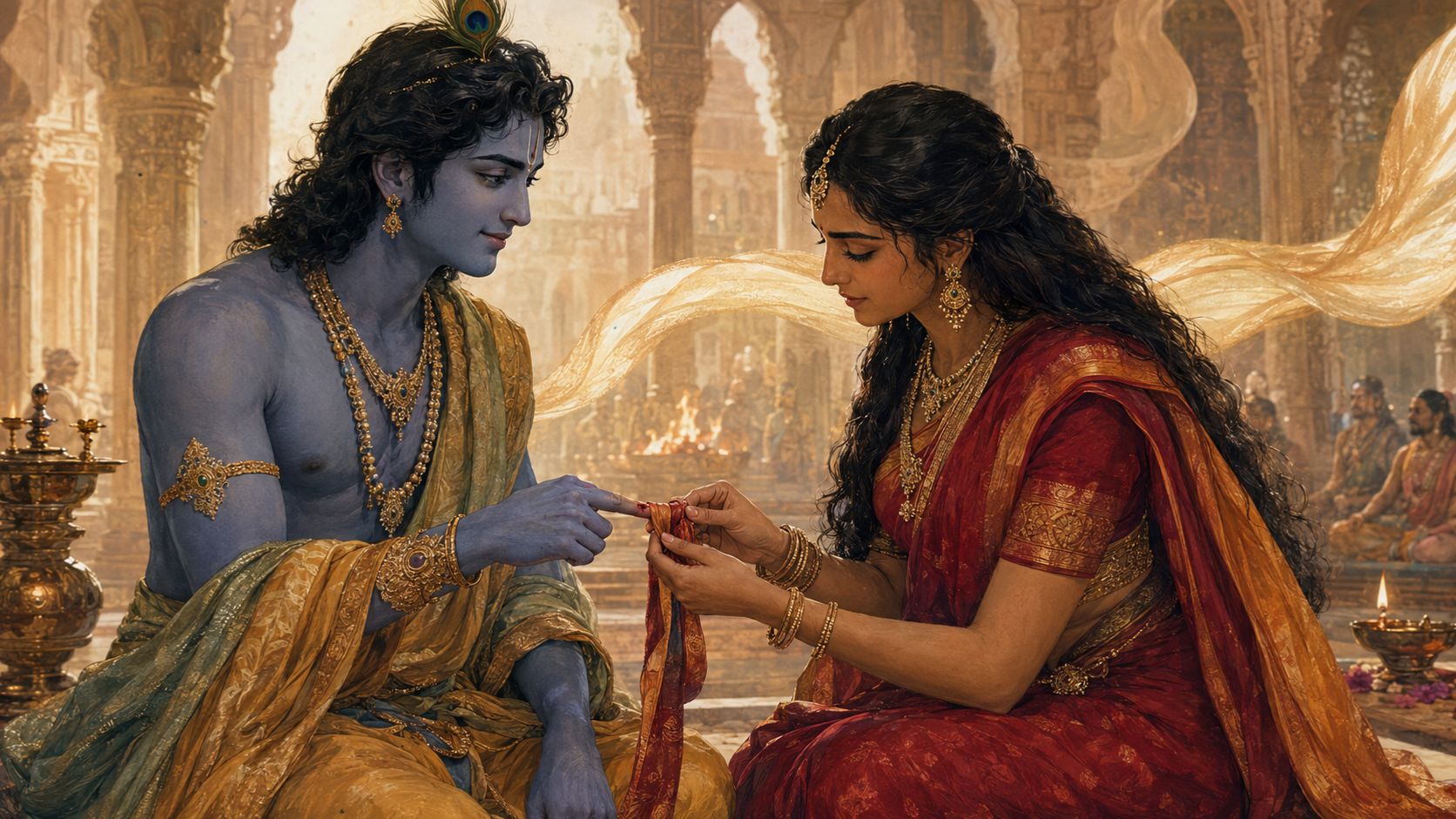
One of the first and most dramatic illustrations of karma can be found in Bhagwad Gita. Arjuna is preparing for battle when he realises that the enemy consists of members of his own family and decides not to fight. His charioteer, Krishna, explains to him the concept of one’s duty among other things and makes him realise that it is his duty to fight. Krishna also specifies moral duties, but the moral law of acting disinterestedly does not necessarily lead one to virtuous acts.
Our actions, both good and bad, bind us to an unhappy and happy cycle of birth and rebirth due to the relentless moral accounting enforced by the law of karma. The purpose of life is liberation from the phenomenal world. According to Krishna, “Detaching one’s actions from personal reward changes the quality of one’s actions.”
So if we take this as central to life, responsibility and moral goodness is primal to each act. In a democracy this applies not just to each of us but also to the four estates that govern the nation. Given the state of our nation, it is clear that only collective karma with a common purpose can bring a change that most wish to see. In short, collectively, karma does mean a revolution.
~ Yash Anand