IndianSanskriti

India = Diversity at its Best!

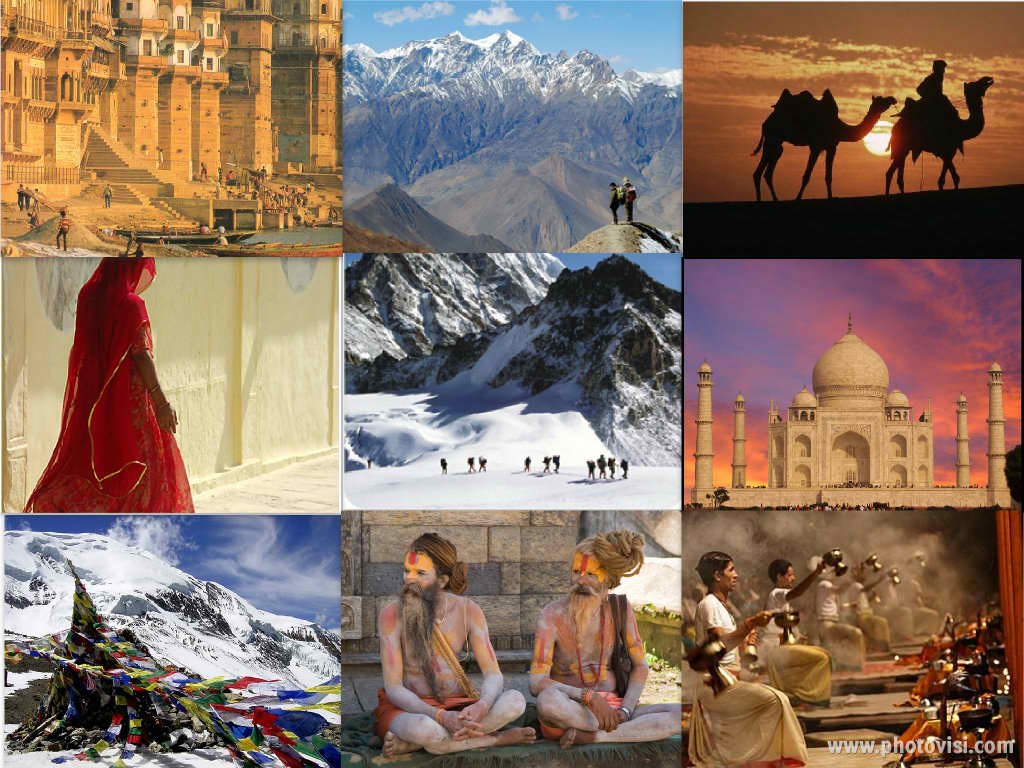
It is often said that there is unity in diversity in India. The people of India are united with a common cultural heritage have a feeling of unity in spite of having external differences. From ancient times it is been seen that India is divided into various castes, creed , religions, regions but then too they are united as one whole nation. Nothing in the past have made them broken into pieces. It is an whole of a nation with a huge population , and will remain united in whatever condition they may put to.India is a land of diverse physical features. There are snow capped mountains, hilly terrains, plains, plateaus, and coastal areas. There are deserts and places with extreme and scanty rainfall. There are regions with extreme and moderate climate.

People of India follow different religions and castes. They follow different customs, traditions and speak different languages. They also differ in dress and food.inspite of so many differences; people have a feeling of oneness .they are bound by common cultural heritage and they share basic human values. When Indians go abroad, they call themselves Indians and they are known as Indians.

Indian culture is dynamic and tolerant, Indian culture is more varied and richer. Though the foreign cultures retained their basic character, they became a part of the Indian culture with the passage of time. The diversity of the Indians contributes to the variety and richness of Indian culture and strengthens national unity.

But intolerance and narrow mindedness may weaken national unity. We should therefore create conditions in which people should become conscious of the similarities which make them Indians rather than the dissimilarities which distinguish them from others. People must be encouraged to feel proud of India’s cultural heritage, of being called Indians while retaining their distinct features. India is a live example to the world to show them that they have Unity In Diversity. This country not only remains together in an emergency but also they remain together in natural calamities such as famines, floods and earthquakes. This country has become quite inspirational for the countries who have heavily been divided racially.
 

You may also like

Search the website

Like us on Facebook

Get daily updates via Email

Enter your email address:

Recent Posts

Purushottam Maas — The Month No Deity Would Claim, and the Lord Who Made It Supreme

Every month of the Hindu calendar has a lord — except the rare thirteenth, the Adhika Maas, born an orphan and shunned as the “impure month.” The Puranas tell how this rejected month went in grief to Bhagavan Vishnu, who claimed it, gave it His own name — Purushottam — and made it the most fruitful month of all. The origin story, the teaching, and what it means for Purushottam Maas 2026 (May 17 – June 14).

Padmini Ekadashi 2026 — The Ekadashi Even the Devas Descend to Keep

Padmini Ekadashi 2026 — The Ekadashi Even the Devas Descend to Keep

The rarest Ekadashi of the entire Hindu calendar is three days away. The Padma Purana preserves a conversation between Bhagavan Krishna and Yudhishthira about a single Ekadashi the great Rishis spend lifetimes waiting for — Padmini. The Vrat Katha of Queen Padmini of Mahishmati, the lotus teaching, and why May 27, 2026 is the morning Vaishnavas across Bharata are preparing for.

Varada Chaturthi 2026 — The Rare Ganesha Day of Purushottam Maas

Varada Chaturthi 2026 — The Rare Ganesha Day of Purushottam Maas

Once every 2.5–3 years — when the rare 13th month of Adhika Maas opens — a thirteenth Vinayaka Chaturthi appears. The Mudgala Purana calls it Varada Chaturthi, the “boon-giving” Chaturthi, and holds it as the most fruit-bearing Ganesha day of the entire calendar. Today, Wednesday May 20, 2026, is that day.

Padmini Ekadashi 2026 — The Rare Ekadashi That Comes Only in Purushottam Maas

Padmini Ekadashi 2026 — The Rare Ekadashi That Comes Only in Purushottam Maas

Padmini Ekadashi 2026 falls on Wednesday, May 27 — the Shukla Paksha Ekadashi of Adhika Maas, the rarest Ekadashi in the entire Hindu calendar (it appears only every 2.5–3 years). The Padma Purana conversation between Bhagavan Krishna and Yudhishthira, the Vrat Katha of Queen Padmini, complete vrat vidhi with jagrana, mantras, and the lotus symbolism that gives the Ekadashi its name.

Ganga Dussehra 2026 — The Day Maa Ganga Came Down to Bhagiratha

Ganga Dussehra falls on Monday, May 25, 2026 — commemorating the day Maa Ganga descended from Vaikuntha to the earth through the millennia-long tapasya of King Bhagiratha. The full account from the Valmiki Ramayana, snan vidhi, dana traditions, mantras, and the teaching of sustained sincerity.

css.php