[hr]
Identifying the key challenges facing Sri Lankan Tamil youth in Canada.
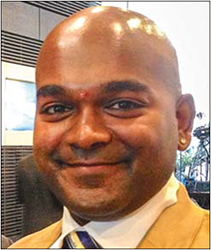
I grew up in London, Ontario, Canada, just west of Toronto. As the only Hindu in my elementary school, I was often asked to explain Hinduism and Hindu culture to other students. As I grew older, I did class presentations. This continued in secondary school. People often inquired about my religion, as I would openly wear sacred ash and a pottu at the third eye on my forehead. By the end of my high school life, most of my peers were aware that I was Hindu. Most of them also understood a few things about Hinduism, such as the tenets of karma, nonviolence and reincarnation. But I never really associated with other Hindu Canadian Tamil youth until 2011, when I entered the University of Ottawa and began participating in the Tamil Students’ Union. Interacting with Tamil Hindu students over the past year, I have observed we are losing our Hindu tradition. I believe this crisis in the transmission of our culture has three main causes.
First, there is an appalling lack of education about even the simple basics of philosophy and spirituality. Many students do not practice Hinduism, because they believe God is some abstract and inconceivable construct. Others believe religion is incompatible with rational, scientific thought. Some say visiting the temple is economically irrational—that it provides net loss of money and no material gain. Some even parrot atheistic arguments against the dogmas of Abrahamic faiths, such as the lack of proof of heaven—attempting to apply these to Hinduism. But they simply do not apply! Hinduism has no eternal heaven or hell, for instance; both states are experienced in life. Nor do we believe in the devil. As the great Saivite Saint of Sri Lanka, Sage Chellappaswami, said, “There is no intrinsic evil.” On the contrary, Hindus believe in the intrinsic Godliness of all that exists—a doctrine diametrically opposed to the teachings of Abrahamic faiths. But the stark differences between Hinduism and Abrahamic faiths are never made clear, so our youth remain ignorant and unaware.
A second serious issue impacting Tamil youth—not only here in Canada, but worldwide—is Tamil fanaticism. Certain groups are propagating the idea that Hinduism is an Aryan religion keeping Dravidian people in shackles. Canada is home to the largest number of Tamil refugees from Sri Lanka’s civil war. Already emotionally battered, they hear claims that Hinduism itself oppresses Tamils. Heated claims such as this often blind people to the facts. The Aryan invasion theory has been debunked. Hinduism is not an “outside religion;” it is the native religion of South Asia. But political parties such as the DMK and other Marxist parties in India have used the idea of Dravidian exceptionalism to divide Tamil Nadu from the rest of India for political gain. Political opportunism of this sort has infected Tamils in Sri Lanka, who regard the Sinhalese as Aryans, and Tamils in Canada, who are increasingly seeing Hinduism as Aryan. They forget that Hinduism needs both Sanskrit and Tamil to survive. Tamil and Hindu are synonymous. The Tamil identity shares a strong connection with Hinduism, especially Saiva Siddhanta. The Guru Chronicles quotes the Rishi from the Himalayas, when he sent his sishya to preach in Sri Lanka: “The people [in Sri Lanka] are pure; they cherish their traditions; they live the Saivite path; but they do not know the spirit of Siva.” These days, sadly, it seems the Tamils neither know the spirit of Siva nor live the Saivite path.
The third challenge is the materialistic consumerism that is engulfing Tamil Hindus—not only the youth but entire families. Eastern as well as Western Hindus are increasingly driven by greed and the pursuit of material gain. Students and parents alike are motivated primarily by the desire for material objects. Visiting the temple and praying are considered irrelevant to these goals and are therefore neglected. This leads only to discontent. Wealth, artha, is a legitimate and worthy human goal, when it is part of a balanced life. Today, however, many families are so consumed by their pursuit of wealth that they live a joyless, spiritually impoverished, sometimes even adharmic life with no thought of eventually attaining moksha.
But Hinduism has withstood the test of time. It has endured Muslim invasion, European colonialism and Christian evangelism. In ancient days Hinduism reinvented itself and evolved in countless ways to deal with the rise of Jainism and Buddhism. Our great saints were also proactive missionaries. At times when Hinduism seemed weak, Adi Shankara unified the Smarta tradition and Tirumular reinvigorated Saiva Siddhantha. In recent times in Sri Lanka, Srila Sri Arumuga Navalar countered the English missionary schools with a Hindu English-medium school. The time has come once again for us to respond to the threats of ignorance, fanaticism and materialism. Hindu youth must be taught the importance of Hindu dharma. Hindu leaders must respond to the blatant lies and misrepresentations of our religion.
Finally, Tamils must unite to keep political propaganda away from religion. The youth must be taught that Hinduism is an ancient yet modern religion, truly timeless—applicable through the generations and various walks of life. Hinduism carries the wisdom of the past yet embodies modernity, containing the answers for past, present and future and for all aspects of human experience, offering guidance to each person on his or her uniquely circuitous journey to our common destiny. We must clearly and unequivocally proclaim the great truths of Hinduism for all to hear. My grandfather has often told me, “You can take the cow to the water, but you cannot make the cow drink the water.” Our duty is to take the youth to the holy lake called Hinduism and make sure the water is pure and crystal clear. Even someone who is not thirsty will drink if it is appealing and self-appreciating.
Every being is on a spiritual journey. My family’s trip to Kauai Aadheenam in 2003 changed the course of our lives; we became spiritually awake. Going through high school and university as a practicing Hindu allowed me to stay focused. My family is transparent; we’ve discussed everything from women to partying. I offer no other advice but to seek Divinity as a family and strive to experience it. Our religion and tradition can be preserved in a modern world.
~ Vignesh Markandu is President of the Tamil Students’ Union at the University of Ottawa.