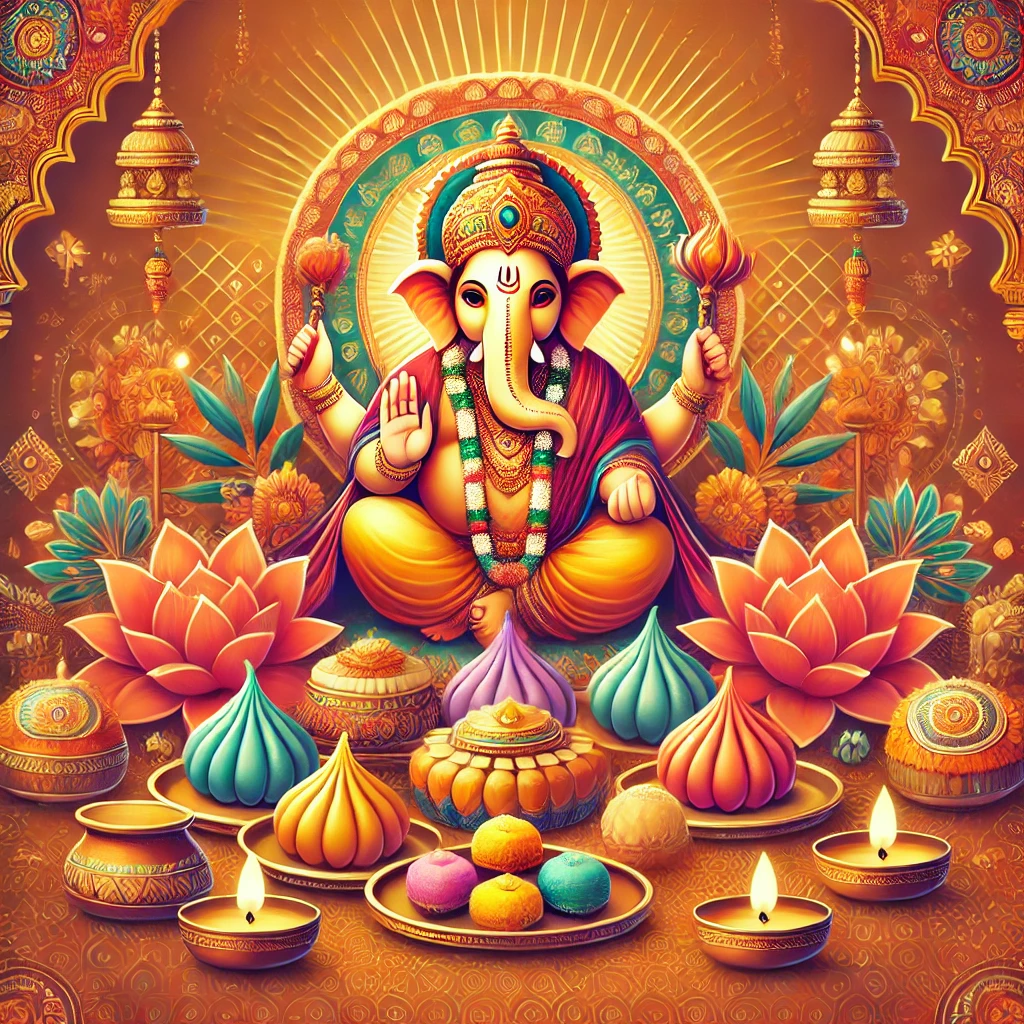
Ganesh Chaturthi is a grand festival celebrating the birth of Lord Ganesha, the remover of obstacles and the god of new beginnings. The festival involves several rituals and traditions that have been passed down through generations. Here’s an overview of the key practices:
1. Ganesh Sthapana (Idol Installation):
- The festival begins with Ganesh Sthapana, where devotees bring home or install a beautifully crafted idol of Lord Ganesha. The idol is placed on a decorated platform, and the priest performs a ritualistic invocation called Pranapratishtha to infuse life into the idol. Devotees chant mantras and prayers to invite Lord Ganesha into their homes and hearts.
2. Daily Aarti and Offerings:
- During the festival, devotees perform daily aarti (a ceremonial worship with lamps) and offer various items like modaks, fruits, flowers, and coconut to the deity. Modaks, in particular, are considered Lord Ganesha’s favorite sweet. Devotees recite the Ganesh Stotra and other hymns to seek his blessings for prosperity and wisdom.
3. Vrat (Fasting):
- Many devotees observe a fast during Ganesh Chaturthi. The fasting can range from abstaining from food entirely to consuming only fruits and milk. This is a form of devotion, where devotees focus on spiritual practices and self-discipline.
4. Visarjan (Immersion of the Idol):
- The festival concludes with the Visarjan, where the idol of Lord Ganesha is immersed in water, symbolizing his return to his celestial abode. This ritual is often accompanied by joyous processions with singing, dancing, and chanting of “Ganapati Bappa Morya.” The immersion is a symbolic reminder of the cycle of creation and dissolution.
5. Social and Cultural Celebrations:
- Ganesh Chaturthi is also marked by cultural events, including music, dance, and community feasts. Many households and communities organize plays, devotional singing (bhajans), and competitions to engage people in the festivities.
Ganesh Chaturthi is a festival rich in rituals and traditions that bring families and communities together in worship, celebration, and joy. Each ritual is a way to honor Lord Ganesha and seek his blessings for a prosperous life. Understanding and participating in these traditions allow devotees to deepen their spiritual connection and celebrate the festival with greater reverence.