Vedic Astrology: A Predictive Science
Astrology is the science of the effects of planetary movements on the lives of human beings. Astrology is based on astronomy; astrologers need to know

Astrology is the science of the effects of planetary movements on the lives of human beings. Astrology is based on astronomy; astrologers need to know

Panini was born in Shalatula, a town near to Attock on the Indus river in present day Pakistan. The dates given for Panini are pure guesses.

Today at the frontier of Genetic Engineering replacing and manipulating DNA has become the order of the day. Since the successful cloning of adult Sheep

The art of ophthalmology was well developed in ancient India and was known as Nimi Tantra. The article below presents main features of Nimi Tantra an

Temples are the most attractive features of India. India is known for the divine culture for a long time. Almost in all occasions and ceremonies
Ancient Indian theories lacked an empirical base, but they were brilliant imaginative explanations of the physical structure of the world, and in a large measure,


The 12 Jyotirlingas of Lord Shiva — where each stands, its sacred story, and how to make the Dwadasha Jyotirlinga pilgrimage in person or in spirit this Shravan.

The Rudrabhishek is the abhishekam said to please Lord Shiva fastest. What it is, the meaning of each sacred substance, the Sri Rudram, and how it is performed at home this Shravan.

Shravan runs July 30–Aug 27 in 2026, with four Sawan Somwars (Aug 3, 10, 17, 24). Why the whole month belongs to Mahadeva — the churning of the ocean, the poison He drank, and how to keep the Sawan vrat.

Thiruvonam 2026 falls on Wednesday, August 26 — the crown of Kerala’s ten-day festival. The Bhagavata story of King Mahabali and the Vamana avatar, and why Onam is a homecoming, not a defeat.
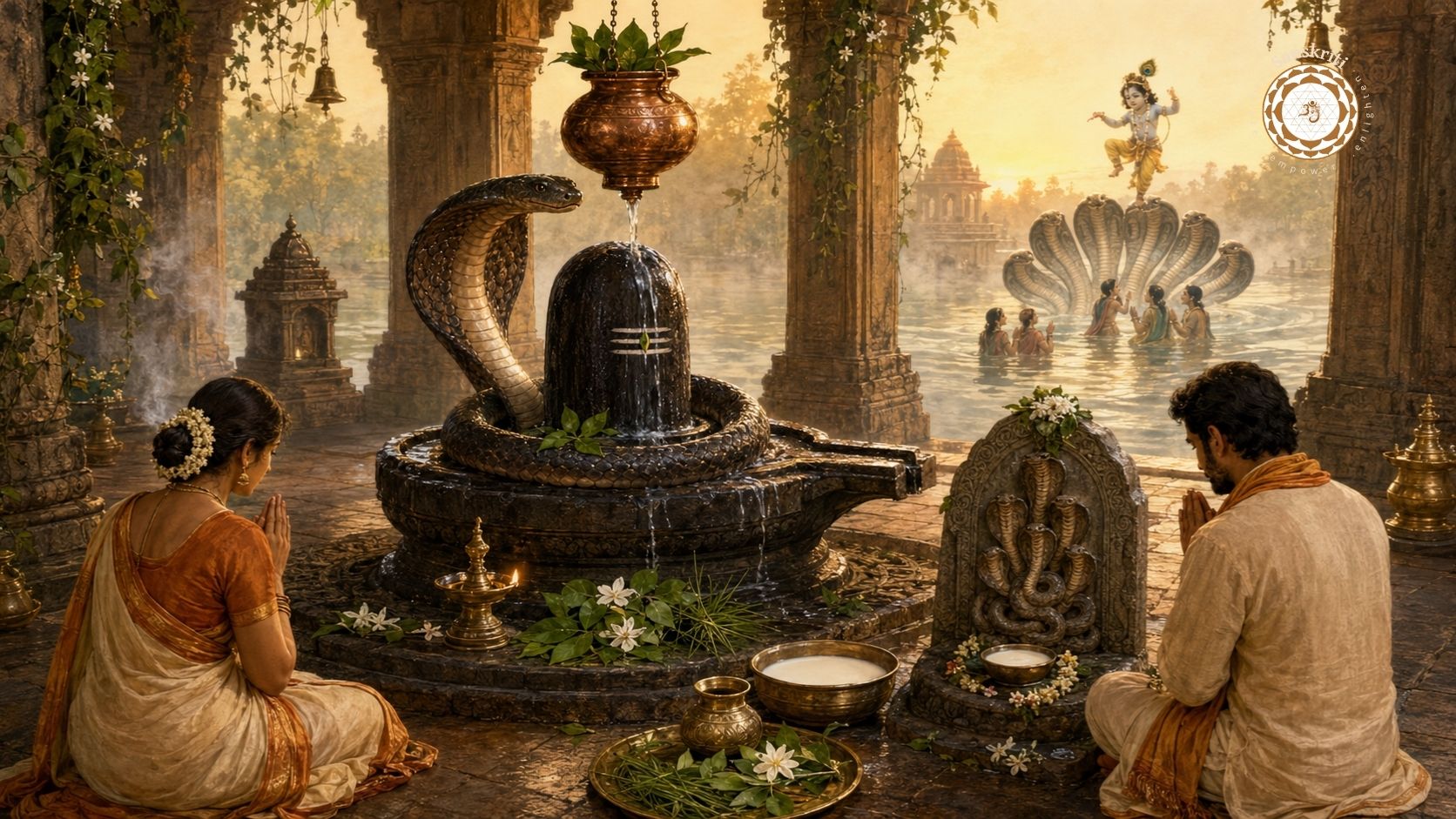
On Monday, August 17, 2026 — a Shravan Monday — Hindus offer milk and prayers to the serpent. The stories of Shesha, Vasuki, Kaliya and Astika, and the puja vidhi for Nag Panchami.

