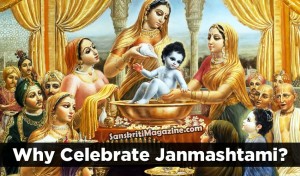
Why should we celebrate Janmashtami?
Janmashtami celebrates the birth of Krishna. Ashtami, the half-moon, indicates a perfect balance between the seen and unseen aspects of reality; the visible material world

Janmashtami celebrates the birth of Krishna. Ashtami, the half-moon, indicates a perfect balance between the seen and unseen aspects of reality; the visible material world

A young boy of a middle class family, all of 5yrs, is sitting on a chair in the drawing room of his parents’ modest apartment.

Rakhi festival is celebrated with great enthusiasm every year. The preparations for celebration of Rakhi, which is one of the most awaited festival in India,

As every traditional festivity is associated with ancient legends and myths, Rakhi is no exception to it. The tales and stories related to the Rakhi

In the world of religious feast and festivities, India has become a hub for multi-cultural religiosity and celebrations. Amidst this cultural, racial and religious background,

Jhulan Yatra (Aug 7th, 2014) is one of the most important festivals for the followers of Lord Krishna celebrated in the monsoon month of Shravan. AfterHoli and Janmashthami, it is the


Bhadrapada begins today in North India, opening a lunar month that moves from the midnight

The 12 Jyotirlingas of Lord Shiva — where each stands, its sacred story, and how to make the Dwadasha Jyotirlinga pilgrimage in person or in spirit this Shravan.

The Rudrabhishek is the abhishekam said to please Lord Shiva fastest. What it is, the meaning of each sacred substance, the Sri Rudram, and how it is performed at home this Shravan.

Shravan runs July 30–Aug 27 in 2026, with four Sawan Somwars (Aug 3, 10, 17, 24). Why the whole month belongs to Mahadeva — the churning of the ocean, the poison He drank, and how to keep the Sawan vrat.

Thiruvonam 2026 falls on Wednesday, August 26 — the crown of Kerala’s ten-day festival. The Bhagavata story of King Mahabali and the Vamana avatar, and why Onam is a homecoming, not a defeat.

