
Empower Intellect, Fend life with Vedanta
Veda means knowledge and anta means the end. The term Vedanta literally means ‘the end of knowledge” or “the highest knowledge”. Vedanta is the scientific

Veda means knowledge and anta means the end. The term Vedanta literally means ‘the end of knowledge” or “the highest knowledge”. Vedanta is the scientific

Parenting involves a certain amount of discretion. There is no one standard rule for all children. Different children may need different levels of attention, expression

What if Europe was really in darkness in comparison to the Far East and India that Columbus set sail to find? What if the popular

Most of us are caught in the trivial parts of life and miss seeing the whole. Without leaving our room we want to see the
Nirvana Shatkam or Atma Shatkam as it is popularly known, is a śloka in six stanzas written by the great Ādi Śaṅkaracharya summarizing the basic teachings of Advaita Vedanta, or

The natural calamities (earthquakes, tsunamis and cyclones) in Pakistan, Indonesia, the coastal belts of Sri Lanka and India and earlier in Gujarat and in Orissa


The 12 Jyotirlingas of Lord Shiva — where each stands, its sacred story, and how to make the Dwadasha Jyotirlinga pilgrimage in person or in spirit this Shravan.

The Rudrabhishek is the abhishekam said to please Lord Shiva fastest. What it is, the meaning of each sacred substance, the Sri Rudram, and how it is performed at home this Shravan.

Shravan runs July 30–Aug 27 in 2026, with four Sawan Somwars (Aug 3, 10, 17, 24). Why the whole month belongs to Mahadeva — the churning of the ocean, the poison He drank, and how to keep the Sawan vrat.

Thiruvonam 2026 falls on Wednesday, August 26 — the crown of Kerala’s ten-day festival. The Bhagavata story of King Mahabali and the Vamana avatar, and why Onam is a homecoming, not a defeat.
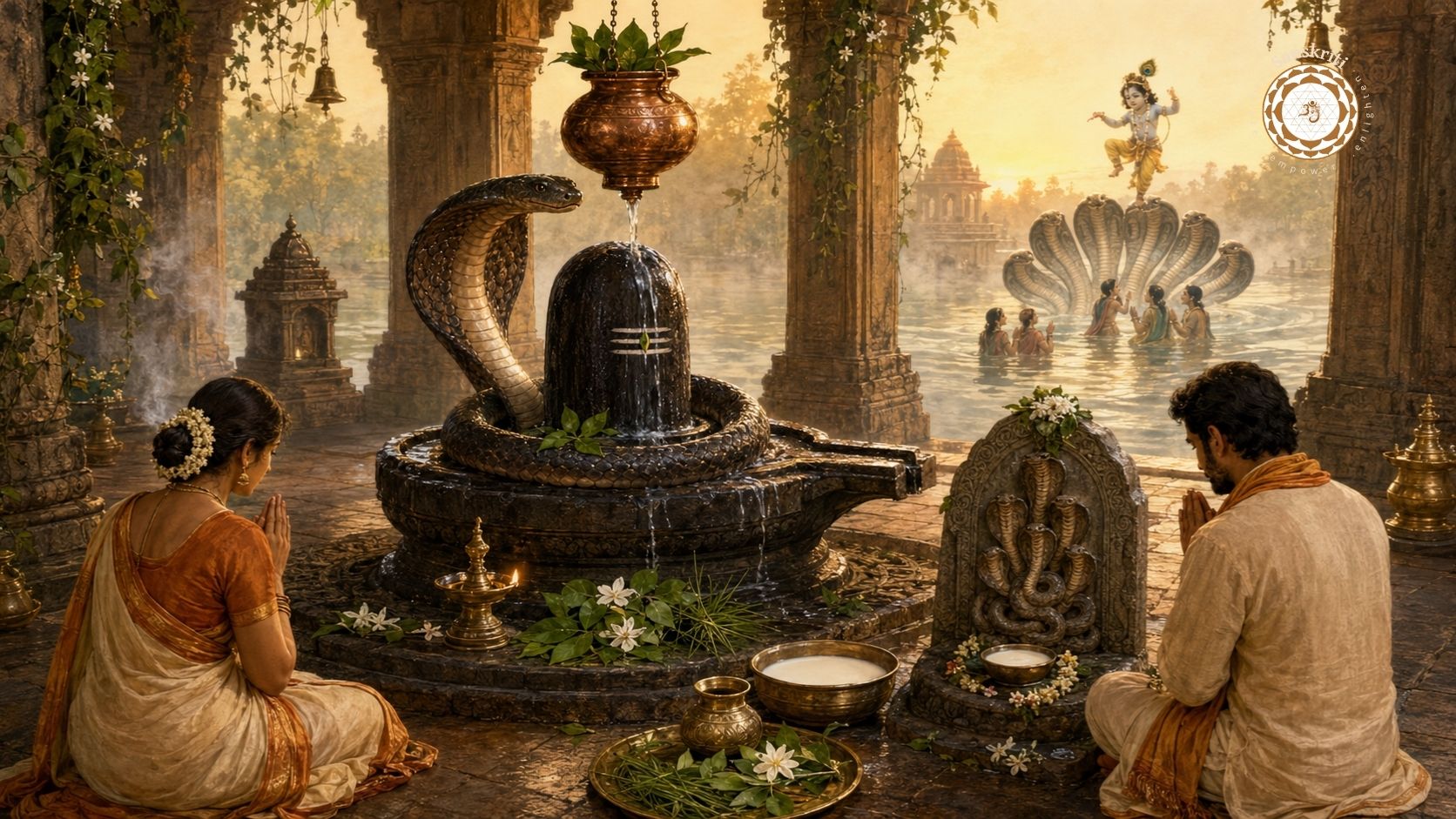
On Monday, August 17, 2026 — a Shravan Monday — Hindus offer milk and prayers to the serpent. The stories of Shesha, Vasuki, Kaliya and Astika, and the puja vidhi for Nag Panchami.

