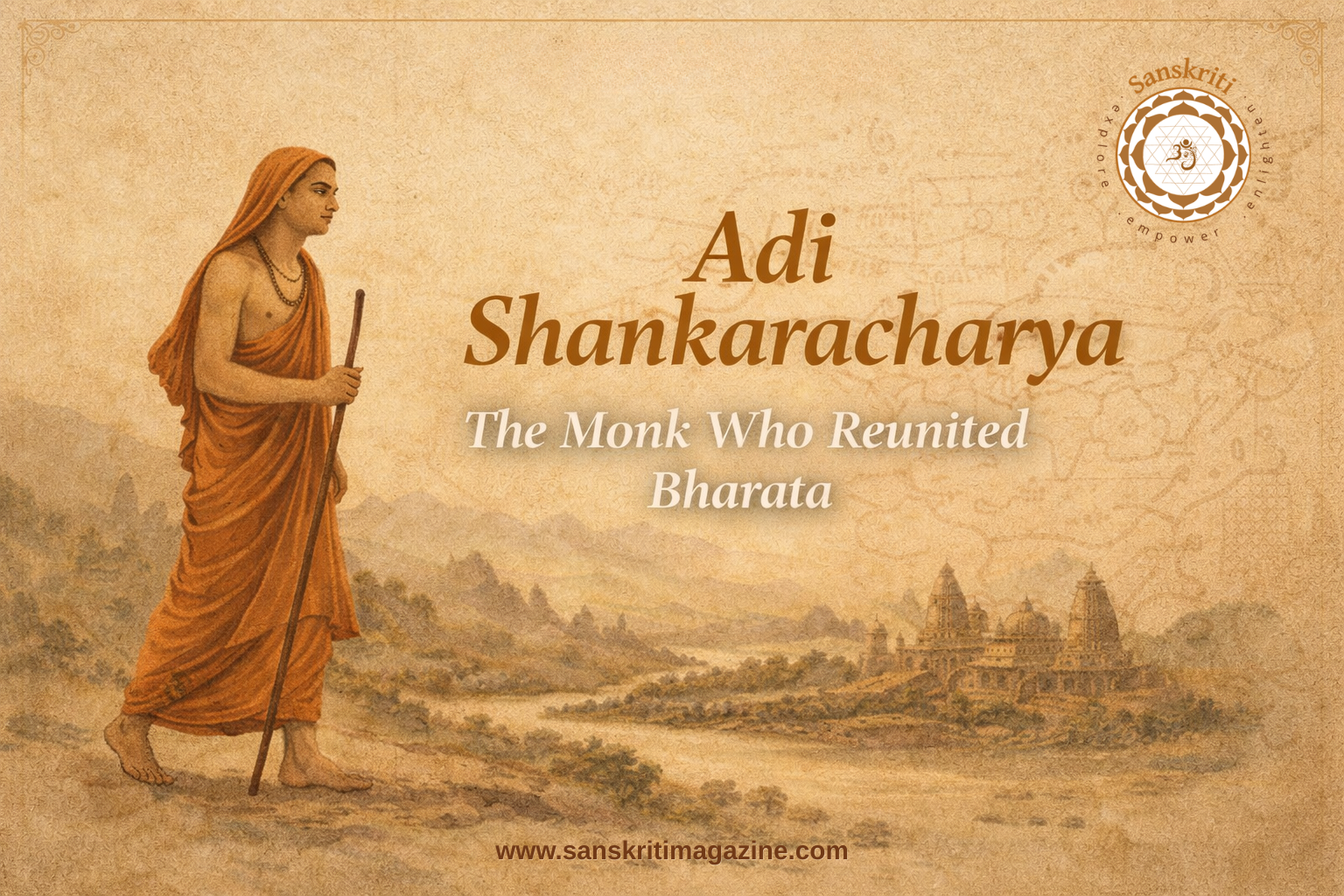
Nirvana Shatkam or Atma Shatkam as it is popularly known, is a śloka in six stanzas written by the great Ādi Śaṅkaracharya summarizing the basic teachings of Advaita Vedanta, or the Hindu teachings of non-dualism.
As a young boy of eight Adi Sankara, while wandering in the Himalayas, seeking to find his Guru, encountered a sage who asked him, “Who are you?” The boy answered with these stanzas, which are known as “Nirvana Shatakam” or Atma Shatakam”. The sage the boy was talking to was Swami Govindpada Acharya, who was indeed, the teacher he was looking for.
“Nirvana” is complete equanimity, peace, tranquility, freedom and joy. “Atma” is the True Self. These few verses can be of tremendous value to progress in contemplation practices that lead to Self-Realization.
The speaker of the poem is nominally Śiva, but it is generally seen as a statement by a knowing person of identity with Śiva or Brahmān. The speaker lists in the earlier verses what he (or Brahmān) is not. He is not body or mind, nor the things that attach them to each other and to the world, including the intellect, the senses, the practices of life, the occurrences of life such as birth and death. In the last verse he says that he permeates the universe, and that he is consciousness, bliss and the soul, and by implication, the Atman and Brahmān.
मनोबुद्धयहंकार चित्तानि नाहं,
न च श्रोत्रजिव्हे न च घ्राणनेत्रे ।
न च व्योम भूमिर्न तेजो न वायुः,
चिदानन्दरूपः शिवोऽहम् शिवोऽहम् ।। 1 ।।
Mano budhya ahankara chithaa ninaham,
Na cha srothra jihwe na cha graana nethrer,
Na cha vyoma bhoomir na thejo na vayu,
Chidananada Roopa Shivoham, Shivoham., 1
Neither am I mind, nor intelligence,
Nor ego, nor thought,
Nor am I ears or the tongue or the nose or the eyes,
Nor am I earth or sky or air or the light,
But I am Shiva the all pervading happiness,
Yes, I am definitely Shiva.
न च प्राणसंज्ञो न वै पंचवायुः,
न वा सप्तधातुः न वा पञ्चकोशः ।
न वाक्पाणिपादं न चोपस्थपायु,
चिदानन्दरूपः शिवोऽहम् शिवोऽहम् ।। 2 ।।
Na cha praana samgno na vai pancha vaayur,
Na vaa saptha dhathur na va pancha kosa,
Na vak pani padam na chopa stha payu,
Chidananada Roopa Shivoham, Shivoham., 2
Neither am I the movement due to life,
Nor am I the five airs, nor am I the seven elements,
Nor am I the five internal organs,
Nor am I voice or hands or feet or other organs,
But I am Shiva the all pervading happiness,
Yes,I am definitely Shiva
न मे द्वेषरागौ न मे लोभमोहौ,
मदो नैव मे नैव मात्सर्यभावः ।
न धर्मो न चार्थो न कामो न मोक्षः,
चिदानन्दरूपः शिवोऽहम् शिवोऽहम् ।। 3 ।।
Na me dwesha raghou na me lobha mohou,
Madho naiva me naiva matsarya bhava,
Na dharmo na cha artha na kamo na moksha,
Chidananada Roopa Shivoham, Shivoham., 3
Never do I have enmity or friendship,
Neither do I have vigour nor feeling of competition,
Neither do I have assets, or money or passion or salvation,
But I am Shiva the all pervading happiness,
Yes,I am definitely Shiva
न पुण्यं न पापं न सौख्यं न दुःखं,
न मन्त्रो न तीर्थो न वेदा न यज्ञ ।
अहं भोजनं नैव भोज्यं न भोक्ता,
चिदानन्दरूपः शिवोऽहम् शिवोऽहम् ।। 4 ।।
Na punyam na paapam na soukhyam na dukham,
Na manthro na theertham na veda na yagna,
Aham bhojanam naiva bhojyam na bhoktha,
Chidananada Roopa Shivoham, Shivoham., 4
Never do I have good deeds or sins or pleasure or sorrow,
Neither do I have holy chants or holy water or holy books or fire sacrifice,
I am neither food or the consumer who consumes food,
As I am Shiva the all pervading happiness,
Yes, I am definitely Shiva
न मे मृत्युशंका न मे जातिभेदः,
पिता नैव मे नैव माता न जन्मः।
न बन्धुर्न मित्रं गुरूर्नैव शिष्यः,
चिदानन्दरूपः शिवोऽहम् शिवोऽहम् ।। 5 ।।
Na mruthyur na sankha na me jathi bhedha,
Pitha naiva me naiva matha na janma,
Na bhandhur na mithram gurur naiva sishya,
Chidananada Roopa Shivoham, Shivoham., 5
I do not have death or doubts or distinction of caste,
I do not have either father or mother or even birth,
And I do not have relations or friends or teacher or students,
As I am Shiva the all pervading happiness,
Yes,I am definitely Shiva
अहं निर्विकल्पो निराकार रूपो,
विभुत्वाच सर्वत्र सर्वेन्द्रियाणाम् ।
न चासङत नैव मुक्तिर्न मेयः,
चिदानन्दरूपः शिवोऽहम् शिवोऽहम् ।। 6 ।।
Aham nirvi kalpi nirakara roopi,
Vibhuthwascha sarvathra sarvendriyanaam,
Na cha sangatham naiva mukthir na meya
Chidananada Roopa Shivoham, Shivoham., 6
I am one without doubts, I am without form,
Due to knowledge I do not have any relation with my organs,
And I am always redeemed,
And I am Shiva the all pervading happiness,
Yes, I am definitely Shiva
~ Artist: Ashit Desai