IndianSanskriti
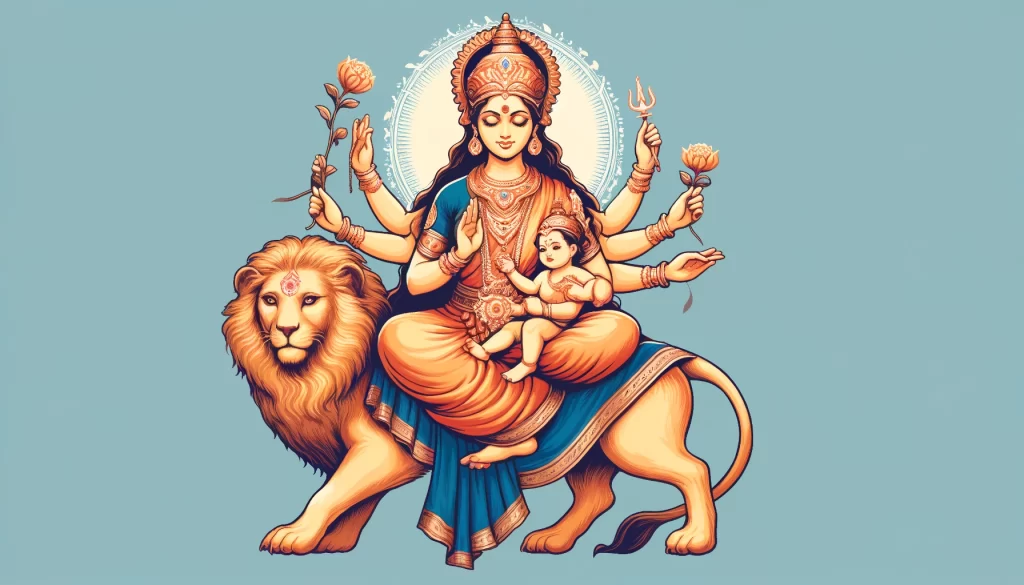
A nurturing and powerful illustration of Goddess Skandamata, the fifth form of Goddess Durga worshipped on the fifth day of Navratri. The image should

Navratri Series – Day 5: Goddess Skandamata – The Mother of Wisdom and Courage

Day 5 of Navratri brings us to the worship of Goddess Skandamata, the fifth form of Goddess Durga. She is revered as the mother of Skanda (or Kartikeya) and symbolizes the strength of a mother and her wisdom.

Who is Goddess Skandamata?
Goddess Skandamata is depicted as a four-armed deity, holding her son Skanda in her lap, signifying the maternal aspect of the divine. She rides a ferocious lion, depicting her courage and fierceness.

Symbolism and Significance
Worshipping Skandamata is said to bestow wisdom, power, prosperity, and salvation. She embodies the nurturing side of the Goddess, teaching us about the power of motherhood and the balance between mercy and justice.

The Story of Skandamata
Skandamata’s narrative is one of unconditional love and maternal fierceness. She is the mother of Skanda, the god of war and a fierce warrior, highlighting the duality of nurturing love and warrior strength.

Cultural Practices and Rituals
Devotees honor Skandamata through special pujas and offerings. The color associated with this day is usually blue, representing the divine and boundless sky.

Contemporary Reflections
In the modern context, Goddess Skandamata inspires us to embrace both nurturing and bravery in our lives. She reminds us of the importance of wisdom and the strength inherent in compassion.

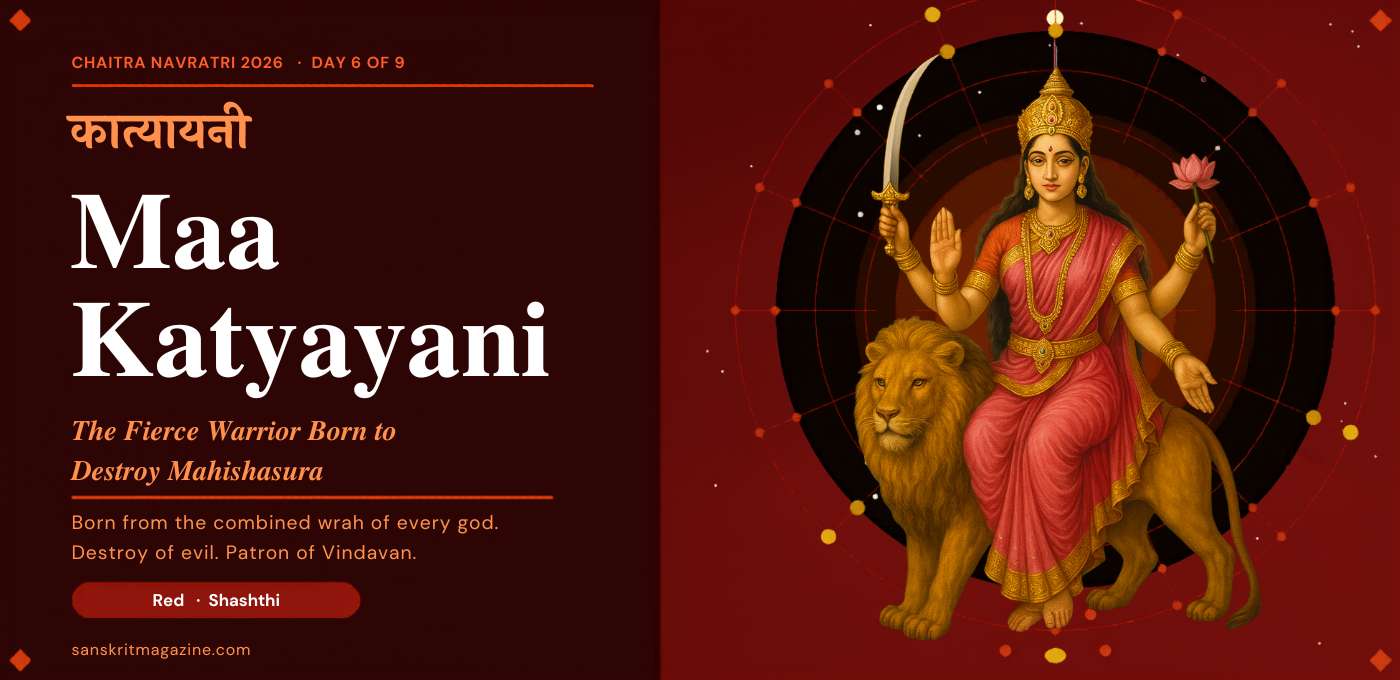
Join us tomorrow for Day 6 as we delve into the grace and valor of Goddess Katyayani. For a deeper exploration of Hindu culture and spirituality, visit Sanskriti Magazine for enlightening articles and stories.
You may also like

Search the website

Like us on Facebook

Get daily updates via Email

Enter your email address:

Recent Posts

Jamai Shashthi 2026 — The Story of Maa Shashthi, the Cat, and the Wife Who Was Forgiven

Jamai Shashthi 2026 — The Story of Maa Shashthi, the Cat, and the Wife Who Was Forgiven

On Saturday, June 20, 2026, Bengali households across Bharata will welcome their married daughters and sons-in-law home for the legendary jamai-aador feast and perform the Shashthi Vrata. But behind the warmth lies a story most Bengalis know by heart and most non-Bengalis have never heard — the wife who stole the hilsa, blamed the cat, lost six sons to Maa Shashthi’s wrath, and was finally forgiven. The Vrat Katha, the vidhi, the mantras, and the deeper teaching.

Vat Purnima 2026 — The Wife Who Argued Yama Into Returning Her Husband’s Life

On Monday, June 29, 2026, women across Maharashtra, Gujarat, and southern Bharata will tie red thread around banyan trees and hear the story of Savitri — the wife who walked behind Yamaraja Himself when He came for her husband, and out-argued the Lord of Dharma into returning Satyavan’s life. The Mahabharata’s Pativrata Mahatmya Parva, the vrat vidhi, and why the banyan witnessed everything.

Nija Jyeshtha 2026 — The Real Jyeshtha Begins, and the Calendar Resumes

Nija Jyeshtha 2026 — The Real Jyeshtha Begins, and the Calendar Resumes

With Adhik Maas now closed on the Somvati Amavasya of June 15, the long-postponed festivals of Jyeshtha return — Vat Purnima (June 29, the Savitri-Yamaraja katha), Jamai Shashthi (June 20, the Bengali festival of Maa Shashthi), Sankashti Chaturthi (June 28), Yogini Ekadashi (July 10), and Devshayani Ekadashi (July 16, opening the four-month Chaturmas of Bhagavan Vishnu’s yoga-nidra). A guide to what the next four weeks hold and what the household that kept Purushottam Maas now carries forward.

The Closing of Purushottam Maas 2026 — Adhik Amavasya and the Sealing of the Month-Long Vrat

On Monday, June 15, 2026 — a rare Somvati Amavasya — the intercalary month that bears Bhagavan Vishnu’s own name comes to its close. The Acharyas teach that a vrat is not measured by its duration but by its closing. Here are the Padma Purana’s instructions for sealing the month-long Purushottam Maas vrat: the morning snan, the closing puja with the Vishnu Sahasranama, the day of dana, the Somvati Amavasya gift, and the final sarva-arpana — the offering of all merit at the feet of the Lord.

Parama Ekadashi 2026 — The Other Rare Ekadashi of Purushottam Maas, and the Poor Brahmin Who Kept It

Two weeks ago, Vaishnavas across Bharata kept Padmini Ekadashi — the rare Shukla Paksha Ekadashi of Adhik Maas. Padmini has a twin. On Thursday, June 11, 2026, the Krishna Paksha Ekadashi of the same intercalary month appears: Parama — the Supreme Ekadashi. The Padma Purana names it the rarer and more secret of the two, and reserves it for those whose poverty or sorrow has refused to lift in spite of every other vrat already kept. The story of Sumedha and Pavitra of Kampilya, the rishi Kaundinya, the prince sent by Bhagavan Brahma — and the vidhi for the day.

css.php