
Lord Hanuman and Worship
The Birth The story of the birth of Hanuman goes thus: Vrihaspati had an attendant called Punjikasthala, who was cursed to assume the form of

The Birth The story of the birth of Hanuman goes thus: Vrihaspati had an attendant called Punjikasthala, who was cursed to assume the form of

Among the various sorts of literary composition the drama holds the most important position; for it is a picture of real life, and, as such,

Vyasa is perhaps the greatest sage in the history of Hindu religion. He edited the four Vedas, wrote the 18 Puranas, the epic Mahabharata and the Srimad Bhagavata and

By Daivajna K N Somayaji Vaastu has some guidelines for locating a cash box. It is believed that following these principles will lead to prosperity

‘God’ is a much used word yet hardly anyone pauses to find out what is meant by it. ‘Isn’t it clear?’ religious people may ask

Alternative therapeutic practices Alternative medicine or alternative therapy is the stream of medicine that exists independently, beyond the domain of conventional medicine. These therapies are


The 12 Jyotirlingas of Lord Shiva — where each stands, its sacred story, and how to make the Dwadasha Jyotirlinga pilgrimage in person or in spirit this Shravan.

The Rudrabhishek is the abhishekam said to please Lord Shiva fastest. What it is, the meaning of each sacred substance, the Sri Rudram, and how it is performed at home this Shravan.

Shravan runs July 30–Aug 27 in 2026, with four Sawan Somwars (Aug 3, 10, 17, 24). Why the whole month belongs to Mahadeva — the churning of the ocean, the poison He drank, and how to keep the Sawan vrat.

Thiruvonam 2026 falls on Wednesday, August 26 — the crown of Kerala’s ten-day festival. The Bhagavata story of King Mahabali and the Vamana avatar, and why Onam is a homecoming, not a defeat.
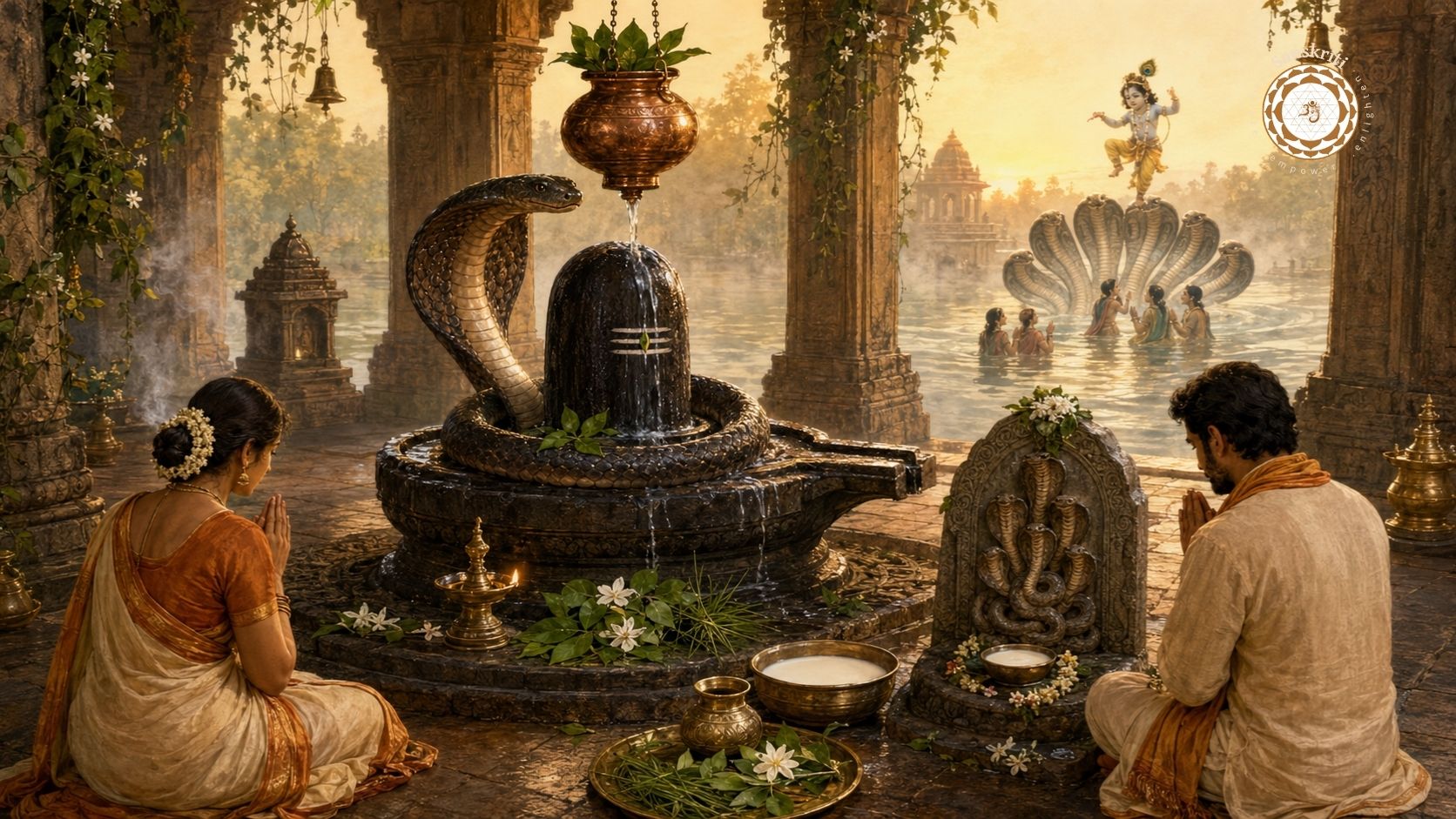
On Monday, August 17, 2026 — a Shravan Monday — Hindus offer milk and prayers to the serpent. The stories of Shesha, Vasuki, Kaliya and Astika, and the puja vidhi for Nag Panchami.

