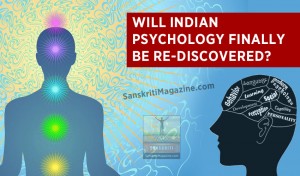
Will Indian psychology finally be rediscovered?
This article is about a conference on Indian psychology that took place in 2002 in Pondicherry. I posted it here again, as unfortunately not much

This article is about a conference on Indian psychology that took place in 2002 in Pondicherry. I posted it here again, as unfortunately not much

The Meaning of Dharma Dharma is perhaps the key term for the great spiritual traditions of India and East Asia, Hindu and Buddhist, whether relative

Looking intently with an unwavering gaze at a small point until tears are shed, is known as trataka by the acharyas. ~ (“Hatha Yoga Pradipika”

Perform exhalation and inhalation rapidly like the bellows (of a blacksmith). This is called kapalbhati and it destroys all mucus disorders. ~ (“Hatha Yoga Pradipika” 2:35)

Sitting in utkatasana, naval deep in water, insert a tube in the anus and contract the anus. This cleansing with water is called basti karma.

Lean forward, protrude the abdomen and (the muscles) from right to left with speed, this is called nauli by the siddhas. (“Hatha Yoga Pradipika”, 2:33)


The 12 Jyotirlingas of Lord Shiva — where each stands, its sacred story, and how to make the Dwadasha Jyotirlinga pilgrimage in person or in spirit this Shravan.

The Rudrabhishek is the abhishekam said to please Lord Shiva fastest. What it is, the meaning of each sacred substance, the Sri Rudram, and how it is performed at home this Shravan.

Shravan runs July 30–Aug 27 in 2026, with four Sawan Somwars (Aug 3, 10, 17, 24). Why the whole month belongs to Mahadeva — the churning of the ocean, the poison He drank, and how to keep the Sawan vrat.

Thiruvonam 2026 falls on Wednesday, August 26 — the crown of Kerala’s ten-day festival. The Bhagavata story of King Mahabali and the Vamana avatar, and why Onam is a homecoming, not a defeat.
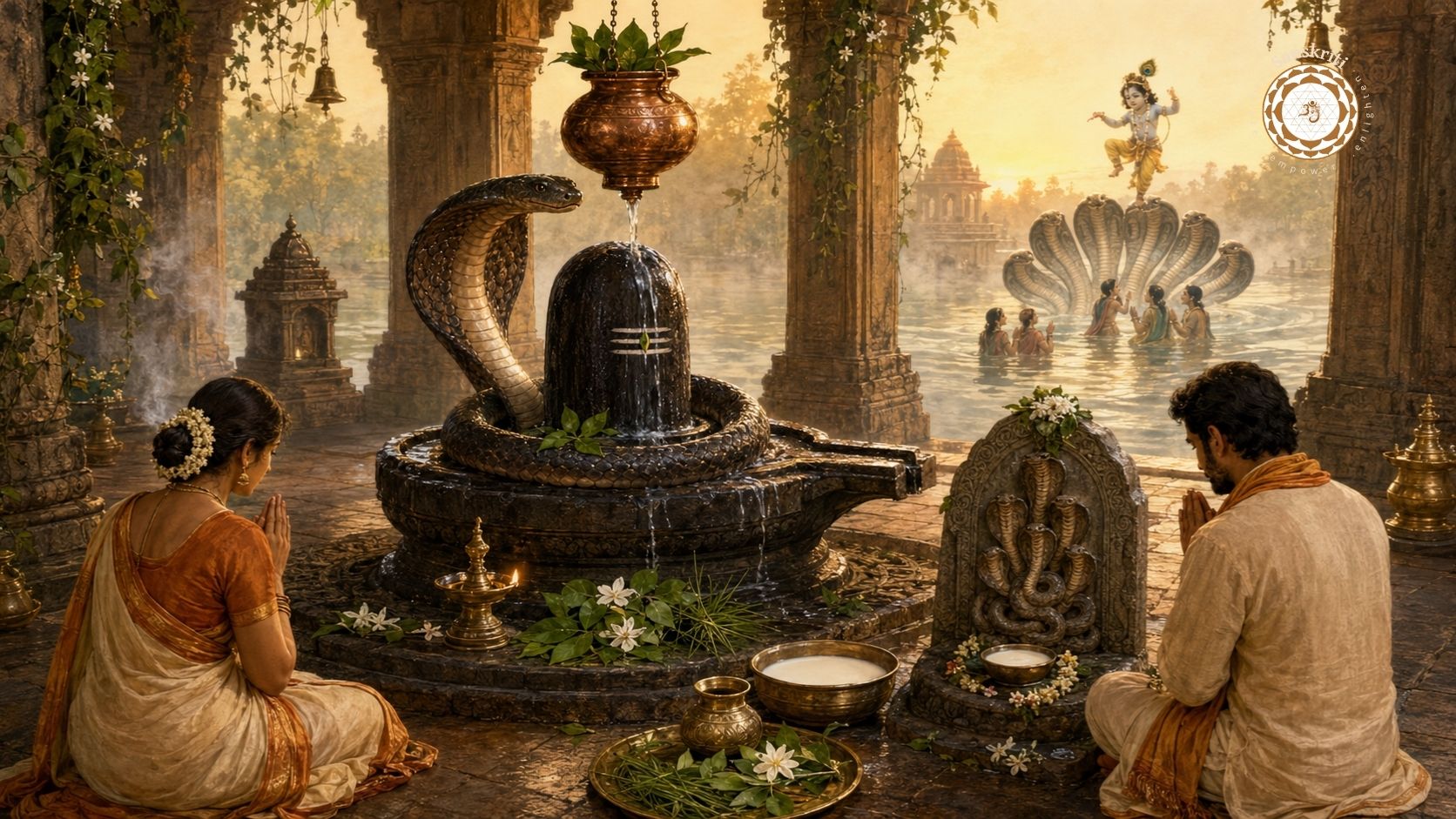
On Monday, August 17, 2026 — a Shravan Monday — Hindus offer milk and prayers to the serpent. The stories of Shesha, Vasuki, Kaliya and Astika, and the puja vidhi for Nag Panchami.

