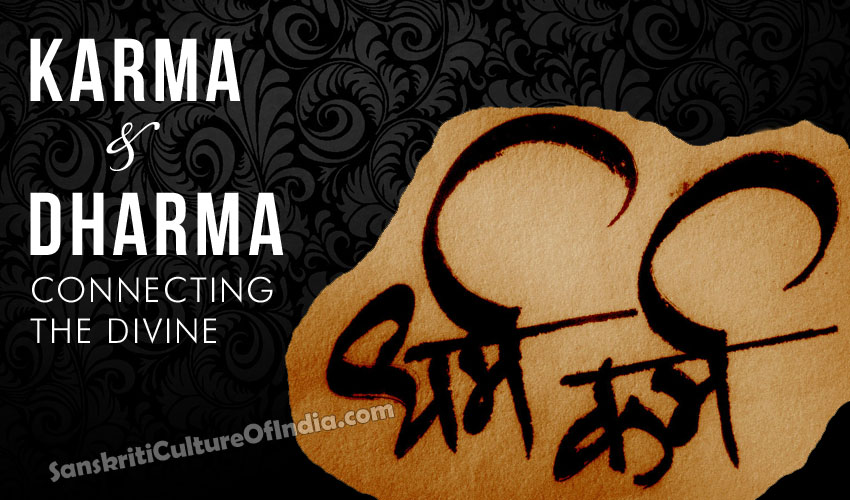
The two Hindu principles that connect the divine to this world are karma and dharma. Both are linked to the Hinduism belief in a reincarnation cycle of birth, death and rebirth known as samsara. The primary spiritual goal in Hinduism is to break free from the samsara cycle and achieve a divine state known as moksha. Moksha is where Hindus are liberated from the suffering found in this world. Hindus believe that they can free themselves from the reincarnation cycle by doing good acts of karma that are based on the ideals set forth by dharma.
KARMA
Karma is best known as a moral law that says every action produces an equal reaction. In Hinduism, a person who acts in a positive, moral way in one life will experience positive reactions such as happiness when they are reincarnated in a following life. The Yajur Veda, one of Hinduism’s holy texts, says this about karma: “According as one acts, so does he become. One becomes virtuous by virtuous action, bad by bad action.”
DHARMA
Dharma is what defines good and bad karmic actions. It’s an ethical code of conduct that Hindus believe is God’s law, which governs everything in the universe. Following the code allows Hindus to find spiritual advancement that allows them to break free from the samsara cycle. Although dharma can be defined differently from one Hindu to the next, Hindus generally turn to sacred scriptures, tradition, wise members of their community and their own conscience when seeking guidance in interpreting it for themselves. Hindu holy scripture says, “Dharma yields Heaven’s honor and Earth’s wealth. What is there then that is more fruitful for a man? There is nothing more rewarding than dharma, nor anything more ruinous than its neglect.”
REINCARNATION
In Hinduism, when an individual’s physical body dies, their soul remains immortal and is born again into a new physical body. In the period between death and rebirth, the soul is believed to exist in an astral plane, which some Hindus believe is the place where dreams take place. Rather than fate, an individual’s reincarnated life is determined by their own personality and karmic actions. The Brihadaranyaka Upanishad, another sacred Hindu text, expands on this responsibility: “An individual creates for himself his next life as a result of his desires, hopes, aspirations, failures, disappointments, achievements and actions performed during this life of his.” If an individual makes negative choices, it’s possible that they may regress and be reincarnated in a following life as something non-human, such as an animal.
MOKSHA
The moksha state of liberation is defined differently among Hindus. In general, it’s when an individual’s soul experiences self-realization and is freed from any selfish wants or attachments. According to the editors of “Hinduism Today Magazine,” most Hindus believe that once an individual is released from the reincarnation cycle, they exist in a higher world populated by deities and other spiritually evolved souls. Some Hindus believe that the soul continues evolving in the moksha world until they become one with God.
~ Errol Manguso