
IndianSanskriti

Ganesh Chaturthi Rituals and Traditions Explained

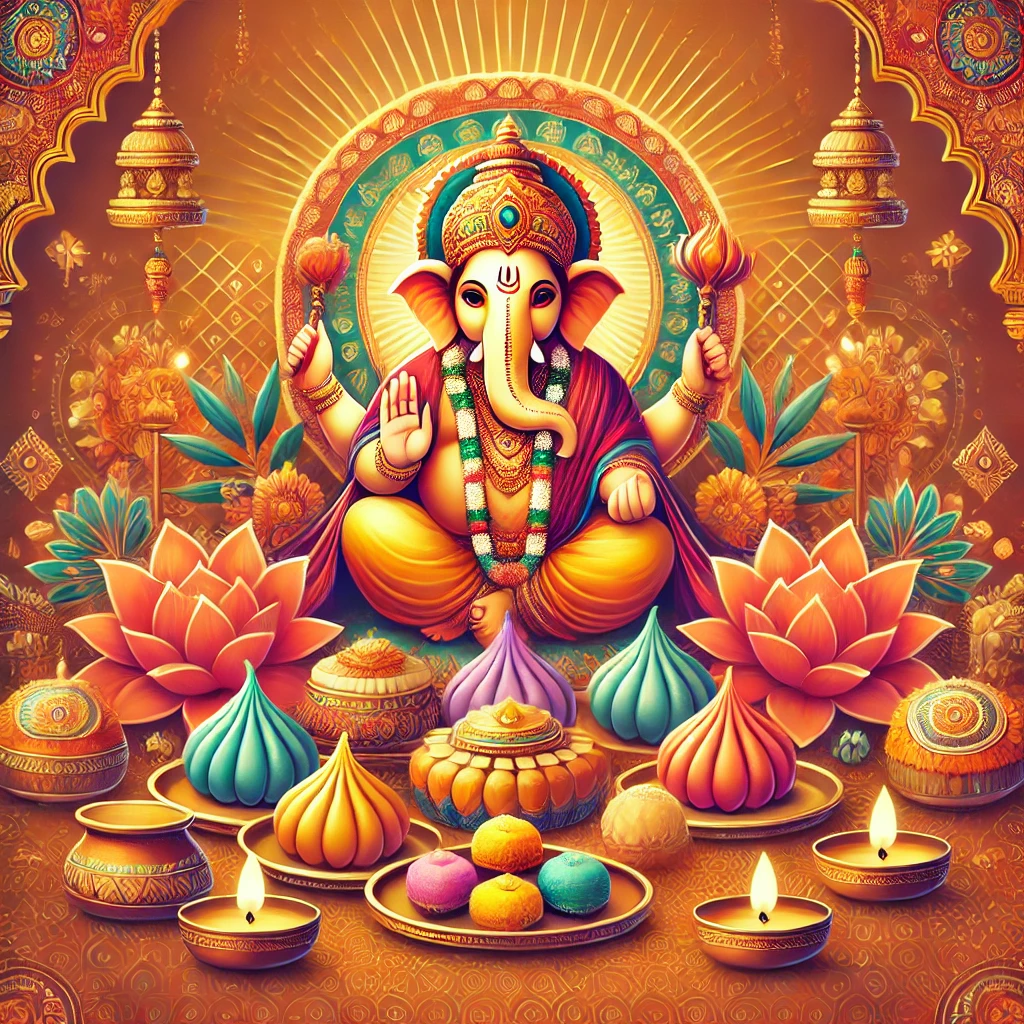
Ganesh Chaturthi is a grand festival celebrating the birth of Lord Ganesha, the remover of obstacles and the god of new beginnings. The festival involves several rituals and traditions that have been passed down through generations. Here’s an overview of the key practices:

1. Ganesh Sthapana (Idol Installation):

  • The festival begins with Ganesh Sthapana, where devotees bring home or install a beautifully crafted idol of Lord Ganesha. The idol is placed on a decorated platform, and the priest performs a ritualistic invocation called Pranapratishtha to infuse life into the idol. Devotees chant mantras and prayers to invite Lord Ganesha into their homes and hearts.

2. Daily Aarti and Offerings:

  • During the festival, devotees perform daily aarti (a ceremonial worship with lamps) and offer various items like modaks, fruits, flowers, and coconut to the deity. Modaks, in particular, are considered Lord Ganesha’s favorite sweet. Devotees recite the Ganesh Stotra and other hymns to seek his blessings for prosperity and wisdom.

3. Vrat (Fasting):

  • Many devotees observe a fast during Ganesh Chaturthi. The fasting can range from abstaining from food entirely to consuming only fruits and milk. This is a form of devotion, where devotees focus on spiritual practices and self-discipline.

4. Visarjan (Immersion of the Idol):

  • The festival concludes with the Visarjan, where the idol of Lord Ganesha is immersed in water, symbolizing his return to his celestial abode. This ritual is often accompanied by joyous processions with singing, dancing, and chanting of “Ganapati Bappa Morya.” The immersion is a symbolic reminder of the cycle of creation and dissolution.

5. Social and Cultural Celebrations:

  • Ganesh Chaturthi is also marked by cultural events, including music, dance, and community feasts. Many households and communities organize plays, devotional singing (bhajans), and competitions to engage people in the festivities.

Ganesh Chaturthi is a festival rich in rituals and traditions that bring families and communities together in worship, celebration, and joy. Each ritual is a way to honor Lord Ganesha and seek his blessings for a prosperous life. Understanding and participating in these traditions allow devotees to deepen their spiritual connection and celebrate the festival with greater reverence.
You may also like

Search the website

Like us on Facebook

Get daily updates via Email

Enter your email address:

Recent Posts

Yogini Ekadashi 2026 — The Yaksha Who Missed the Morning Flowers, and the Ekadashi That Undid His Curse

On Friday, July 10, 2026, the rare Krishna Paksha Ekadashi of Nija Ashadha arrives. The Padma Purana tells the story of Hemamali — the Yaksha gardener of Bhagavan Kubera in Alaka, whose single morning of distraction with his wife Vishalakshi cost him his form, his wife, and his celestial city. Cursed to wander the earth of Bharata as a leper for a long time, he was at last shown the way back by Sage Markandeya — a single sincere keeping of Yogini Ekadashi.

Jamai Shashthi 2026 — The Story of Maa Shashthi, the Cat, and the Wife Who Was Forgiven

Jamai Shashthi 2026 — The Story of Maa Shashthi, the Cat, and the Wife Who Was Forgiven

On Saturday, June 20, 2026, Bengali households across Bharata will welcome their married daughters and sons-in-law home for the legendary jamai-aador feast and perform the Shashthi Vrata. But behind the warmth lies a story most Bengalis know by heart and most non-Bengalis have never heard — the wife who stole the hilsa, blamed the cat, lost six sons to Maa Shashthi’s wrath, and was finally forgiven. The Vrat Katha, the vidhi, the mantras, and the deeper teaching.

Vat Purnima 2026 — The Wife Who Argued Yama Into Returning Her Husband’s Life

On Monday, June 29, 2026, women across Maharashtra, Gujarat, and southern Bharata will tie red thread around banyan trees and hear the story of Savitri — the wife who walked behind Yamaraja Himself when He came for her husband, and out-argued the Lord of Dharma into returning Satyavan’s life. The Mahabharata’s Pativrata Mahatmya Parva, the vrat vidhi, and why the banyan witnessed everything.

Nija Jyeshtha 2026 — The Real Jyeshtha Begins, and the Calendar Resumes

Nija Jyeshtha 2026 — The Real Jyeshtha Begins, and the Calendar Resumes

With Adhik Maas now closed on the Somvati Amavasya of June 15, the long-postponed festivals of Jyeshtha return — Vat Purnima (June 29, the Savitri-Yamaraja katha), Jamai Shashthi (June 20, the Bengali festival of Maa Shashthi), Sankashti Chaturthi (June 28), Yogini Ekadashi (July 10), and Devshayani Ekadashi (July 16, opening the four-month Chaturmas of Bhagavan Vishnu’s yoga-nidra). A guide to what the next four weeks hold and what the household that kept Purushottam Maas now carries forward.

The Closing of Purushottam Maas 2026 — Adhik Amavasya and the Sealing of the Month-Long Vrat

On Monday, June 15, 2026 — a rare Somvati Amavasya — the intercalary month that bears Bhagavan Vishnu’s own name comes to its close. The Acharyas teach that a vrat is not measured by its duration but by its closing. Here are the Padma Purana’s instructions for sealing the month-long Purushottam Maas vrat: the morning snan, the closing puja with the Vishnu Sahasranama, the day of dana, the Somvati Amavasya gift, and the final sarva-arpana — the offering of all merit at the feet of the Lord.

css.php






