IndianSanskriti
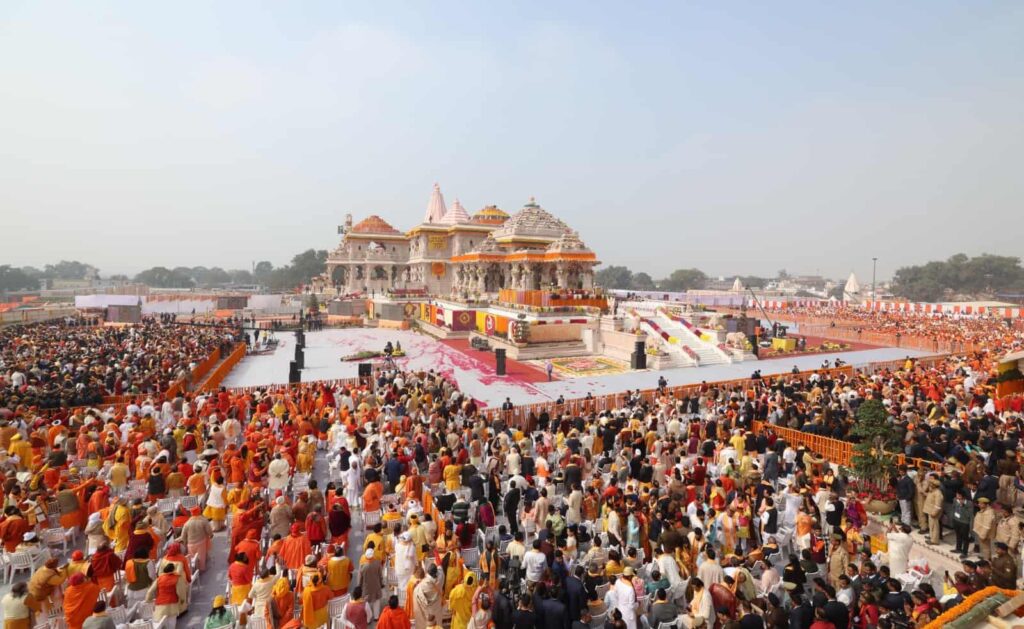
Embark on a journey of discovery with our list of the top 10 reasons to visit the Ram Temple in Ayodhya. From spiritual enlightenment to architectural beauty, find out why this temple is a bucket-list destination. #RamTemple #AyodhyaTourism #CulturalHeritage

10 Compelling Reasons to Visit the Ram Temple in Ayodhya

The Ram Temple in Ayodhya is not just a place of worship, it’s a symbol of India’s rich spiritual heritage and architectural grandeur. Nestled in the heart of Ayodhya, a city steeped in history and legend, the temple is a testament to the enduring legacy of one of India’s most revered deities, Lord Ram. Whether you’re a spiritual seeker, a lover of history, or an admirer of architectural wonders, this temple offers a multitude of reasons to visit. Here, we unveil the top 10 reasons that make the Ram Temple in Ayodhya a must-visit destination, each highlighting a different facet of this magnificent structure and its surrounding culture.

Now, let’s explore these compelling reasons that make the Ram Temple in Ayodhya an unmissable experience.

  1. Historical Significance: The Ram Temple stands at the believed birthplace of Lord Ram, a pivotal figure in Indian history and culture. Visiting the temple offers a connection to India’s ancient past and its epic narratives.
  2. Architectural Marvel: The temple is an exquisite example of traditional Indian architecture, showcasing intricate designs and craftsmanship. Its grandeur and aesthetic appeal are a visual treat for architecture enthusiasts.
  3. Cultural Experience: The temple offers an immersive experience into Hindu culture and practices. It’s a unique opportunity to witness and participate in traditional rituals and ceremonies.
  4. Spiritual Significance: For those seeking spiritual growth, the temple, being a major religious site, provides a serene and contemplative environment conducive to introspection and meditation.
  5. Artistic Displays: The temple complex is adorned with sculptures and artwork depicting scenes from the Ramayana, offering a visual storytelling experience of this epic.
  6. Economic Impact: Visiting the temple contributes to the local economy of Ayodhya, supporting small businesses and the community that thrives around the temple.
  7. Educational Opportunity: For students and enthusiasts of Indian history and religion, the temple serves as a live classroom, offering insights into the Ramayana and Lord Ram’s life.
  8. Community Interaction: The temple attracts visitors from diverse backgrounds, offering a chance to interact with different people, share experiences, and understand various perspectives.
  9. Photography: The temple’s majestic structure against the backdrop of Ayodhya provides a picturesque setting for photography enthusiasts.
  10. Peaceful Retreat: Amidst the hustle and bustle of daily life, the temple offers a peaceful retreat, a place to relax, and rejuvenate in a spiritual environment.

A visit to the Ram Temple is more than just a religious pilgrimage; it’s an exploration of history, culture, art, and spirituality, making it a must-visit destination for a wide range of interests.


You may also like

Search the website

Like us on Facebook

Get daily updates via Email

Enter your email address:

Recent Posts

Purushottam Maas — The Month No Deity Would Claim, and the Lord Who Made It Supreme

Every month of the Hindu calendar has a lord — except the rare thirteenth, the Adhika Maas, born an orphan and shunned as the “impure month.” The Puranas tell how this rejected month went in grief to Bhagavan Vishnu, who claimed it, gave it His own name — Purushottam — and made it the most fruitful month of all. The origin story, the teaching, and what it means for Purushottam Maas 2026 (May 17 – June 14).

Padmini Ekadashi 2026 — The Ekadashi Even the Devas Descend to Keep

Padmini Ekadashi 2026 — The Ekadashi Even the Devas Descend to Keep

The rarest Ekadashi of the entire Hindu calendar is three days away. The Padma Purana preserves a conversation between Bhagavan Krishna and Yudhishthira about a single Ekadashi the great Rishis spend lifetimes waiting for — Padmini. The Vrat Katha of Queen Padmini of Mahishmati, the lotus teaching, and why May 27, 2026 is the morning Vaishnavas across Bharata are preparing for.

Varada Chaturthi 2026 — The Rare Ganesha Day of Purushottam Maas

Varada Chaturthi 2026 — The Rare Ganesha Day of Purushottam Maas

Once every 2.5–3 years — when the rare 13th month of Adhika Maas opens — a thirteenth Vinayaka Chaturthi appears. The Mudgala Purana calls it Varada Chaturthi, the “boon-giving” Chaturthi, and holds it as the most fruit-bearing Ganesha day of the entire calendar. Today, Wednesday May 20, 2026, is that day.

Padmini Ekadashi 2026 — The Rare Ekadashi That Comes Only in Purushottam Maas

Padmini Ekadashi 2026 — The Rare Ekadashi That Comes Only in Purushottam Maas

Padmini Ekadashi 2026 falls on Wednesday, May 27 — the Shukla Paksha Ekadashi of Adhika Maas, the rarest Ekadashi in the entire Hindu calendar (it appears only every 2.5–3 years). The Padma Purana conversation between Bhagavan Krishna and Yudhishthira, the Vrat Katha of Queen Padmini, complete vrat vidhi with jagrana, mantras, and the lotus symbolism that gives the Ekadashi its name.

Ganga Dussehra 2026 — The Day Maa Ganga Came Down to Bhagiratha

Ganga Dussehra falls on Monday, May 25, 2026 — commemorating the day Maa Ganga descended from Vaikuntha to the earth through the millennia-long tapasya of King Bhagiratha. The full account from the Valmiki Ramayana, snan vidhi, dana traditions, mantras, and the teaching of sustained sincerity.

css.php