Introduction
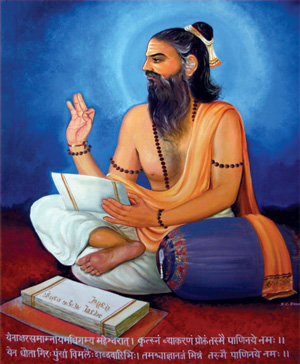
Pāṇini was an ancient Indian linguist and Sanskrit grammarian who codified a great part of the Vedic knowledge into written form. Pāṇini’s grammar consists of four elements:
Panini’s comprehensive and scientific theory of grammar is conventionally taken to mark the end of the period of Vedic Sanskrit, by definition introducing Classical Sanskrit.
Panini’s grammar is not only the earliest surviving work in Sanskrit but also the earliest surviving complete theoretic analysis of any language. In India, Pāṇini is sometimes considered as the founder of linguistics and Indian grammatical tradition.
Panini’s comprehensive and scientific theory of grammar is conventionally taken to mark the end of the period of Vedic Sanskrit, by definition introducing Classical Sanskrit. His standardizing influence on Sanskrit has been compared to that of Panini’s standardizing influence on Classical Sanskrit has been compared to that of Euclid among mathematicians or Adam Smith among economists; some consider him an intellectual hero while others look down upon him as a conservative traditionalist who slowed down the development of Indian linguistics by locking it into an old-fashioned system (as was also done with European grammarians’ Latinizing efforts).
Panini’s grammar is not only the earliest surviving work in Sanskrit but also the earliest surviving complete theoretic analysis of any language.
Panini’s grammar is not only the earliest surviving work in Sanskrit but also the earliest surviving complete theoretic analysis of any language.
His work influenced later linguists and philosophers, including Patanjali who wrote the Mahabhasya, a commentary on Panini’s sutra.
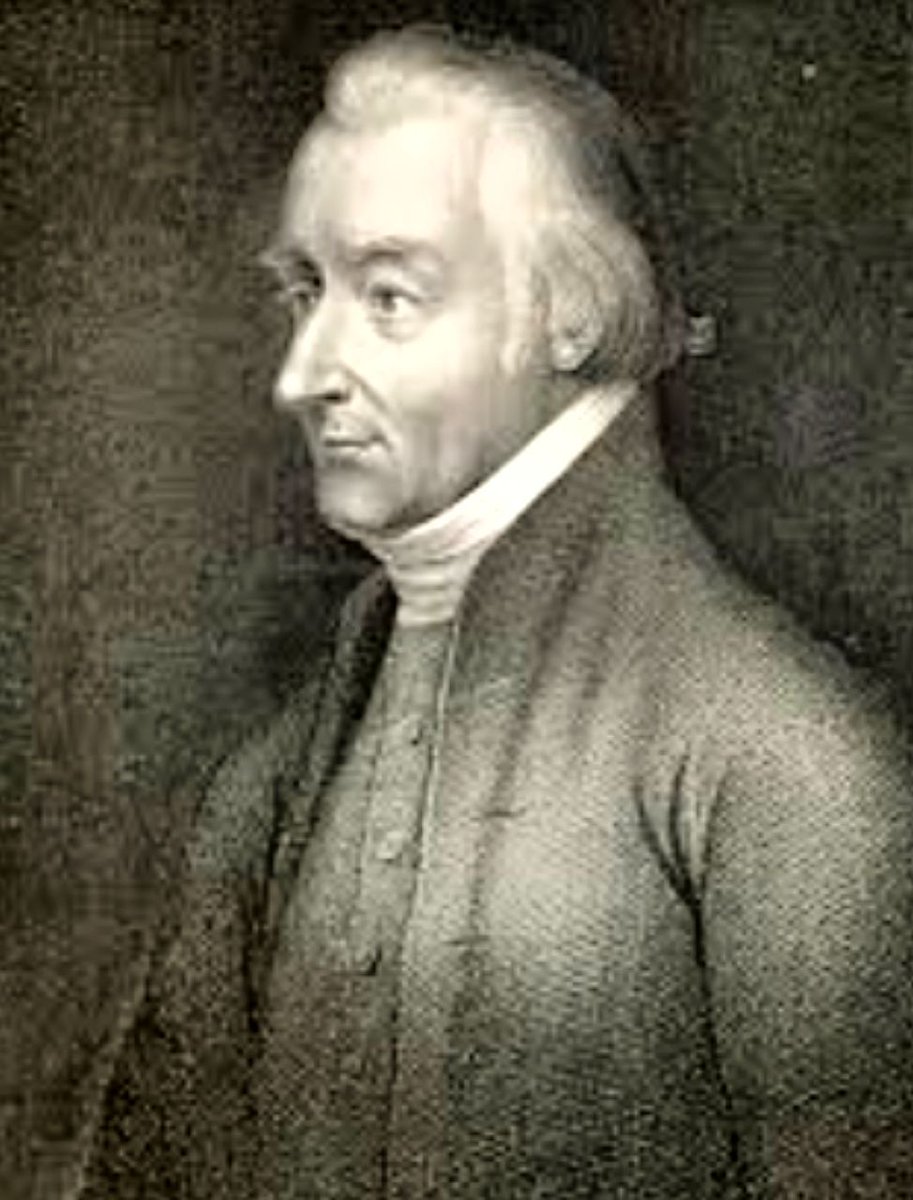
Pāṇini’s thorough and scientific theory of grammar, is conventionally taken to mark the start of Classical Sanskrit.
Pāṇini’s grammar is not only the earliest surviving work in Sanskrit but also the earliest surviving complete theoretic analysis of any language. It is, therefore, considered to be one of the most influential works in classical linguistics and modern linguistics.
The Pāṇiniya-śabda-sūtram (“Pāṇinian aphorisms”) or Astadhyayi (“eight chapters”) are a collection of phonological rules and morphological paradigms for Sanskrit. The text describes an algorithm for reciting “perfect” poems, using metrical feet consisting of long and short syllables, which can be combined into lines that describe various metres by means of a fixed number (usually eight) of such feet.
In India, Pāṇini is sometimes considered as the founder of linguistics and Indian grammatical tradition.
In India, Pāṇini is sometimes considered as the founder of linguistics and Indian grammatical tradition. His work is considered to have been the first formal study of linguistics and grammar.
Modern linguists such as Noam Chomsky found inspiration in Panini’s work for their own theories on grammar.
Panini’s work is the earliest surviving work on linguistics. It was written in Sanskrit and has been studied by scholars throughout India for many centuries, but it was not translated into English until 1823. Modern linguists such as Noam Chomsky found inspiration in Panini’s work for their own theories on grammar. Today, his text is still used in the study of natural language processing and artificial intelligence—though it’s important to note that these fields are very different from what Panini had in mind!
The Ashtadhyayi is Panini’s most famous work.
The Ashtadhyayi is Panini’s most famous work. It consists of 3,959 sutras (rules), which are concise statements dealing with all aspects of Sanskrit grammar. The work is remarkable for its completeness and for the exactness of its rules, many of which took centuries to be rediscovered; this led to the legend that Panini lived long before Buddha and was a contemporary of Mahavira, the 24th tirthankara or venerated sage in Jainism. The sutras cover about 455 topics and were considered so difficult to understand that commentaries on them did not appear until about 1500 years after his death
In it he describes a set of 16 general rewrite rules as applied to Sanskrit morphology; all are parallelled by a set of further rules which state exceptions to these rules.
In it he describes a set of 16 general rewrite rules as applied to Sanskrit morphology; all are parallelled by a set of further rules which state exceptions to these rules. The system defines an unambiguous context-free grammar, with a single exception: the rule for word-final short vowels in compounds is extended by an additional rule (called kalpana), making it context-sensitive.
Pāṇini’s grammar is not only the earliest surviving work in Sanskrit but also the earliest surviving complete theoretic analysis of any language.
In addition, he provides a metarule which determines how these rules should apply in order to generate well-formed words, and an ordered list (known as the dhatupatha) which gives information about the conjugation classes of verbs and declension classes of nouns.
In addition, he provides a metarule which determines how these rules should apply in order to generate well-formed words, and an ordered list (known as the dhatupatha) which gives information about the conjugation classes of verbs and declension classes of nouns.
This is not the end of Sanskrit grammar. There are other works describing different aspects of Sanskrit grammar.
Although it was composed over 2,000 years ago, its description remains unsurpassed in terms of precision and comprehensiveness.
Although it was composed over 2,000 years ago, its description remains unsurpassed in terms of precision and comprehensiveness. Panini’s grammar is not only the earliest surviving work in Sanskrit but also the earliest surviving complete theoretic analysis of any language.
Panini was written in around 4th century
You might be wondering, how do I know Panini was written in around 4th century? Well, you can find out for yourself by reading about the history of linguistics on Wikipedia. It’s an important part of human history and should be treated as such.
Conclusion
Panini’s Ashtadhyayi is one of the most influential works in the history of linguistics. It laid the foundation for modern linguistics by introducing concepts such as recursion, and it has been compared to Euclid’s Elements in its importance as a model for scientific exposition. In addition, Panini’s grammar is thought to be a model for the structure of human language, with its system of rules and exceptions based on context similar to how humans use language. The Ashtadhyayi was written around 500 BCE by Panini, who lived in India during this period.
Source :