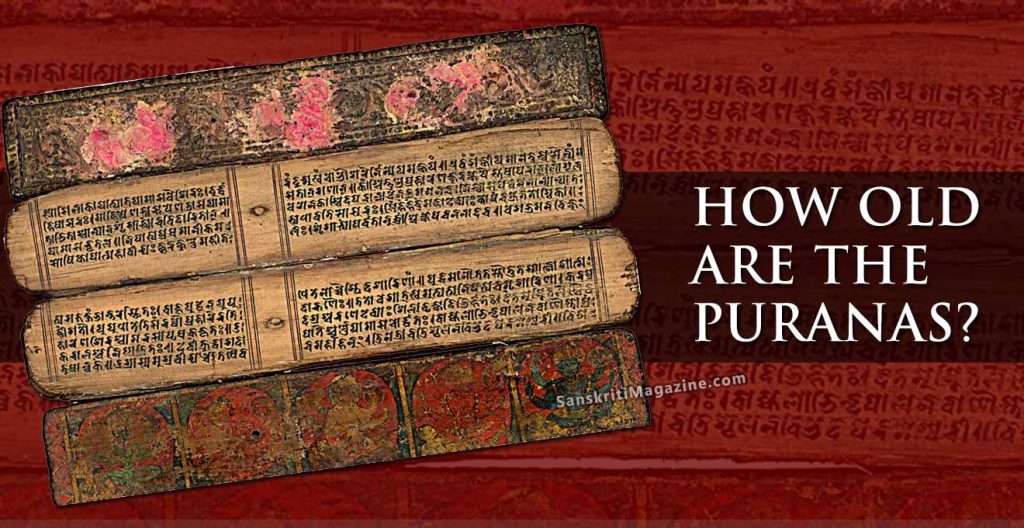
“If our religion has survived many vicissitudes in the past, it is because of our temples and the festivals associated with them. The spiritual, moral, and ethical principles expounded by the Vedas have survived and spread through the Puranas. They teach the basic truths in a manner, which appeal to the heart. Let us not, therefore, be indifferent to these great works of religious literature, but treasure them, study them, conduct researches in them, and thereby benefit ourselves and the world’’—Kanchi Shankaracharya on February 4, 1958. From ‘Acharya’s Call’, Madras Discourses 1957-1960.
Puranas are dated to Gupta period by the scholars on the basis of the genealogical tables in them. Ancient scholars who wanted to update the Puranas included the latest kings which misled the scholars. Actually Puranas are older than Gupta period i.e. 4th century AD. Vishnu Purana is the oldest of the eighteen Puranas.
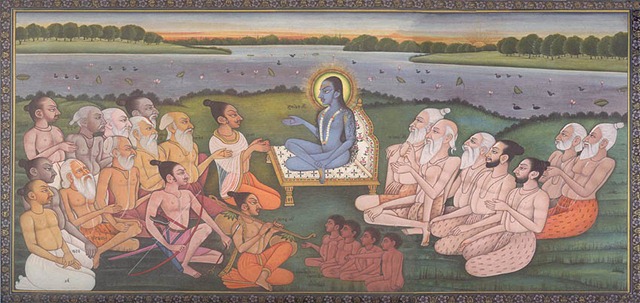
Manikkavasagar, one of the four famous Saivite saints, praised Lord Shiva as a God ‘’older than the oldest and newer than the newest’’. This epithet is applicable to Puranas as well. Purana means ‘Pura api Navam’ in Sanskrit . This means they are old but new. They are ever fresh and their morals are relevant to all the ages. We have many references to ‘Ithihasa-Purana ‘in Vedic literature. Ithihasa means ‘in this way it happened’. Ithihasa and Purana were always put together in Vedic literature. They are real stories of kings and seers.eBrihad Aranyaka Upansihad and other Brahmanas refer to Ithihasa-Purana.
The Purana deals with five topics:
1.The Evolution of Universe from the Material Cause
2.Its recreation in each aeon
3.The genealogies of divinities an sages
4.Those of Royal Families
5.An account of groups of great ages
Not all the eighteen Puranas contain all the five elements. The genealogy of the Royal families is the ancient history of India but over enthusiastic patriots of each dynasty changed it according to their whims and fancies. Puranas contain geography as well. Once again it is confusing because different clans moved from one location to another in course of time. In those days people named their countries on the basis of its ethnic tribes. Yavanas, Huns, Kambojas and Sakas moved to different parts of India misleading many a scholar.
Puranas are copious. It contains 400,000 slokas/couplets. They contain lot of interesting stories. All the ancient seers of India are listed there. Names like Agastya, Vishwamitra and Vashista also misled many a scholar because several seers had the same name. Since they are Gotra (clan or group) names, all the Rishis or seers born in the family were called with the same name. Those who do research into Puranas must take all the above factors into account. Pargiter tried a make a historical list of kings out of the Puranas ( Pargiter’s ‘Dynasties of the Kali Age’, 1913). Though his attempt was appreciated by later day scholars, his list was not without errors. But one may take it as a starting point and improve upon it.
Mahabharata contain almost all the Puranic stories. Puranas are broadly classified into Saivite and Vaishnavite Puranas i.e. those that glorify Shiva or Vishnu. Most of the Puranas are said to be narrated by the reciter of Mahabharata, Ugrasravas or his father, the suta Lomaharshana and Suka. The narrator of the Vishnu Purana was said to be Parasara, grandson of Vashishta. He narrated it at the court of Kuru king Parikshit. Puranas were recited in the courts of kings. In this context it is interesting to note that Tamil kings donated money to recite Mahabharata according to old Tamil inscriptions. One Chera king even ordered his army to march in support of Rama while he was listening to Ramayana. He was listening to the epic several thousand years after the Rama’s time!
Following are the 18 Puranas with the number of Slokas (couplets) they contain:
Agni……………………………………..16,000
Bhagavata……………………………..18,000
Bhavisya………………………………..14,500
Brahma………………………………….10,000
Brahmanda…………………………….12,000
Brahmavaivavarta…………………..18,000
Garuda…………………………………..18,000
Kurma……………………………………18,000
Linga……………………………………..11,000
Markandeya……………………………9000
Matsya…………………………………..14,000
Naradiya……………………………….25,000
Padma…………………………………..55,000
Skanda………………………………….81,000
Vaman………………………………….10,000
Varaha………………………………….24,000
Vayu……………………………………..24,000
Vishnu…………………………………..23,000
Largest Purana: Skanda Purana
Shortest Purana: Makandya Purana
Oldest Purana: Vishnu Purana: (in the present form -300 AD)
Tatriya Aranyaka and Apastamba mention Puranas confirming their existence for at least 2500 years. Purana recitation is a popular ritual in India. People who have got wealth organise recital of Bhagavatham or Ramayana or Mahabharatam for 40 or 45 days. Bhavatha Sapataham i.e. reciting Bhagavatham (About Vishnu) for seven days continuously is another religious practice done until today by devoted Krsihna devotees. Several inscriptions tell us about the kings’ donation of land or gold coins for this recital. This had its own good and bad effects. It preserved our culture and even illiterates knew all the basic tenets of Hinduism. It has entered their folk songs and lullabies. Children were always compared to Krishna. The bad effect is Pauranikas—those who told the story to general public— added their own interpretations to make it more interesting. Though their intention was good, later day scholars were mislead by these additions.
Hundreds of books have come out about the History and Geography in the Puranas in addition to the philosophy in them. Linguists must study the style and language and classify them. A research institute for Puranic and Sthala Puranic Studies is long due.