~ By Pratha Sharma, Contributing Writer, New Delhi
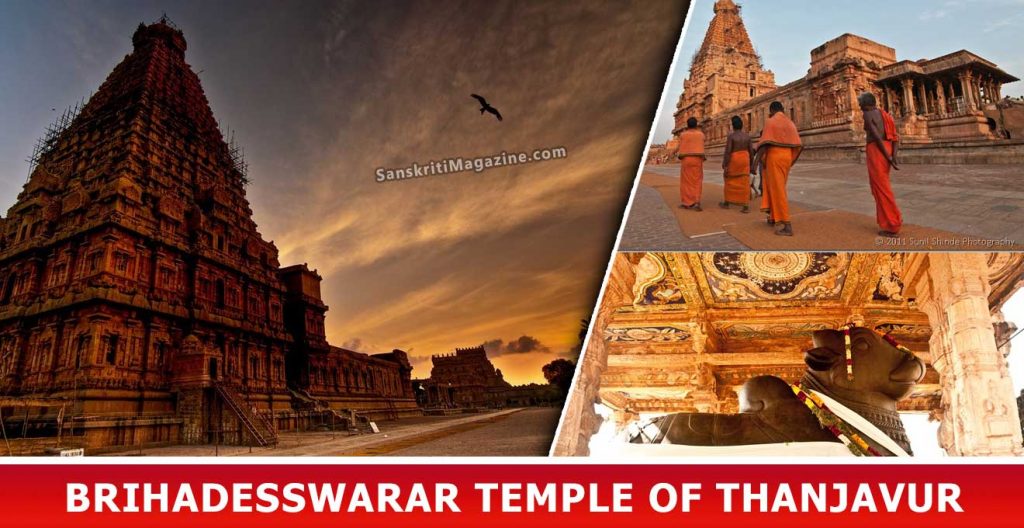
Also famed as the “Rajarajeshwara Temple”, “Rajarajeshwaram” and “Peruvudayar Temple”, this temple is located in Thanjavur in the State of Tamil Nadu. This temple is amongst the largest temples of India, and is a part of the UNESCO World heritage sites.
Although believed to be named after the king, it is precisely the presiding deity Lord Shiva who is known by the name of ‘Rajarajeshwara’. Later, it came to be known as ‘Brihadeeswara’ as synonym to the Great Ishwara.
Constructed by the Tamil king Arulmozhivarman, famously known as RajaRaja Chola in order to fulfill an order given to him in a dream.
This temple, built around 1010 CE is around one thousand years old, and gives an insight to the exquisite Chola Dravidian temple architectural style.
The temples of this era are inherent examples that narrate the Chola kingdom wealth, cultural symbolism at it’s behest, art, craft and sculptural expertise and with several scriptural treatises.
According to the inscriptions in the temple, the architect was Kunjara Mallan Raja Raja Rama Perunthachan.
The temple is said to have been built by 60,000 tonnes of granite, even though granite was not available in the radius of 100 kms from here.
The Architecture of this temple follows the famous Dravidian style. One of the prominent features are that the temple has a moat around the outer walls just giving it the status of a fortress.
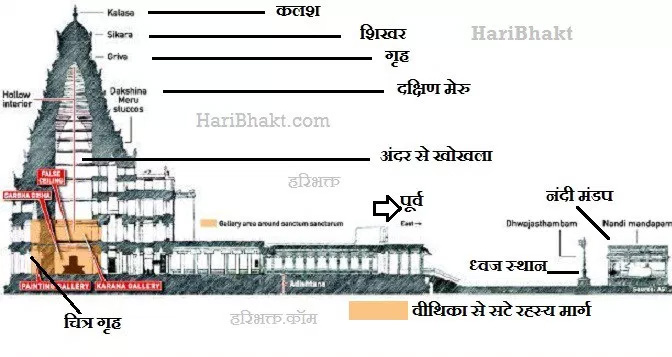
The main Vimanam or the Shikhar is around 60 mts high, while the Gopuram is around 30 mts. This feature is just contrary to the popular style of this period where the gopurams are undoubtedly higher than the vimanams.
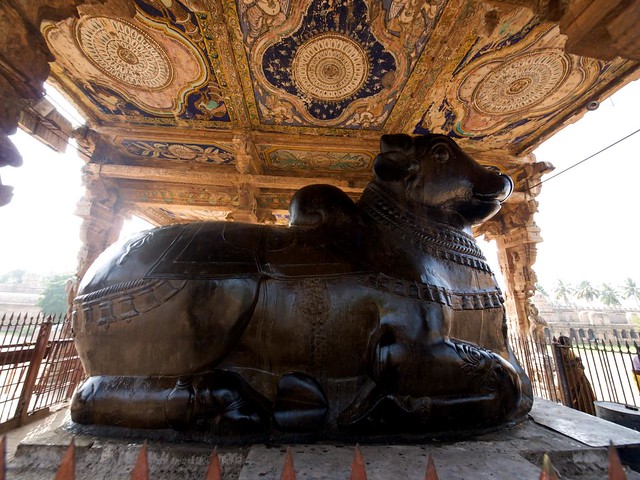
This is a temple built on a higher platform, and a sold base raises it to 5 mts above the ground. The interiors of this spacious temple consist of a sanctuary, a huge Nandi bull idol, a pillared hall, an assembly hall (Mandapa), and various small sub shrines.
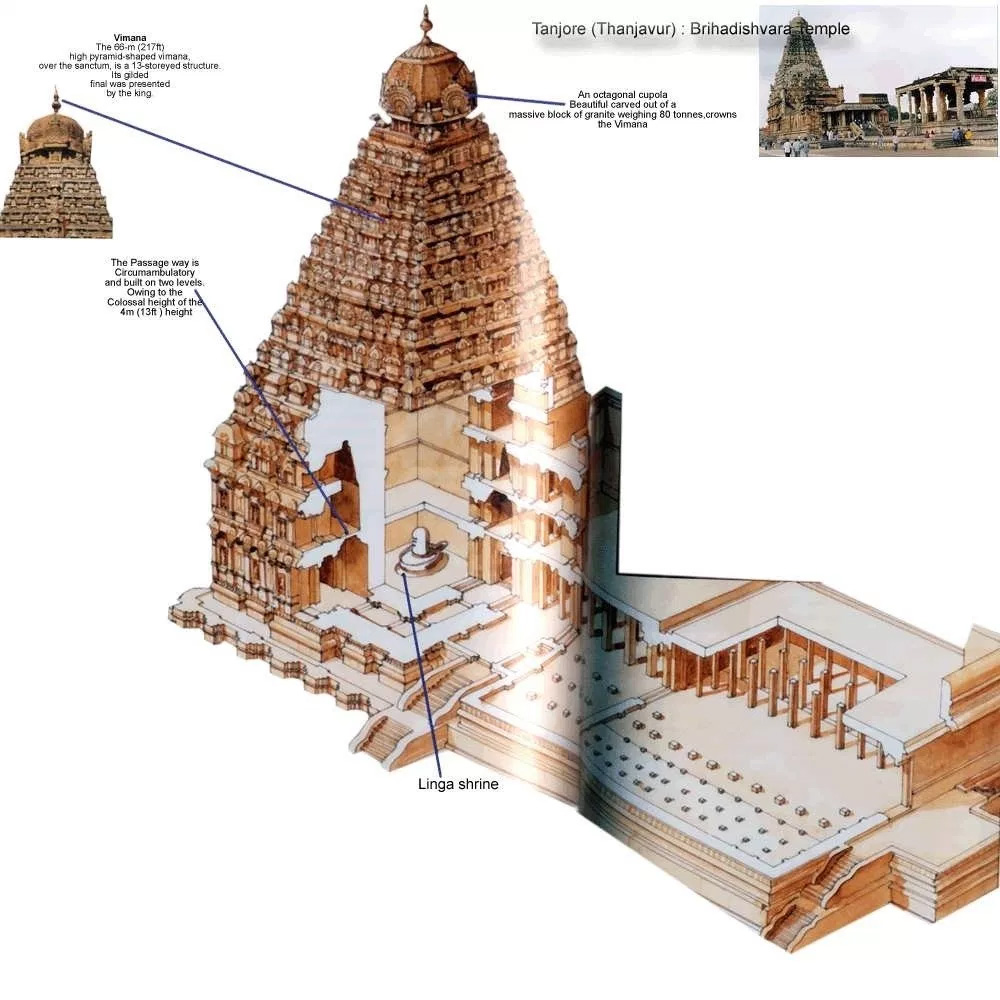
The innermost sanctum sanctorum of the Garbha Griha locally known as ‘Karuvarai’ in Tamil has a huge image of Lord Shiva in the linga form. Only priests are allowed inside.
The Garbha Griha has an inner wall and an outer wall creating a pradakshina around the Karuvarai for circumbulation. The entrance is exquisitely decorated, and it’s location is calculated to be at a point of total equilibrium, a representation of the microcosm of the universe.
At the exact central point is the Shiva linga placed. This linga is about 29 mts high, making it one of the largest.
Deities located in the various niches of the outer wall are Surya, Chandra and Dakshinamurthy.
This is one of the unique temples with Ashtadikpalas, or the rulers of the eight directions namely Indra, Agni, Yama, Varuna, Vayu, Kubera, Isana and Nirrti with life size statues of 6 feet located in their respective directions with a separate temple for each.
Another unique and characteristic feature of this temple is that shadow of the Vimana does not fall on the ground.
The temple has various murals and paintings on the walls depicting Lord Shiva destroying demons, in dancing postures, battle with Tripurasur and the like.
The huge Nandi bull is monolithic, and is second largest only to the Lepakshi Temple of Andhra Pradesh. The Nandi weighs around 20 tonnes with huge dimensions.
At it’s cultural peak and grandeur, the temple maintained a staff of around a 1000 people. There were 400 temple dancers at the time of Raja Raja Chola. Along with them, there were Brahmin priests, musicians, dance gurus, artists, craftsmen and varied housekeeping staff.
The Brihadeeswara Temple was the hub of not only the religious and cultural activities and festivals of dance, music, vedic scripture discussions, but also for the business activities of flower, milk and ghee merchants who made a regular supply to the temple for the pooja activities and the festivals.
Most famously, this temple served as a cultural platform for the evolution, progression and the sustenance of the dancers in the traditional Bharatnatyam form of Tamil Nadu.
This can be religiously seen as inscribed as the carvings of 108 dance Karanas or postures of Bharatnatyam in the outer walls of the upper storey.
The temple grandeur is mentioned in the texts of that time also.
Several additions were made by the consequent rulers to this temple, as the Goddess shrine added by the Pandyas, the Subramanya shrine added by the Vijaynagar rulers, and the Vinayaka shrines that was restored and renovated by the Maratha rulers.
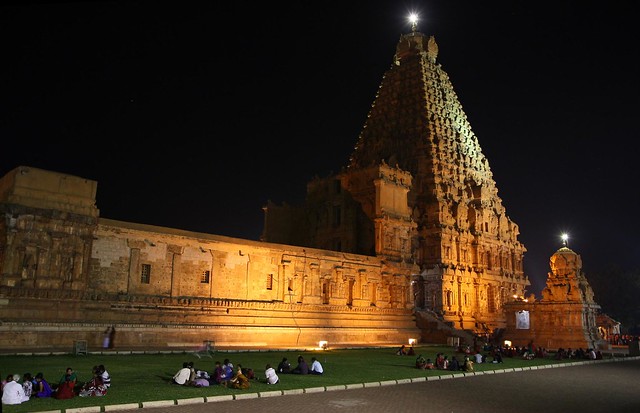
Great features of this temple cannot pass unnoticed. While it was said to be constructed in just 7 years time, it was the tallest temple at that time. The view became spectacular after it was illuminated after dark.
The entrance has two idols of Lord Ganesh and when one is tapped, sound waves can be felt in the other.
Another classic feature of the temples of that era is the tapping pillars. The musical pillars produce different sounds when tapped. This is indeed a contribution and the architectural brilliance of the Dravidian style of this era temples.
The temple celebrated it’s completion of 1000 years in 2011, with a spectacular performance of a congregation of dancers of the Bharatnatyam form.