The melodious madrigals of Sanskrit literature do not comprise of only high order of lyricism for the passionate readers of literary romances but these have scientific cum religious description of nature as well as of art and craft from which wizards of museology and conservation can get prolific and profound idea about indigenous system of restoration and stablisation.
The absolute ethics of our land, Vedas are certainly the sequels of spiritualistic vision of our ancestors, but it does not mean that these are acosmistic in approach.
The development of paganistic thought and belief which gave birth to henotheism and above all to acatheistic monotheism is the greatest achievement of the Vedic Pantheon. We are proud of them who recited Ano Bhadrah: Kritwo Yantoo Vishwathaha. (Here the Poet’s feeling of the welfare of man kind is reflected who makes prayer in devotion to nature for the upliftment of the people) and are fortunate successors of those for whom Shantirausadhaya and Shantiravanaspataya (In Yajur Veda these terms are used for tree and other elements of greenery as well as medicinal plants believing in their power to provide tranquility) were ritualistic hymns. They provocate that nature itself has a moral order (Rit) or disciplined way of regulation and this systematic regulation is the zygotic cause of our healthy survival.
In the cut throat competitive race of scientific development and material achievement even we Indian have forgotten the altruistic naturalism of Rit and Sunrit. Rit means systematic rules of nature and the word Sunrit denotes the Prosperous Survival of man Reference of Indra, Varuna, Diti, Aditi as the representatives of religious concern but also of scientific realization. Such references explain the Vedic conscience of accepting nature as a creative and protective power.
Atharav-veda (Aranya to preethivi sayo namastu) goes on to pray that the forests and plants on earth should have pleasing effect on people and Taitariya Brahamana says:
Varmhavan Vrahmsh Vriksh AAaso Yato Dhava Prithivi Nisttatakshu (Trees, space, and earth are also endowed with the merits of supreme divinity). The Gayatri Mantra dedicated to the God of dusk and dawn is an instance of our spiritual devotionalism dedicated to generative power of the Nature. The concept ofSursari and Nadiswari in Sanskrit literature not only accepts perennial streams as heavenly gifts but also declares that earthly pleasures and material achievements cannot be gained without the sanctity and purity of rivers like Ganga, Yamuna, Krishna and Cauvery.
It has also been said Ganga hinam hatam desh. (A country which has no perennial river like the Ganga is dead). The traditional of religious bath and tree worship which have deep rooted historicity is a general feature of India’s socio religious life. Bhagwan Krishna’s acceptance in Geeta himself as the papal tree, Lord Buddha’s enlightenment symbol, the relation of all the Jaina Trithankaras with vivid trees shows that lover for nature is not only a Brahmanical concept but it is the genetic character of our land. Vedic concept of Pushan’s generative power is remarkable.
The Kailash peak of the Great Himalaya mythologically occupies great importance as the seat of Sawambhu. In this way Kshirsagar and Meru Parvat related to Vishnu is not an utopian imagination but rational attitude to link nature with divinity. The Salbhanjika and Dohad icons generally shown with three branches reflects our ancestor’s thought, that nature is a living phenomenon charged with spiritual power and it has cerebrumatic receiver to feel human sense and emotion. Kalidas’s Reetusabhharam and Meghdootam are famous because the poet has presented nature as the soul of celestialism. The erection of temples, monasteries and Jaina Shrines in the midst of natural panorama proves that love for nature is not only a dry hypothesis for us but it is our cult, creed and cradeo.
Fortunately the people of the land of great Guru Padamsamshava could easily realize cosmic power of the nature because worshipping Kanchanjanga is the genesis of their cult. Also reciters of our holy hymns Satam Sardam Jivem (wish to live till hundred years) knew it is only possibly when our demand of Kale varsatu prajanyo prithivi sasya shalini (Need of heavy rainfall and healthy fauna and flora) will be fulfilled.
India, the country of Gandhar, Mathura, Sarnath, Gaya of the land of Sanchi. Bharhut, the cradle of rock-cut architecture, Bhaj, Kondaney, Pitalkhora, Bagh, Badami, Ajanta and Elephanta, the lap of Chidambaram. Brihdeshwara, Minakshi, Konark and Khajuraho has a golden history of art from Proto-historic Harappa to these days of Super computer. The Syncretic character of our culture is quite obvious in our art traditions. It is an outcome of our indigenous spirit and it reflects our philosophy, stark realism, sense of spiritualism and aestheicism having tender adaptation of occidental art trends to develop itself as the best. The salient aspect of our traditions is not only the erection but preservation also, to maintain their dignity and to make them a subject of socio-cultural glory.
The very first and foremost thing is that many of our monuments were built in many successive periods. The artistic establishment of Sanchi is Sunga-Satvahana period, the continuity of Ajanta period and the continuous development of Nalanda Vihar from Ashokan time to Pala age are some of the instances of our preservative sensibility. Wherever literature is concerned there are so many texts like Vishnudharmottara Purana, Agnipurana lakshana, Yashodara’s commentary on Kamsutra and many others which reflect the nature of damage which makes the icon ritually underserving. There has been a mention of some restorative techniques also in these texts, to make the character of their art a subject of immortal dignity.
Ship ratana narrates: Dose laghutare bimbam naiva tyajyam kadachan/
bahuchede karachede podaechede talhaivaia
Huthaiva sphutitey bhinne yasmin navyave gato/
Vairapayaman jayate yasya lat tyjayam prayso bhavet/
Angulayadi parishedede bandhanam sasyate budhaih/
(When an image is slightly damaged it should never be discarded, but when its arms, hands, feet and legs are severed, when it is broken and split up or its nine portions have gone or when it gets disfigured it is usually to be discarded. If its fingers etc. dare damaged the sages recommended binding them).
Agni Purana, a text written in Post Gupta age also describes Jirnodhar Vidhim (method of restoration)
Shribhagvanuvach
Jirnodharvidhim vaksya bhusitam Suapayed guruh
acutam vinaysedgahe atijernam partiyate vyangam Ch Siladayam
naysednam Ca purvavat
Samharvidhina tatra tattvan Samhritya deshik
(Here god himself describes the process of replacing old images. As stone image which has become disfigured should be cut again to give new forms having all its attributes and characteristics.
Vaditraih praksipettoye gaurve dakshi namdadet
Yat pramana Ca yadravaya tammanam Sthapayedoine
(After replacing old image a new image should be carved, installed in the place of the old one, made of the same substance and having the same dimensions as the original.)
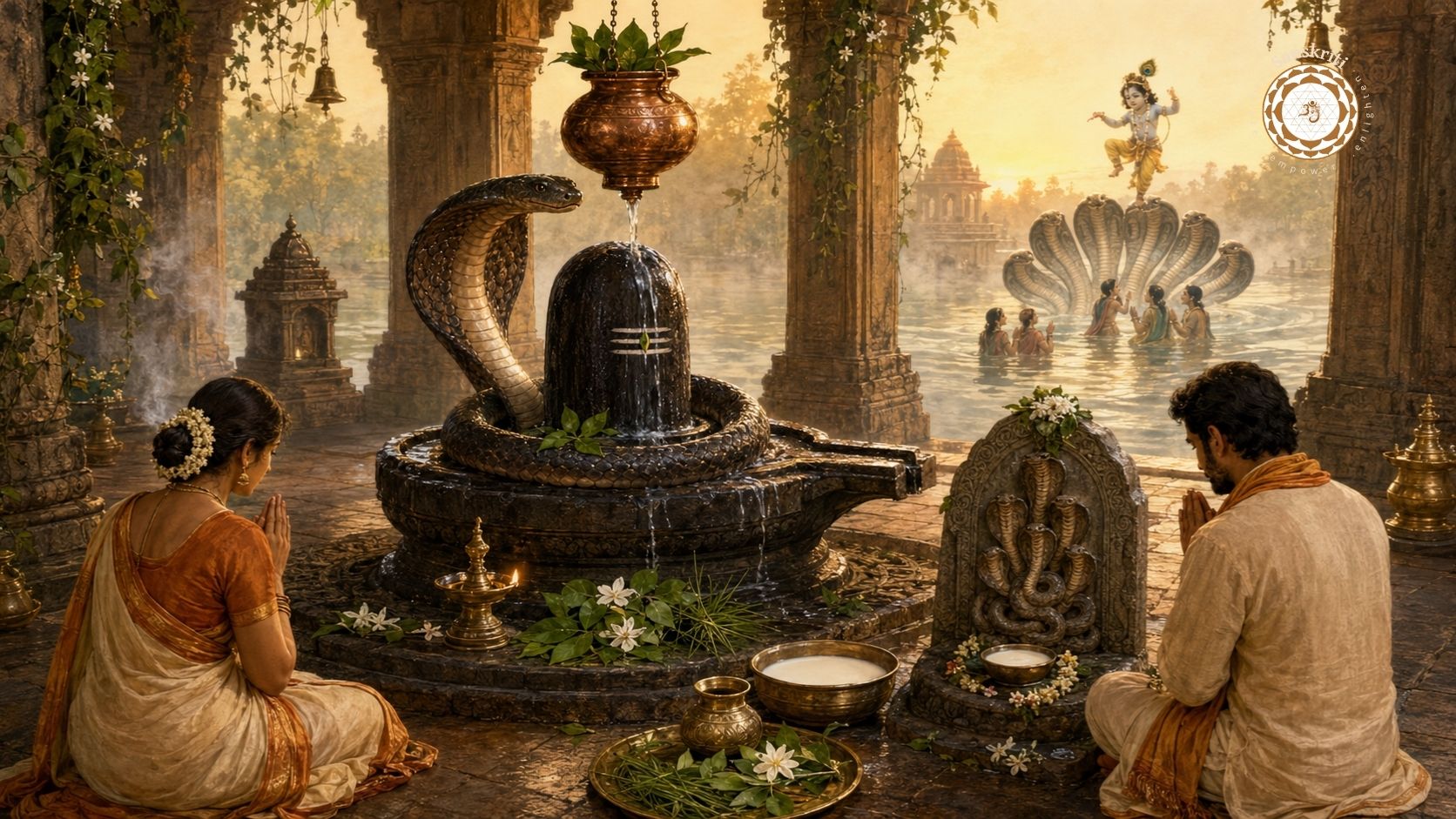
The exhaustive, text Pratima-Lakhan describes various types of images such as Salija Mritika, Ratanodvhava Dhatu Jamita and district instruction in regard to different materials. The ritualistic use of milk, perfume, tulsidal, deodhar, Chandan and to prepare other materials are subjects or research. It appears to be quite certain that the Pooja system was not just to purify the environment but also to protect the icons and other religious and artistic material from the impact of biological growth.
Though in ancient time there was no scientific methodology for the preservation of art objects, we cannot deny the fact that our forefathers and deep-rooted awareness for the proper care, handling and restoration of art objects. They were well acquainted with some of the natural things which were having insecticidal or fungicidal properties. The leaves of Neem were kept between the pages and holy books like great epics were wrapped in red cloth, explicit that there was preservative sensibility among people of the period. It is now well known that burning of Deodar, Amra (Mango), Chandan (Sandal) and other woods not only fulfilled sanctitious purpose but also purified the environment.
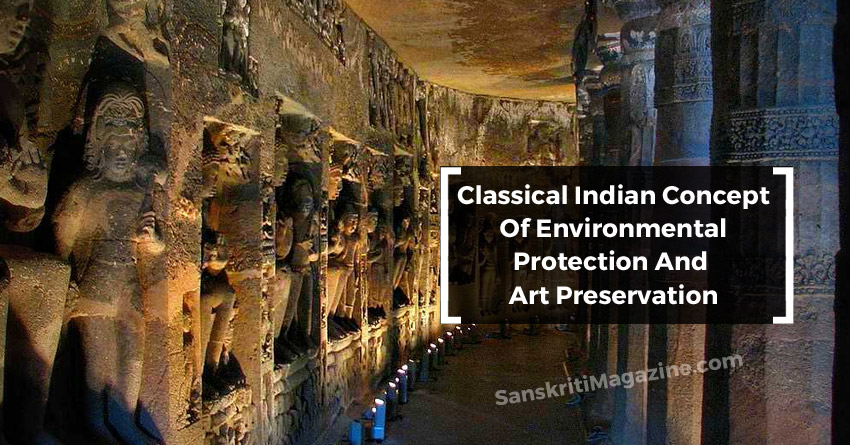
The architectural features of rock cut caves like AJANTA and ELLORA and the Indian temples are good subjects for the students of Museology and Conservation to work for evaluating the efficacy of various natural materials and thereby reviving the old practice on more scientific grounds. However, one can say that the concept of preservation is neither modern nor occidental but completely classical and indigenous.
Source: Rig Veda, Yaju Veda, Athrav Veda, Agnipurana, Shilp Ratana and Pratimalakshan.
Kumar Sanjay Jha & Anand Burdhan, National Museum Institute, Janpath, New Delhi