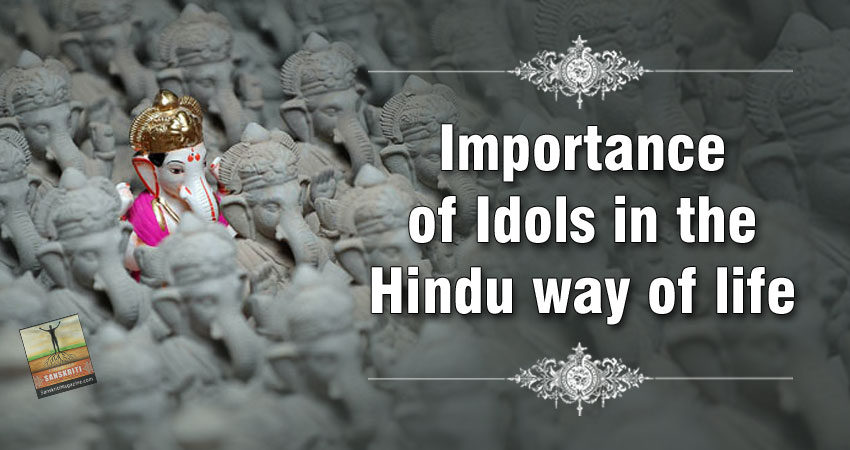
India is one place where they went into elaborate systems of idol-making. This has been misunderstood by other cultures as worshiping some doll as a god. No. Here, people are very much aware that it is we who create the shapes and forms. If you look at it from the standpoint of modern science, we know today that everything is the same energy, but everything is not the same in the world. This energy can be like an animal or this energy can function like the Divine. When I say “the Divine,” I am not talking about you as a being. I am talking about the body itself. The physical body itself can be transformed into a Divine entity if we just reorganize our systems in a particular way.
For example, between the full moon day and the new moon day, each of the fourteen nights are so different. Today, we live with so much electric light, so you don’t know the difference. Suppose you lived on a farm or in a forest where there was no electricity, then every night would be very different because the moon comes up at different times and it has different shapes and forms. But it is the same moon. It is not a different entity. The same moon has different impacts at different times. Just a little rearrangement, see what a difference it has made.
Similarly, if you re-arrange the energy system in the body, this body which is just a mass of flesh right now, can become a divine entity. The whole system of yoga is oriented towards this. Gradually, if you give it sufficient attention and practice, you will see that this body is no longer just craving for self-preservation and procreation, it has become something else altogether. It is no longer just a physical entity. Though it is physical, though it is biology, it need not be limited to the physical. It can function and operate in a completely different dimension. Its very presence can become different. It is from this context that many yogis who made their bodies in a certain way, allowed people to worship their bodies. They themselves would not be there in the body, but they let people worship their body because it has become like a divine entity. It is a reorganized energy – completely engineered.
The Hindu Way of Life
One fundamental thing that I would like to clear up about the Hindu way of life is, with the Hindu, there is no “ism” because it is a geographical and cultural identity. Anyone born in the land of Indus is a Hindu. There is no particular belief system, god or ideology which you can call as the Hindu way of life. Whatever you do in this culture is Hindu. You can worship a man-god and be a Hindu. You can worship a woman-god and be a Hindu. You can worship a cow and be a Hindu. You can worship a tree and be a Hindu. Or you don’t worship anything and you can be a Hindu. Hindu is a cultural identity, not a religious identity. In the Hindu way of life, the only important thing in human life is his liberation. Mukti is the only goal.
The Science of Idol-Making
There is a whole science of idol-making where a certain form is created with a particular material and energized in a certain way. Different idols are made in different ways where they relocate or rearrange the chakras in certain places to make them into completely different possibilities. Idol-making is that science through which you manifest the energy in a particular way so that your quality of life can be enhanced.
Temples in India, were built as a very deep science. They were not created for worship. When I say temple, I am referring to the ancient temples. Most modern temples are built just the way you build shopping complexes. Temple building is a very deep science. If the basic aspects of the temple – the size and shape of the idol, themudra that the idol holds, the parikrama, the garbha griha, and the mantras used to consecrate the idol are properly matched, a powerful energy system is created.
In Indian tradition, no one told you that if you go to a temple, you must worship and give money and ask for something. This is something that people have started now. Traditionally, they told you, if you go to the temple, you must sit for a while and come. But today you just touch your bottom to the floor and run away. This is not the way. You are required to sit there because there is a field of energy that has been created. In the morning, before you go out into the world, the first thing you do is you go sit in the temple for a while. This is a way of recharging yourself with very positive vibrations of life so that you go into the world with a different perspective. The temple was not created as a place of God or a place of prayer. No one was ever allowed to lead a prayer. It was created as a place of energy where everyone could go and make use of it.
~ Sadhguru