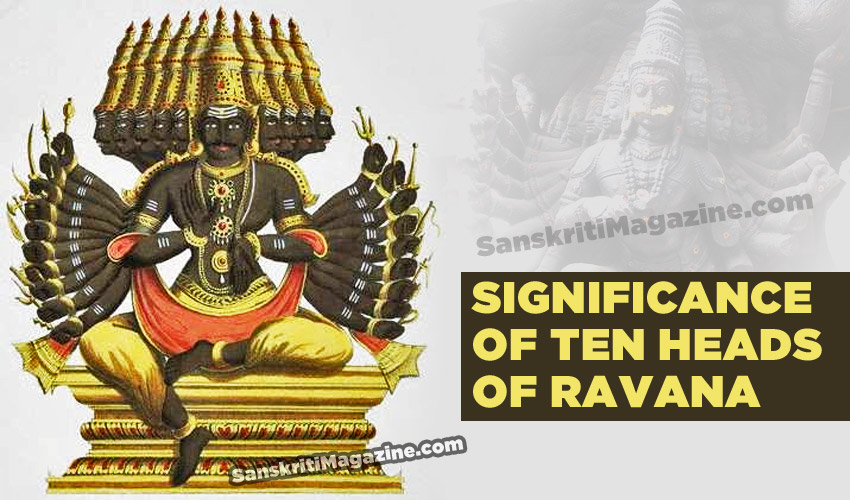
Ravana, one of the most powerful beings ever to roam the earth is also known as the supreme anti-hero in Ramayana. He was the king of Rakshasas and is depicted with 10 heads and 20 arms, giving him the name of “Dasamukha” (10 faced) or “Dasagriva” (10 headed). He was born to Sage Vishravan and Asura mother Kaikashi.
Ravana’s 10 heads symbolize the 6 Shastras and 4 Vedas, making him a great scholar and the most intelligent person of his time. He was a master of 64 types of knowledge and all arts of weaponry. A highly learned Brahmin, Ravana has to his credit over a dozen of texts of which Arkaprakasha, Kumaratantra, Indrajala, Prakrata Kamadhenu, Prakrata Lankeshvara, Ravana Samhita, Rigveda Bhashya, Ravanabheta, Krishna Yajur Veda etc. are some of the best known. He is known to have compiled Sama Veda with the relevant musical svaras (notes) and his Shiva Tandava Stotra is yet the most popular hymn ever sung in praise of Lord Shiva. His ten heads thus stood for this multiplicity of his genius.
Another negative interpretation of Ravana’s 10 heads are the 10 emotions or senses in a human:
- Kaam (lust)
- Krodha (anger)
- Moha (delusion)
- Lobha (greed)
- Mada (pride)
- Maatsarya (envy)
- Manas (the mind)
- Buddhi (intellect)
- Chitta (will), and
- Ahamkara (ego)
Hindu traditions emphasize on the importance of controlling one’s senses and projecting just the intellect alone, which is considered supreme over others. The use of other emotions are considered to be detrimental to the growth of a soul. The great king Mahabali advised Ravana to shun these nine emotions and to keep only intellect to which Ravana justifies that the possession of all these facets are equally important and make him a complete man.
The head controls our destiny and the ten 10 heads of Ravana controlled his actions which ultimately let to his destruction. The king of Lanka became a slave to his senses and since he could not control his desires, he not only destroyed himself and his clan but the whole Lanka was reduced to ashes as well. Having all this knowledge and not being unable to harness his powers was one of Ravana’s biggest regrets as he lay dying on his deathbed.