In Me the universe had its origin,
In Me alone the whole subsists;
In Me it is lost—Siva,
The Timeless, it is I Myself,
Sivoham! Sivoham! Sivoham!
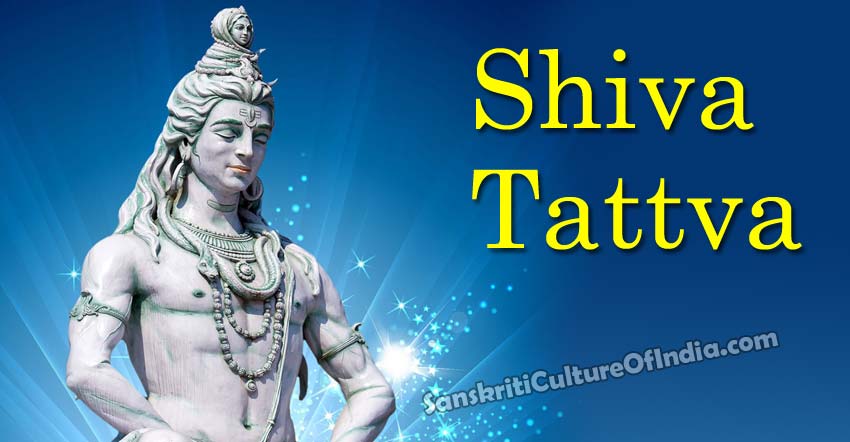
Salutations to Lord Siva, the vanquisher of Cupid, the bestower of eternal bliss and immortality, the protector of all beings, destroyer of sins, the Lord of the gods, who wears a tiger-skin, the best among objects of worship, through whose matted hair the Ganga flows.
Lord Siva is the pure, changeless, attributeless, all-pervading transcendental consciousness. He is the inactive (Nishkriya) Purusha. Prakriti is dancing on His breast and performing the creative, preservative and destructive processes.
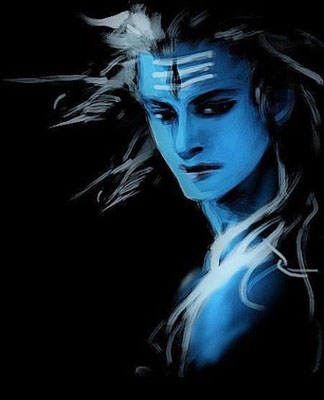 When there is neither light nor darkness, neither form nor energy, neither sound nor matter, when there is no manifestation of phenomenal existence, Siva alone exists in Himself. He is timeless, spaceless, birthless, deathless, decayless. He is beyond the pairs of opposites. He is the Impersonal Absolute Brahman. He is untouched by pleasure and pain, good and evil. He cannot be seen by the eyes but He can be realised within the heart through devotion and meditation.
Siva is also the Supreme personal God when He is identified with His power. He is then omnipotent, omniscient active God. He dances in supreme joy and creates, sustains and destroys with the rhythm of His dancing movements.
He destroys all bondage, limitation and sorrow of His devotees. He is the giver of Mukti or the final emancipation. He is the universal Self. He is the true Self of all creatures. He is the dweller in the cremation-ground, in the region of the dead, those who are dead to the world.
The Jivas and the world originate from Him, exist in Him, are sustained and rejected by Him and are ultimately merged in Him. He is the support, source and substratum of the whole world. He is an embodiment of Truth, Beauty, Goodness and Bliss. He is Satyam, Sivam, Subham, Sundaram, Kantam.
He is the God of gods, Deva-Deva. He is the Great Deity—Mahadeva. He is the God of manes (Prajapati). He is the most awe-inspiring and terrifying deity, Rudra, with Trisul or trident in His hand. He is the most easily pleased (Asutosha). He is accessible to all. Even the untouchable Chandalas and the illiterate rustics can approach Him. He is the source of all knowledge and wisdom. He is an ideal Yogi and Muni. He is the ideal head of an ideal family with Uma as His devoted wife, Lord Subrahmanya, the brave general of strength and courage, Lord Ganesa, the remover of all obstacles.
 Sadasiva
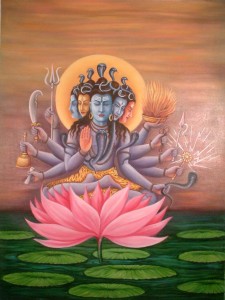
At the end of Pralaya, the Supreme Lord thinks of re-creation of the world. He is then known by the name Sadasiva. He is the root-cause of creation. From Sadasiva creation begins. In Manusmriti He is called Svayambhu. Sadasiva is unmanifested, He destroys the Tamas caused by Pralaya and shines as the self-resplendent light bringing forth the five great elements, etc., into being.
The Siva Purana says that Siva is beyond both Prakriti and Purusha. Siva is Mahesvara. He is the witness, well-wisher and nourisher of all beings. The Gita says: ‘Upadrashtanumanta cha bharta bhokta mahesvarah’.
Mahesvara conducts the work of creation according to His will and pleasure. The Sruti says,‘Mayam tu prakritim viddhi mayinam tu mahesvaram’.Know Prakriti to be Maya and Mahesvara to be the wielder of Maya or Prakriti. The Sakti of Siva works in two different ways. Mula Prakriti and Daivi Prakriti. Mula Prakriti is Apara Prakriti from which the five elements and other visible objects and the Antahkarana are evolved. Para Prakriti is Chaitanya Sakti which converts the Apara Prakriti and gives name and form to it. Apara Prakriti is Avidya and Para Prakriti is Vidya. The controller and dispenser of these two Prakritis is Lord Siva.
Siva is distinct from Brahma, Vishnu and Rudra.
Lord Siva is the Lord of innumerable crores of Brahmandas or worlds. Isvara united with Maya gives rise to Brahma, Vishnu and Rudra out of Rajas, Sattva and Tamo Gunas respectively, under the command of Lord Siva. Brahma, Vishnu and Rudra are the trinities of the world.
There is no difference among the trinities, Brahma, Vishnu and Rudra. By the command of Mahesvara these three do the creative, preservative and destructive duties of the world. The work of all the three deities is done conjointly. They all have one view and one definite purpose in creating, preserving and destroying the visible universe of names and forms. He who regards the three deities as distinct and different, Siva Purana says, is undoubtedly a devil or evil spirit.
The Lord who is beyond the three Gunas, Mahesvara, has four aspects: Brahma, Kala, Rudra and Vishnu. Siva is the support for all the four. He is the substratum for Sakti also. Siva is distinct from the Rudra included in the trinities. Rudra is really one though according to the different functions He is considered to have eleven different forms. The first face of Siva does Krida or play, the second does penance, the third destroys or dissolves the world, the fourth protects the people and the fifth, being knowledge, fully covers the entire universe by its power. He is Isana the creator and romoter of all beings, from within.
The first form of Siva is the enjoyer of Prakriti as Kshetrajna Purusha. The second is Tatpurusha resting in Sattva-guna, rooted in Bhogya-Prakriti, the Prakriti-enjoyed. The third is Ghora rooted in the eightfold Buddhi like Dharma, etc. The fourth is Vamadeva rooted in Ahankara and the fifth is Sadyojata, the presiding deity of the mind. The eight forms of Siva are Sarva, Bhava, Rudra, Ugra, Bhima, Pasupati, Isana and Mahadeva, rooted respectively in earth, water, fire, air, ether, Kshetrajna, sun and moon.
Ardhanarisvara
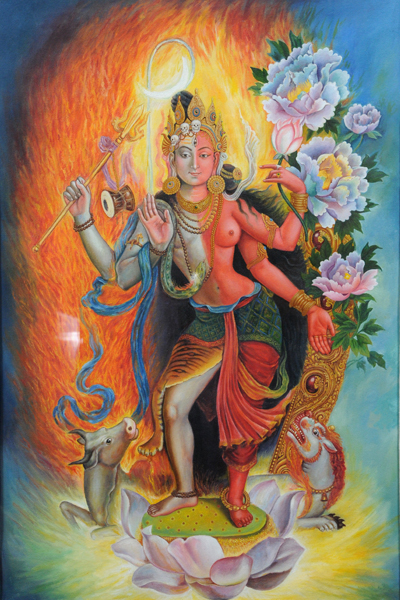 Brahma was unable to create and bring forth creatures from his mental creation. To know the method of creation he did Tapas. As a result of his Tapas Adyasakti arose in Brahma’s mind. Through the help of Adyasakti Brahma meditated upon Tryambakesvara. Pleased by the penance of Brahma, Lord Siva appeared in the form of Ardhanarisvara (half male and half female). Brahma praised Ardhanarisvara. Lord Siva then created from His body a Goddess by name Prama-Sakti. Brahma said to the Goddess: “I was not able to bring forth creatures by my mental creation. Though I created the Devatas yet they could not multiply. Therefore, I wish to bring forth creatures by intercourse. Before Your appearance or till now, I was not able to create the endless female species. Therefore, O Devi, be merciful and take birth as the daughter of my son, Daksha.”
World-Teacher
The most auspicious and useful work beneficial to mankind ever carried out by Lord Siva, is to impart the knowledge of Yoga, Bhakti, Jnana, etc., to the world. He blesses those deserve His grace and who cannot get out of Samsara without His grace. He is not only the World-Teacher but also an ideal example to the Jivanmukta or sage. He teaches by His very actions in His daily life.
Pasupata Yoga
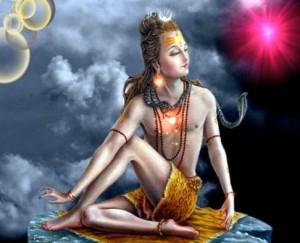 Uniting the self with the true Siva Tattva by the control of the senses is real wearing of Bhasma, because Lord Siva through His third eye of wisdom burnt passion to ashes. The meditation of Pranava should be done through Japa. One should attain the real Jnana, Yoga and Bhakti by steady practice. In the heart, there is a ten-petalled lotus. It has ten Nadis. It is the Jivatma’s abode. This Jivatma lives in a subtle form in the mind and it is Chitta or Purusha itself. One should ascend to the moon by cutting open or transcending the Dasagni Nadi by the regular practice of Yoga as
instructed by the Guru and practising dispassion, righteousness and equality. The moon then gradually attains fullness, as it gets itself pleased with the Sadhaka on account of his regular application in Yoga and purification of Nadis. In this state, the Sadhaka overcomes waking and sleeping state and through meditation merges himself in the object meditated upon in this waking state itself.
~ Swami Sivananda