IndianSanskriti
Sanskrit Mantras to be included in BBC's "Songs of Praise"

Sanskrit Mantras to be included in BBC’s “Songs of Praise”

[hr]

Hindus are asking that hymns from ancient Sanskrit scriptures and contemporary bhajans should regularly form part of BBC One’s over 52 years old “Songs of Praise” program.

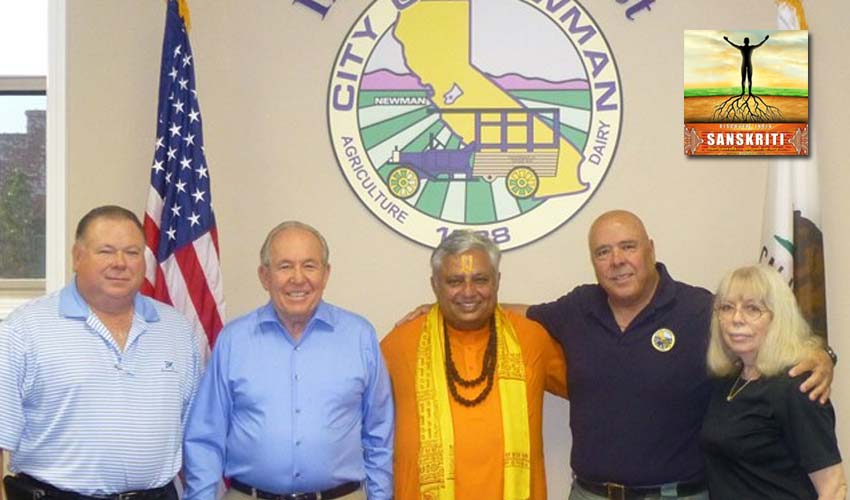
Distinguished Hindu statesman Rajan Zed, in a statement in Nevada (USA), said that British Broadcasting Corporation (BBC), being “a public service broadcaster funded by the licence fee paid by UK households”, including the Hindu households, should have been more responsible and inclusive in “Songs of Praise”.

It was the time for “Songs of Praise” to become multi-faith as United Kingdom (UK) was a diverse society formed of various religions and denominations and non-believers. Moreover, God liked all songs-of-praise, irrespective of the religion these came from, Zed, who is President of Universal Society of Hinduism, stressed.

Rajan Zed requested the intervention in this multi-faith issue of The Archbishop of Canterbury Justin Welby, whose “priorities” included “people, communities and nations learning to live together with deeply-held differences – in a spirit of love and respect”.

Zed argued that like chapels, churches and cathedrals; “Songs of Praise” programming should also sometimes include Hindu temples and ashrams spread worldwide and broadcast Hindu sermons and prayers. Hindu hymns, songs and faith stories were also highly inspiring, warm and engaging, Zed added.

Rajan Zed pointed out that BBC; whose  “values” included “celebrate our diversity” and “great things happen when we work together” and whose  “purpose” included “reflect the many communities that exist in the UK”; should show some maturity on this issue.

Zed urged BBC Trust Acting Chairman Diane Coyle to thoroughly investigate this matter as the Trust stated that they had challenged the BBC to “do more to serve all audiences” and “Our job is to get the best out of the BBC for licence fee payers”.

One of the world’s longest-running religious television series, “BBC One – Songs of Praise” defines itself as “Inspiring hymns and songs, together with stories of faith from around the UK and beyond.” Its home page today talked about St Andrews Church, Gospel Choir of the Year 2014, Galleries including picture of “School Choir of the Year 2013″, etc. Wikipedia describes it as most-watched British religious television program “based around Christian hymns”.

Launched in October 1922, headquartered in London, and established by a Royal Charter; BBC claims to be the world’s leading public service broadcaster. Tony Hall is BBC Director-General, while Charlotte Moore is BBC One controller. Every UK viewer needs to have a TV License, which costs around $245.

Hinduism, oldest and third largest religion in the world, has about one billion adherents and moksh (liberation) is its ultimate goal.

~ BBC
You may also like

Search the website

Like us on Facebook

Get daily updates via Email

Enter your email address:

Recent Posts

Jamai Shashthi 2026 — The Story of Maa Shashthi, the Cat, and the Wife Who Was Forgiven

Jamai Shashthi 2026 — The Story of Maa Shashthi, the Cat, and the Wife Who Was Forgiven

On Saturday, June 20, 2026, Bengali households across Bharata will welcome their married daughters and sons-in-law home for the legendary jamai-aador feast and perform the Shashthi Vrata. But behind the warmth lies a story most Bengalis know by heart and most non-Bengalis have never heard — the wife who stole the hilsa, blamed the cat, lost six sons to Maa Shashthi’s wrath, and was finally forgiven. The Vrat Katha, the vidhi, the mantras, and the deeper teaching.

Vat Purnima 2026 — The Wife Who Argued Yama Into Returning Her Husband’s Life

On Monday, June 29, 2026, women across Maharashtra, Gujarat, and southern Bharata will tie red thread around banyan trees and hear the story of Savitri — the wife who walked behind Yamaraja Himself when He came for her husband, and out-argued the Lord of Dharma into returning Satyavan’s life. The Mahabharata’s Pativrata Mahatmya Parva, the vrat vidhi, and why the banyan witnessed everything.

Purushottam Maas — The Month No Deity Would Claim, and the Lord Who Made It Supreme

Every month of the Hindu calendar has a lord — except the rare thirteenth, the Adhika Maas, born an orphan and shunned as the “impure month.” The Puranas tell how this rejected month went in grief to Bhagavan Vishnu, who claimed it, gave it His own name — Purushottam — and made it the most fruitful month of all. The origin story, the teaching, and what it means for Purushottam Maas 2026 (May 17 – June 14).

Padmini Ekadashi 2026 — The Ekadashi Even the Devas Descend to Keep

Padmini Ekadashi 2026 — The Ekadashi Even the Devas Descend to Keep

The rarest Ekadashi of the entire Hindu calendar is three days away. The Padma Purana preserves a conversation between Bhagavan Krishna and Yudhishthira about a single Ekadashi the great Rishis spend lifetimes waiting for — Padmini. The Vrat Katha of Queen Padmini of Mahishmati, the lotus teaching, and why May 27, 2026 is the morning Vaishnavas across Bharata are preparing for.

Varada Chaturthi 2026 — The Rare Ganesha Day of Purushottam Maas

Varada Chaturthi 2026 — The Rare Ganesha Day of Purushottam Maas

Once every 2.5–3 years — when the rare 13th month of Adhika Maas opens — a thirteenth Vinayaka Chaturthi appears. The Mudgala Purana calls it Varada Chaturthi, the “boon-giving” Chaturthi, and holds it as the most fruit-bearing Ganesha day of the entire calendar. Today, Wednesday May 20, 2026, is that day.

css.php