IndianSanskriti

Significance of Muhurats in Hinduism

Many people consult a Brahmin priest before starting anything new. It may be the laying of the foundation of a new house or shifting to a new house, starting of new work, a marriage in the family, a journey to a distant place or something similar. Some call it superstition. Others emphasize that in nature there are days and times when one is likely to succeed better.

In the Brahmvarchas Panchang it is said:

 सदुद्देष्यक्र्ते कार्ये विवाहे जातकर्मणि | विघ्नाषुभमुहुर्तान: प्रभावो नोपजायते ||

Nothing inauspicious can affect a noble deed done with a noble objective.

How true! Whatever is good and noble will always succeed. Delaying it to search for an auspicious time would be wrong. One who is capable and confident will always succeed. If there are obstacles sometimes, they may be due to natural reasons and should be accepted as part of life. They should not be allowed to damage one’s self-confidence.

In the Brahmvarchas Panchang it is also said:

य्दानस्त: गतो भानुगोधूल्या पूरित: नभः | सर्वमन्गलकार्येषु गोधुलि: शस्यते सदा ||

The time when the sun is setting and the cows are returning home is auspicious for all good deeds.

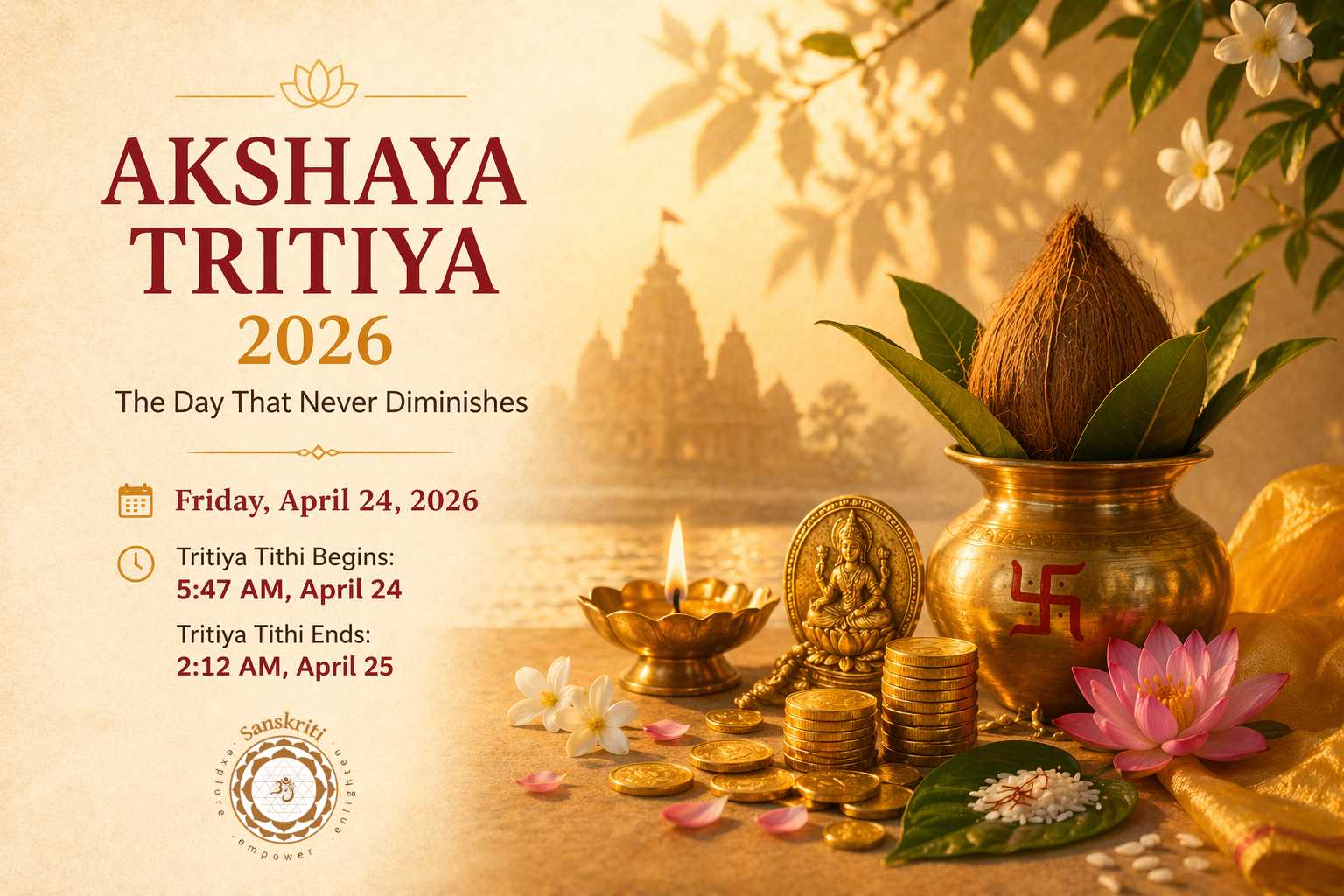
It is also explained that Akshay Tritiya (the third day of the moonlit half of Baisakh), Akshay Naumi (the ninth day of the moonlit half of Kartik), Basant Panchmi (the fifth day of the moonlit half of Magh), Ganga Dashera (the tenth day of the moonlit half of Jaisth), Vijay Dasmi (the tenth day of the moonlit half of Ashwini), Mahashivratri (the fourteenth day of the dark fortnight of Phagun), Ramnaumi (the ninth day of the moonlit fortnight of Chaitra), and all the full moon days are auspicious for marriages and other new activities.

It is also believed that all activities conducted after religious rites or those conducted in places of pilgrimage need no special day or time. The purpose of the activity and circumstances are important. Success follows automatically.

Your questions answered…

What are the marks of persons born with demonic qualities?

Persons born with demonic qualities are given in to anger, greed, hypocrisy, pride and arrogance. Such persons do not understand when to act, and when not to. They do not believe in God, or His having created this universe. Such people have insatiable desires and through ignorance cherish false doctrines. They are devoted to the enjoyment of sensuous pleasures. To them that is the highest limit of joy. Given to lust and anger, they amass wealth by all kinds of means. They believe that they have supernatural powers and are mighty, and none could be like them. Even when they pray and give charity, it is only with ulterior motives.

~ Prem P. Bhalla

You may also like

Search the website

Like us on Facebook

Get daily updates via Email

Enter your email address:

Recent Posts

Jamai Shashthi 2026 — The Story of Maa Shashthi, the Cat, and the Wife Who Was Forgiven

Jamai Shashthi 2026 — The Story of Maa Shashthi, the Cat, and the Wife Who Was Forgiven

On Saturday, June 20, 2026, Bengali households across Bharata will welcome their married daughters and sons-in-law home for the legendary jamai-aador feast and perform the Shashthi Vrata. But behind the warmth lies a story most Bengalis know by heart and most non-Bengalis have never heard — the wife who stole the hilsa, blamed the cat, lost six sons to Maa Shashthi’s wrath, and was finally forgiven. The Vrat Katha, the vidhi, the mantras, and the deeper teaching.

Vat Purnima 2026 — The Wife Who Argued Yama Into Returning Her Husband’s Life

On Monday, June 29, 2026, women across Maharashtra, Gujarat, and southern Bharata will tie red thread around banyan trees and hear the story of Savitri — the wife who walked behind Yamaraja Himself when He came for her husband, and out-argued the Lord of Dharma into returning Satyavan’s life. The Mahabharata’s Pativrata Mahatmya Parva, the vrat vidhi, and why the banyan witnessed everything.

Purushottam Maas — The Month No Deity Would Claim, and the Lord Who Made It Supreme

Every month of the Hindu calendar has a lord — except the rare thirteenth, the Adhika Maas, born an orphan and shunned as the “impure month.” The Puranas tell how this rejected month went in grief to Bhagavan Vishnu, who claimed it, gave it His own name — Purushottam — and made it the most fruitful month of all. The origin story, the teaching, and what it means for Purushottam Maas 2026 (May 17 – June 14).

Padmini Ekadashi 2026 — The Ekadashi Even the Devas Descend to Keep

Padmini Ekadashi 2026 — The Ekadashi Even the Devas Descend to Keep

The rarest Ekadashi of the entire Hindu calendar is three days away. The Padma Purana preserves a conversation between Bhagavan Krishna and Yudhishthira about a single Ekadashi the great Rishis spend lifetimes waiting for — Padmini. The Vrat Katha of Queen Padmini of Mahishmati, the lotus teaching, and why May 27, 2026 is the morning Vaishnavas across Bharata are preparing for.

Varada Chaturthi 2026 — The Rare Ganesha Day of Purushottam Maas

Varada Chaturthi 2026 — The Rare Ganesha Day of Purushottam Maas

Once every 2.5–3 years — when the rare 13th month of Adhika Maas opens — a thirteenth Vinayaka Chaturthi appears. The Mudgala Purana calls it Varada Chaturthi, the “boon-giving” Chaturthi, and holds it as the most fruit-bearing Ganesha day of the entire calendar. Today, Wednesday May 20, 2026, is that day.

css.php