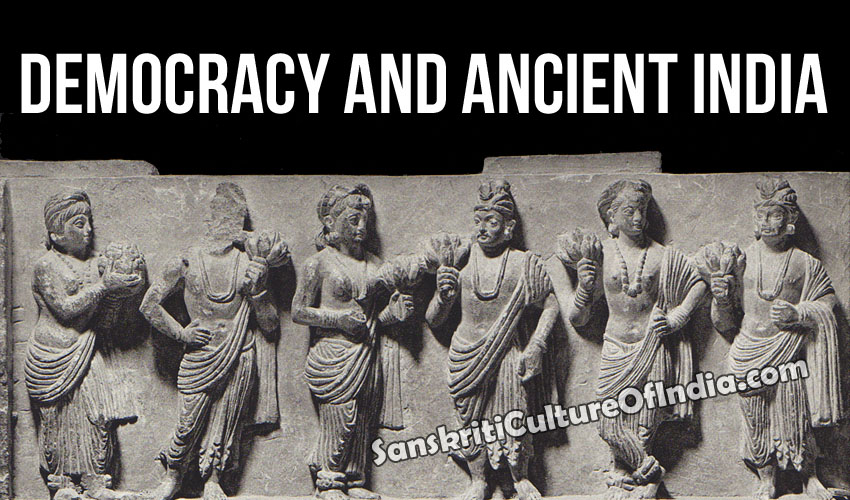
India is the largest democracy in the world and continues to grow despite the predictions of the demons of gloom and doom. It is an ancient land of mind-boggling cultural diversity and plurality; an “eternal India juxtaposed against the India of today” as indicated by High Commissioner Malay Mishra in his recent lecture at UTT. Some commentators are prone to proclaiming that democracy in India is a British inheritance despite glaring evidence to the contrary. The Westminster style of democracy is, without doubt, a British inheritance but the principle of democracy existed as a core value in ancient India.
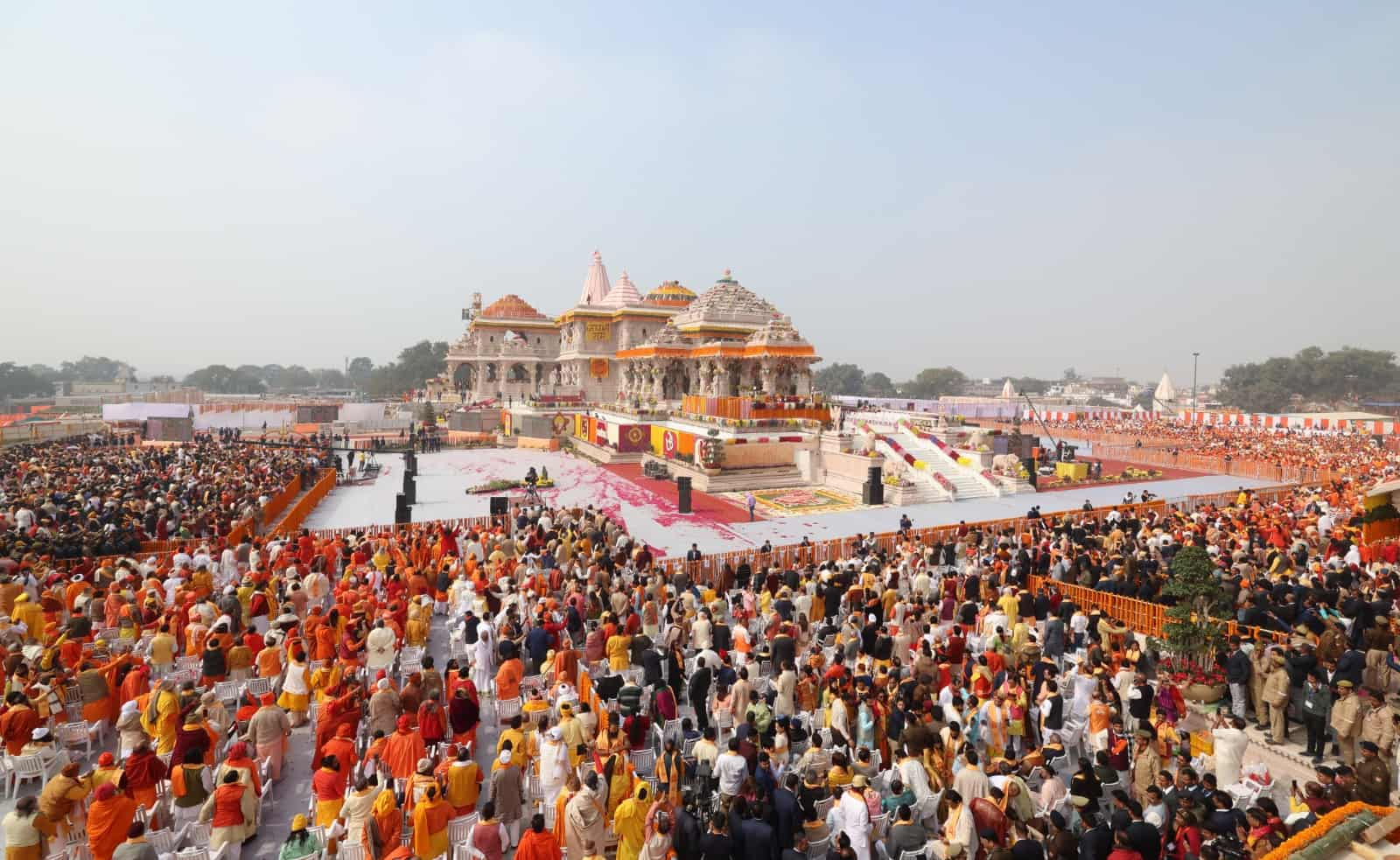
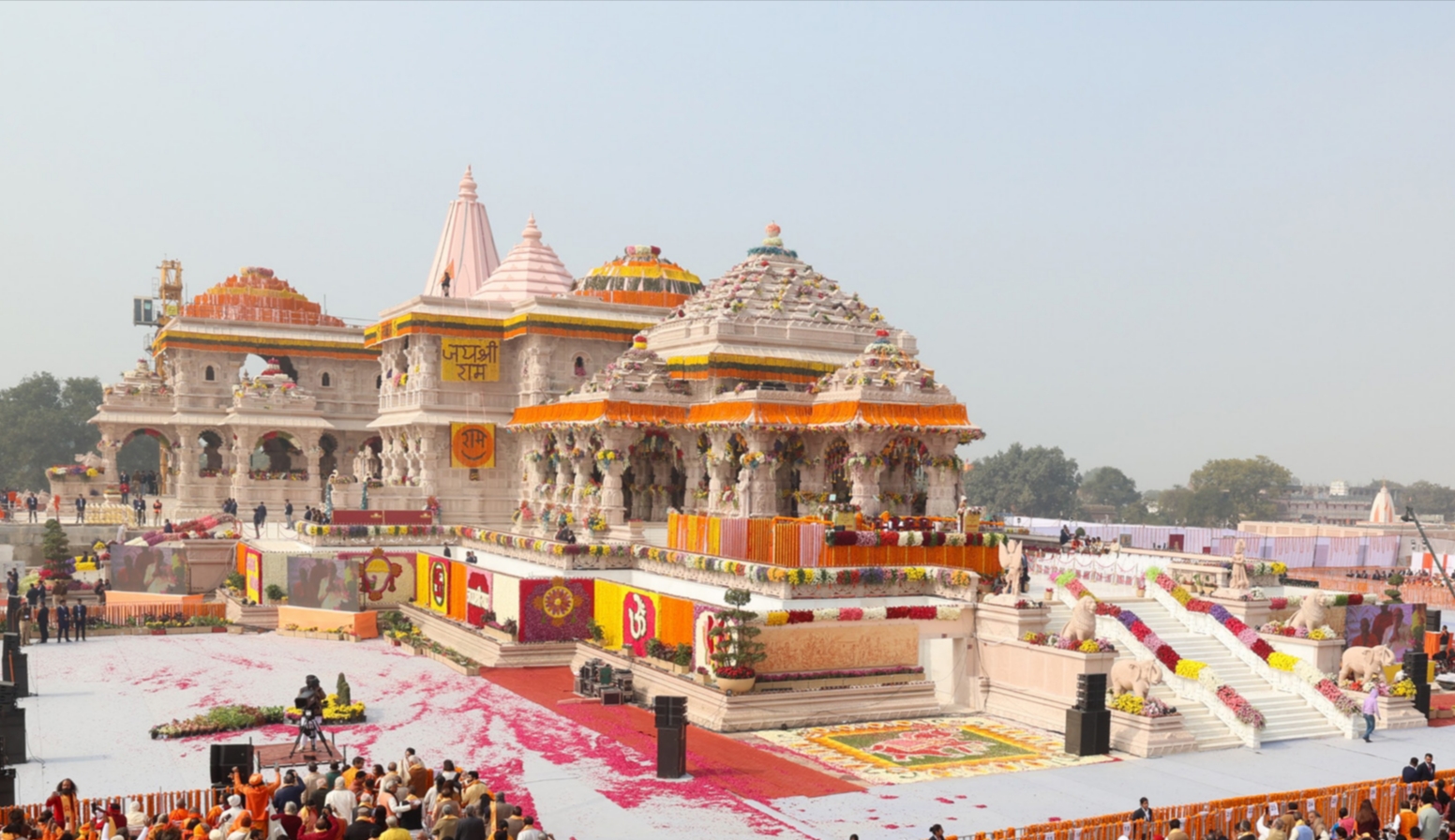
A much touted feature of modern democracy is the meeting of citizens by leaders, existing and prospective, to discuss and to receive feedback on issues that impact on community and national life; be they town meeting or consultations. They were also a feature of ancient India. A clear example of this is described in the holy Ramayan of the poet/saint Tulsidas when Lord Ram assembled the citizens to engage in dialogue. He indicated very clearly that they, the citizens, were free to disagree with him but he would very much appreciate their reasons for so doing so as to enable him to fully understand and appreciate their point of view.
Here is a king of what was probably the most powerful and prosperous kingdom of the ancient world listening to the views of his citizens, even if they disagreed with him. This represents the highest ideals of democracy as freedom of speech, which includes the right to criticise official policy, is the most fundamental democratic right, without which there can be no democracy. This right to a dissenting view, not tolerated at all in monotheistic traditions, has been and continues to be a core feature of Hinduism which embraces spiritual democracy.
It could come as no surprise then that Hindus feel very comfortable with democracy. This is evidenced by adherence to the ideals of democracy by Hindu communities wherever and in whichever countries they are domiciled, be they in the majority or minority. There is no founder of or starting date of Hinduism and hence it is named the Eternal Religion (Sanatan Dharma). The Rig Veda, the world’s oldest religious text, which is at least four to five thousand years old, is accepted as the authoritative source by Hindus.
In light of this, attempts to separate or alienate the Vedas and Vedic traditions from Hinduism are incomprehensible and have no basis whatsoever. To say that there was no Shiva in Vedic times but Rudra, the representation of whom is not found in subsequent Hindu texts, is to display an incredible ignorance of the evolution of Hinduism, the prime mover of which is the right sacrosanct in Hinduism, the right to dissent. This led to the continuing evolution of the concept of the Supreme Being.
This would appear blasphemous to those who adhere to the monotheistic traditions who hold fixed inflexible positions. But the reality that mankind’s knowledge and understanding is ever increasing makes such a position “blasphemous” to those who believe in the right to dissenting views and acknowledge that we must update our views in light of new and irrefutable evidence and that the world is not static.
Interestingly, the Dalai Lama has indicted that Buddhism should be prepared to accept new evidence even if it contradicts existing beliefs/practices. This is consistent with the position taken in Hinduism that our present knowledge is incomplete. This is vividly illustrated by the cautionary statement in the Vedas to the effect that what is contained in them is not all that there is to know.
Ancient India, the fountain of the core democratic ideal of the right to dissent, provided the basis and foundation for the democratic India of today. The very idea of a Mother India, the axis upon which the independence movement sat, has its origins in Hinduism. Hindus, since time immemorial, have propagated and practised religious tolerance, even when they were subjected to the onslaught of intolerant invaders.
It is both ironic and tragic that modern India, in seeking its place in the modern world, seems intent on denying and demeaning the very core values that made it what it is. It is the sincere plea emanating from the depths of the heart of this grandson of India that my glorious heritage be given its just due.
THOUGHTS
- Right to dissent is a core value of democracy.
- The right to dissent is central to Hinduism.
- Modern India must cease and desist from denying its Hindu roots.
~ Prakash Persad