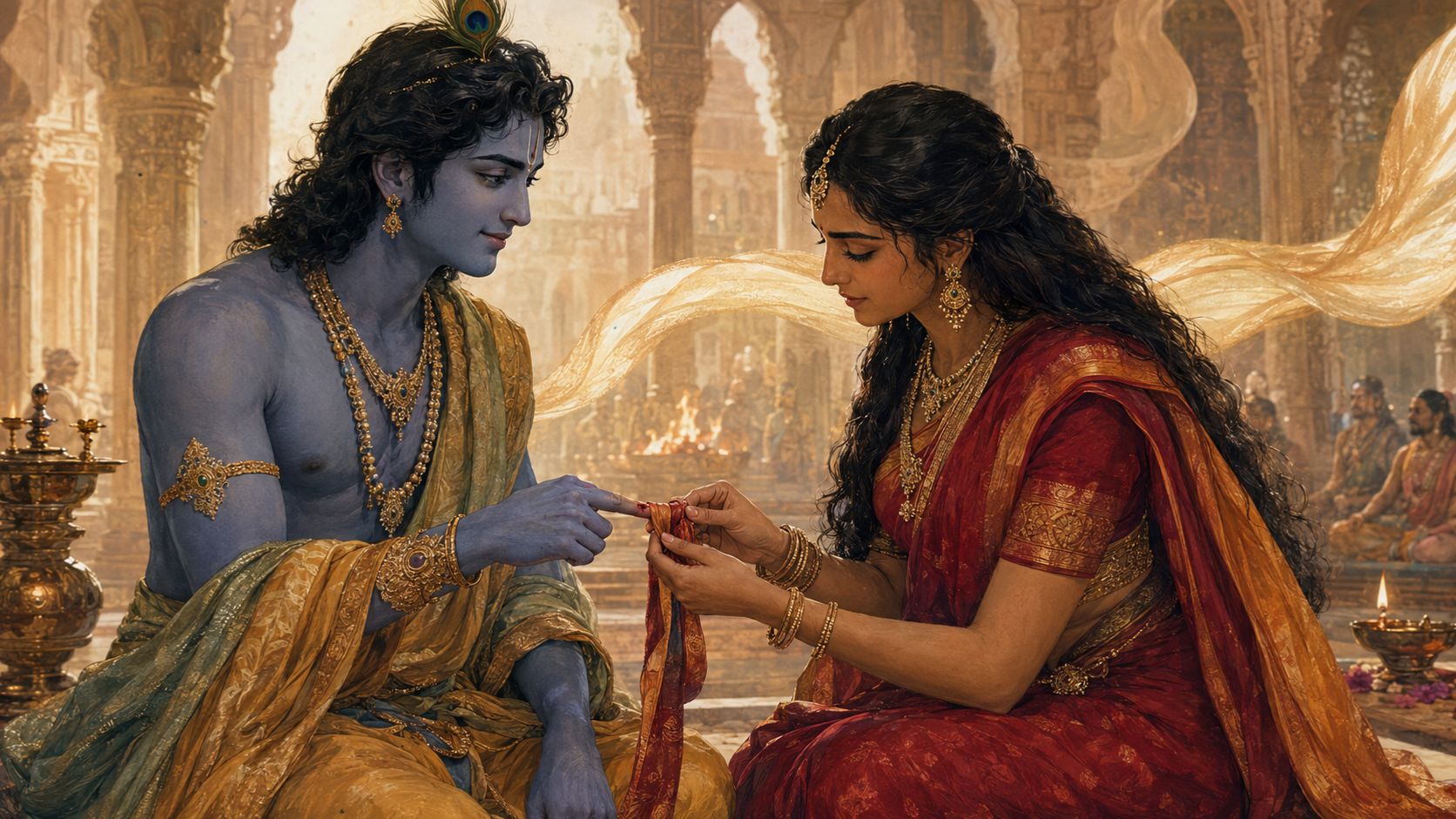
In India, colours play a very important role in religion and cultures, showing a very deep significance that transcends purely decorative values. Artists use color on the deities and their dresses signifying their qualities. Proper use of colors creates an environment, which should keep a person cheerful. Some of the main colors used in religious ceremonies are red, yellow (turmeric), green from leaves, white from wheat flour. etc. The main color that most Eastern religions and cultures use is Saffron.
Hinduism:
If there is any colour that symbolizes all aspects of Hinduism, it is Saffron – the colour of Agni or fire. Fire burns away the darkness and brings light and it is symbolic of knowledge burning ignorance. Fire also shows the spirit of Yagna (Ritual of the sacred fire) which is important to Self knowledge. As such, the fire altar is regarded as a distinct symbol of ancient Vedic rites.
A colour of purity, it represents religious abstinence, purging and resultant purity. It is the colour of saints and ascetics, those who have renounced the world. Wearing saffron colour symbolizes the quest for Knowledge of Godhead.
In symbolism, Saffron comprises of the colours of Sun, Mars and Jupiter that relates to:
Driving the Desire (Mars) for Truth or Moksha, liberation (Sun) with the help of knowledge and one who dispels it (Jupiter).
When sages moved from one ashram to another, it was customary to carry fire along. The inconvenience to carry a burning substance over long distances may have given rise to the symbol of a saffron flag. Triangular and often forked saffron flags are seen fluttering atop most Sikh and Hindu temples.
It is the color of holy men and ascetics who have renounced the world. Wearing the color symbolizes the quest for light. It is the battle color of the Rajputs, the warrior caste.
Buddhism:
In Buddhism, Saffron is the color of illumination, the highest state of perfection. The saffron colors of robes to be worn by monks were defined by the Buddha himself and his followers in the 5th century B.C. The robe and its color is a sign of renunciation of the outside world and commitment to the order. The candidate monk, with his master, first appears before the monks of the monastery in his own clothes, with his new robe under his arm and asks to enter the order. He then takes his vows, puts on the robes, and with his begging bowl, goes out to the world. Thereafter, he spends his mornings begging and his afternoons in contemplation and study, either in a forest, garden, or in the monastery.
Sikhism:
In Sikhism, orange or saffron appears in the form of Nishan Sahibs (the Sikh flag), the cholas (warrior attire) worn by Panj Pyaray and Sikh turbans. This is the colour of deep joy and bliss. It absorbs shocks, nasty experiences and trauma. It’s about letting go of what holds us back or what is not helpful. Orange is the colour of connection, a sense of community, belonging and social aspects of being.
Saffron is also one of the three colours in the Indian flag, signifying courage and selflessness. India has a history of brave and loyal freedom fighters. Saffron indicates the strength of this nation and its will to give away all for the benefit of its people.