National anthem is the idea of a unified nation that we all are a part of, irrespective of our religion.
It started off as a normal day in school for me. Academic and general discussions with the colleagues before the bell rings for assembly, smiling and greeting the students back, which wouldn’t stop until the prayer starts. Making the students stand in queues and feeling a sense of solace in this togetherness, watching them as one entity, a little unified world amidst the chaos outside. Till one girl, someone I am particularly fond of, did something unusual. I observed that she was not participating in the morning assembly.
While the other students were singing “Itni Shakti Humein Dena Daata”, she neither joined her hands and sang the prayer, nor stood in attention position for the national anthem later. At first I considered it as a case of general indiscipline until after the assembly, I, along with two other teachers called her to know what made her do so.
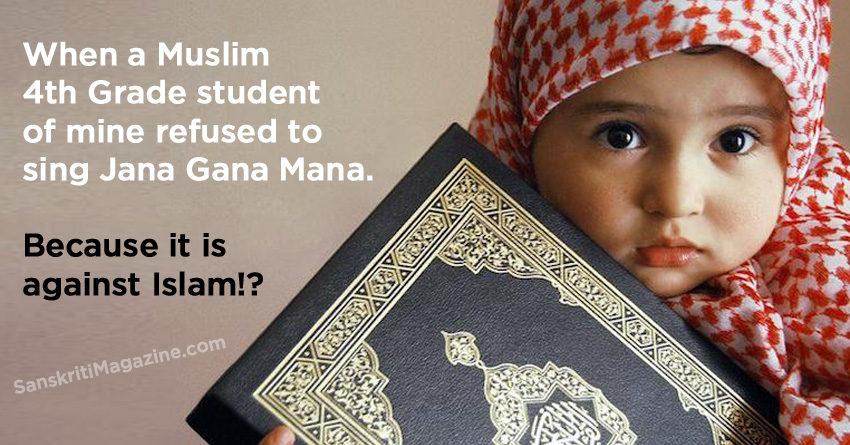
Upon being questioned, the Class 4 girl replied: “I will not join my hands, nor will I do anything else. It is against Islam. My father has asked me not to do it.” It came as a shock at first to the three of us as such an incident had never happened before.
Elsewhere and on Twitter there was a raging debate on a Muslim couple in Mumbai being heckled for not standing up during the national anthem and here, I was facing a crisis in my classroom. The teachers tried to explain to her that the school prayer is not for any particular religion or god but it pays respect to every religion. They are a part of the school curriculum so that in a secular state like India, the students grow up to become citizens who would respect all religions equally while maintaining their own faith. “It is okay if you do not want to join hands for the prayer but you should stand still when the national anthem is being sung. It is a mark of respect for the nation.”
The next day the girl was observed keeping her hands together loosely in the front during the entire morning assembly, from prayer to the national anthem. She did not close her eyes even for the five minutes of silent meditation done post the anthem, aimed at increasing the concentration of the students.
There is an ongoing debate about the fundamental question: Why is it important to honour the anthem? Not standing for the anthem is not punishable by law. But think this way, today one kid has refused to participate in the morning assembly, tomorrow there will be ten, and day after a 100. As a teacher, my concern is the school decorum which might be jeopardised.
Morning assemblies aim at bringing the students of all religions and castes together. National anthem, in my opinion, is the abstract, the idea of a unified nation that we all are a part of, irrespective of our religion, region or caste. Those 52 seconds when I stand still and sing the national anthem are the most peaceful moments of my day.