
IndianSanskriti
Amazing Indians: Aryabhatta

Amazing Indians: Aryabhatta

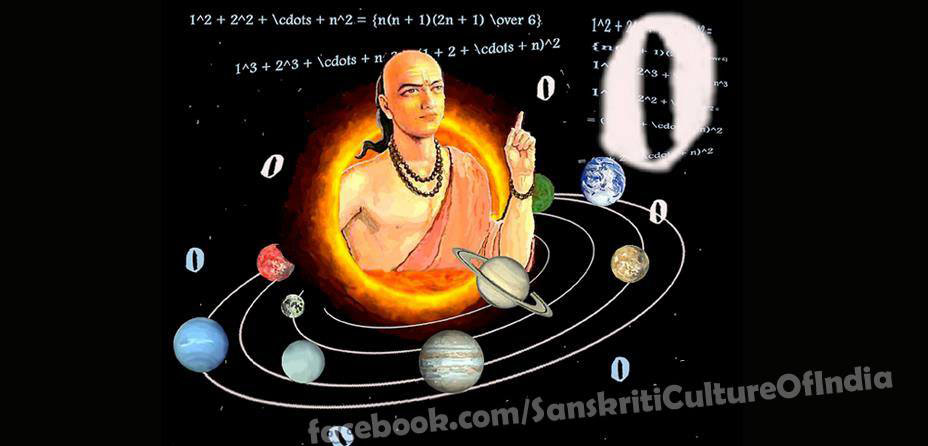
Aryabhatta was the first great astronomer of classical age of India. Born in 476AD, his place of birth has been disputed between Kerala in South India and Patliputra, that has been identified with modern Patna in Bihar.

He studied at the famous Nalanda University that accommodated over 10,000 students and 2,000 teachers. One of his major works, Aryabhatta-siddhanta, also famously known as Aryabhatiya was written in 499 AD which covered astronomical and mathematical theories.

He flourished in Kusumapura near Patalipurta (Patna), then the capital of the Gupta dynasty.

Aryabhatasiddhanta circulated mainly in the northwest of India and, through the Sāsānian dynasty (224–651) of Iran, had a profound influence on the development of Islamic astronomy.

Following are some of his achievements:

  • Contributed to the discovery of “0”
  • Earth’s spin on its axis
  • Periods of the planets with respect to the Sun, including their elliptical orbits
  • Cause of Solar and Lunar eclipses
  • Valued the length of the year at 365 days, 6 hours, 12 minutes and 30 seconds

Gave approximation for Pi:

  • Add 4 to 100, multiply by 8
  • add 62,000 then divide by 20,000
  • giving a result of 3.1416
  • Covers arithmetic, algebra, plane trigonometry and spherical trigonometry, fractions etc.
  • First astronomer to make an attempt at measuring the Earth’s circumference, accurately calculating it as 24,835 miles (current value is 24,902 miles)

This remarkable man was a genius and continues to baffle many mathematicians of today. His work was translated into Latin and later adopted by the Greeks and then the Arabs.

The Indian government named its first satellite Aryabhata (launched 1975) in his honour.

Bhaskara I who wrote a commentary on the Aryabhatiya about 100 years later wrote of Aryabhatta:-

“Aryabhatta is the master who, after reaching the furthest shores and plumbing the inmost depths of the sea of ultimate knowledge of mathematics, kinematics and spherics, handed over the three sciences to the learned world.”
You may also like

Search the website

Like us on Facebook

Get daily updates via Email

Enter your email address:

Recent Posts

Padmini Ekadashi 2026 — The Ekadashi Even the Devas Descend to Keep

Padmini Ekadashi 2026 — The Ekadashi Even the Devas Descend to Keep

The rarest Ekadashi of the entire Hindu calendar is three days away. The Padma Purana preserves a conversation between Bhagavan Krishna and Yudhishthira about a single Ekadashi the great Rishis spend lifetimes waiting for — Padmini. The Vrat Katha of Queen Padmini of Mahishmati, the lotus teaching, and why May 27, 2026 is the morning Vaishnavas across Bharata are preparing for.

Varada Chaturthi 2026 — The Rare Ganesha Day of Purushottam Maas

Varada Chaturthi 2026 — The Rare Ganesha Day of Purushottam Maas

Once every 2.5–3 years — when the rare 13th month of Adhika Maas opens — a thirteenth Vinayaka Chaturthi appears. The Mudgala Purana calls it Varada Chaturthi, the “boon-giving” Chaturthi, and holds it as the most fruit-bearing Ganesha day of the entire calendar. Today, Wednesday May 20, 2026, is that day.

Padmini Ekadashi 2026 — The Rare Ekadashi That Comes Only in Purushottam Maas

Padmini Ekadashi 2026 — The Rare Ekadashi That Comes Only in Purushottam Maas

Padmini Ekadashi 2026 falls on Wednesday, May 27 — the Shukla Paksha Ekadashi of Adhika Maas, the rarest Ekadashi in the entire Hindu calendar (it appears only every 2.5–3 years). The Padma Purana conversation between Bhagavan Krishna and Yudhishthira, the Vrat Katha of Queen Padmini, complete vrat vidhi with jagrana, mantras, and the lotus symbolism that gives the Ekadashi its name.

Ganga Dussehra 2026 — The Day Maa Ganga Came Down to Bhagiratha

Ganga Dussehra falls on Monday, May 25, 2026 — commemorating the day Maa Ganga descended from Vaikuntha to the earth through the millennia-long tapasya of King Bhagiratha. The full account from the Valmiki Ramayana, snan vidhi, dana traditions, mantras, and the teaching of sustained sincerity.

Adhik Jyeshtha Maas 2026 — The Hidden Month That Belongs to Lord Vishnu

Once every 2.5–3 years, the Hindu calendar opens a quiet thirteenth chamber — the intercalary month Lord Vishnu took for His own. A Puranic look at Adhik Jyeshtha Maas 2026 (May 2–31), the Padma Purana account of how it became Purushottam Maas, and a complete householder’s guide for its closing days.

css.php





