IndianSanskriti

Kangra Fort: The Oldest Fort in India

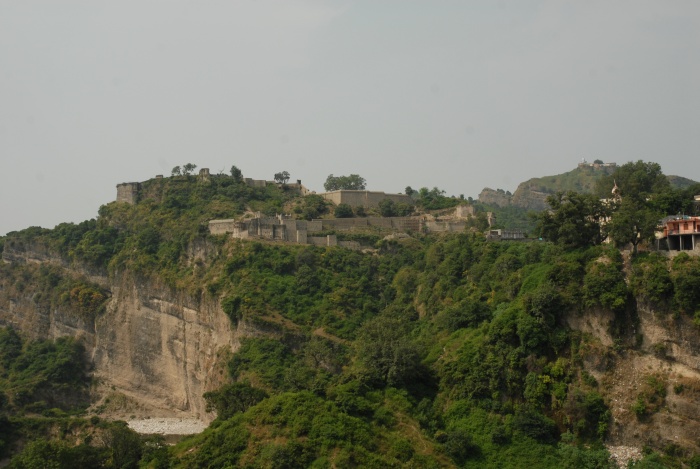
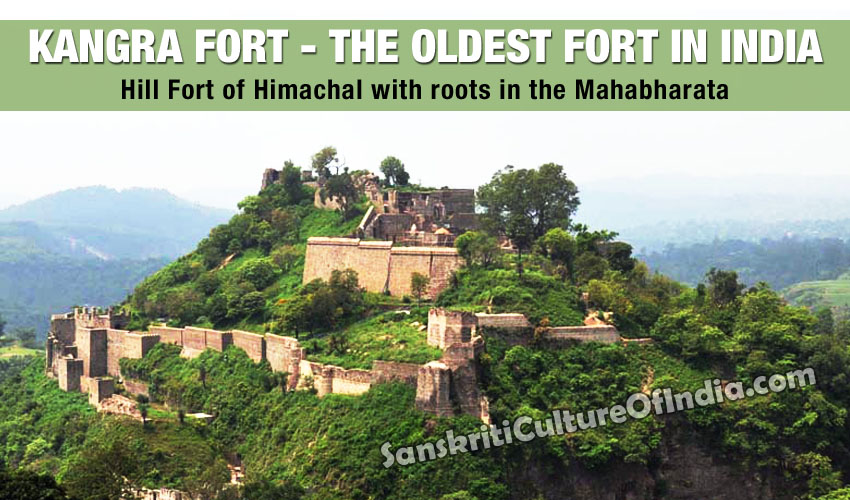
The Kangra Fort is located 20 kilometers from the town of Dharamsala on the outskirts of the town of Kangra, India. The fort was first mentioned in Alexander’s war records, referring to the 4th century BC.

History:
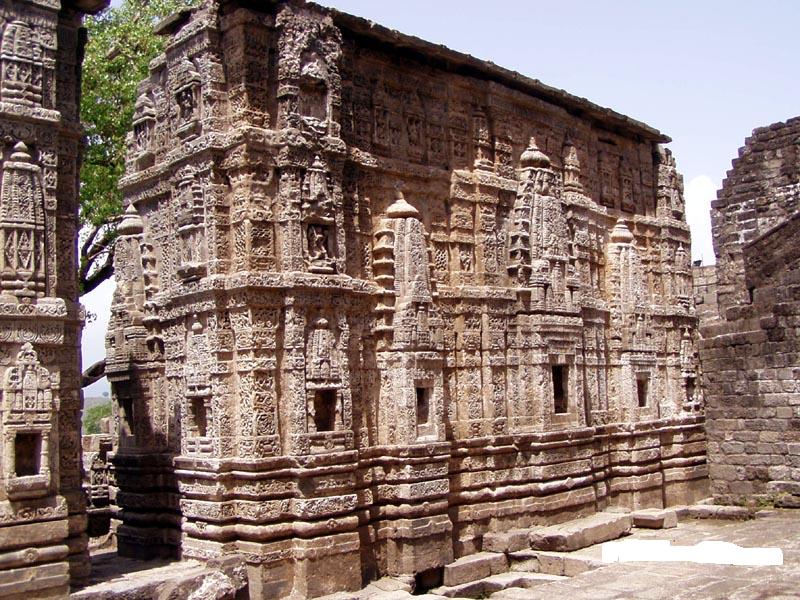
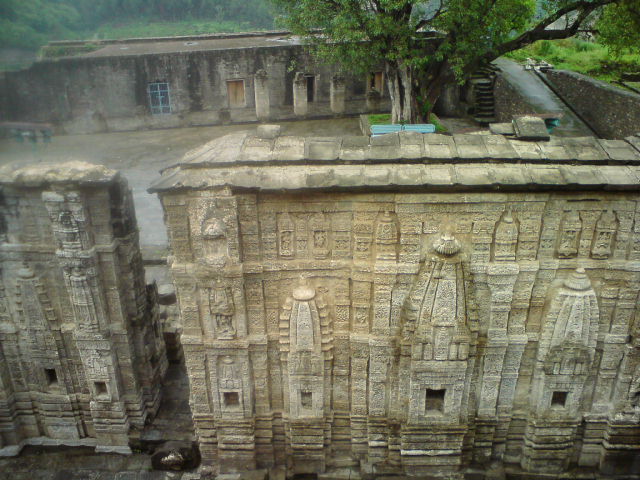
The Kangra Fort was built by the royal Rajput family of Kangra (the Katoch dynasty), which traces its origins to the ancient Trigarta Kingdom, mentioned in the Mahabharata epic. It is the largest fort in the Himalayas and probably the oldest dated fort in India. The fort of Kangra was taken by the Mahmud of Ghazni in AD 1009. In 1337, it was captured by Muhammad bin Tughluq and again in 1351 by his successor, Firuz Shah Tughluq. But it was not completely subdued until 1622, when after a siege of fourteen months, it was conquered by the Mughal Emperor Jahangir who garrisoned it with his troops and appointed a Governor to keep the turbulent hill chiefs in check.

Layout:
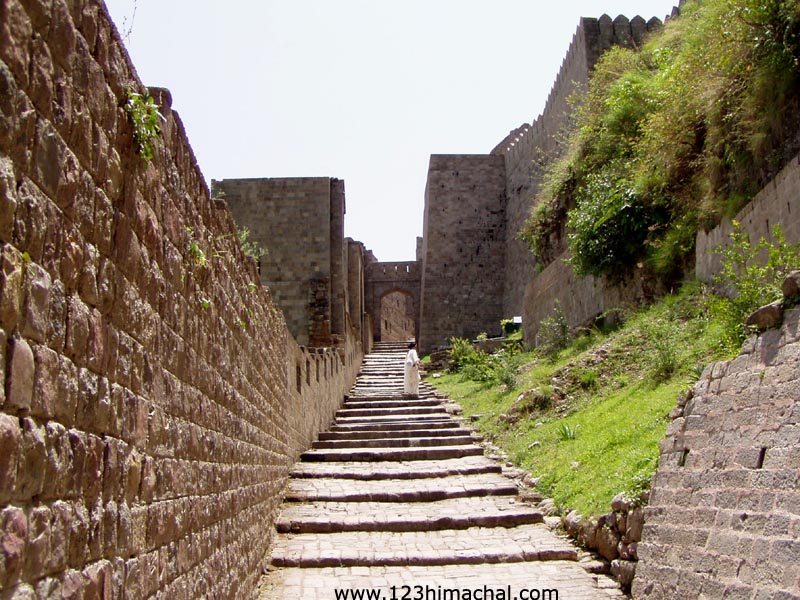
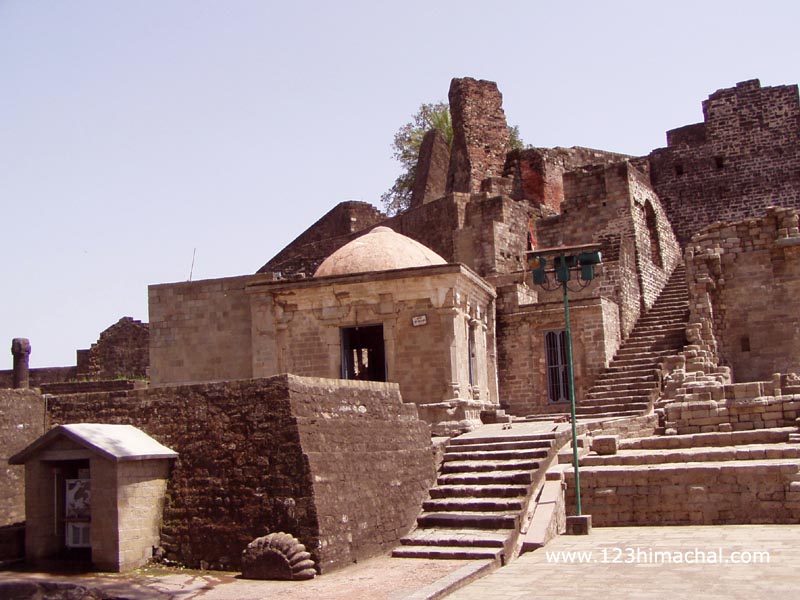
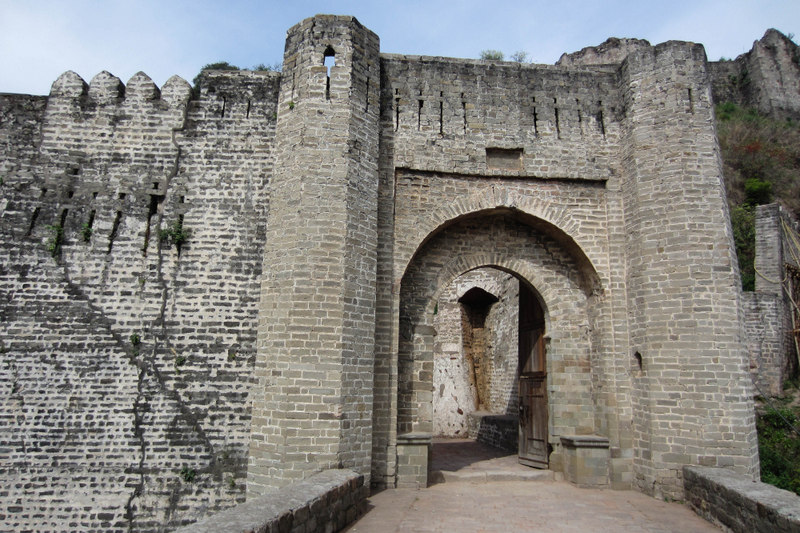
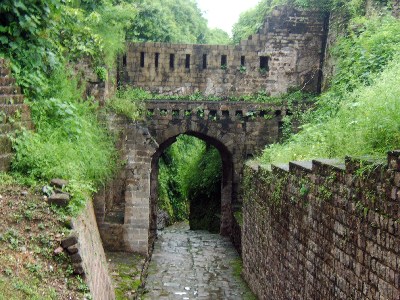
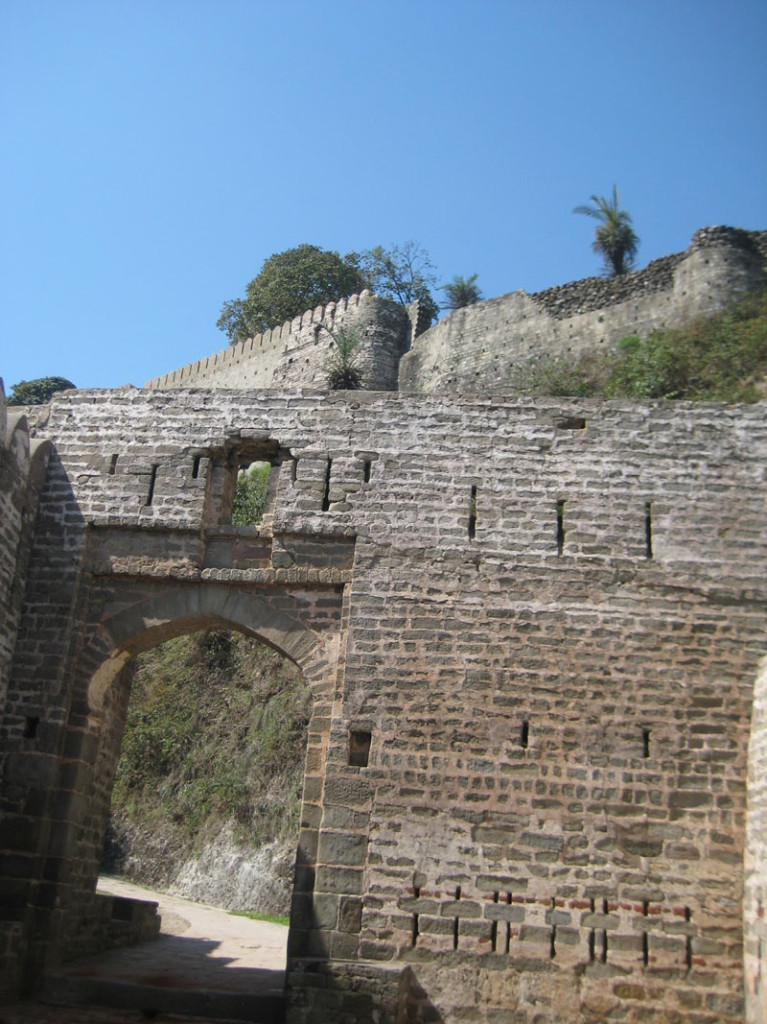
The entrance to the fort is through a small courtyard enclosed between two gates which were built during the Sikh period, as appears from an inscription over the entrance. From here a long and narrow passage leads up to the top of the fort, through the Ahani and Amiri Darwaza (gate), both attributed to Nawab Saif Ali Khan, the first Mughal Governor of Kangra. About 500 feet from the outer gate the passage turns round at a very sharp angle and passes through the Jehangiri Darwaza.

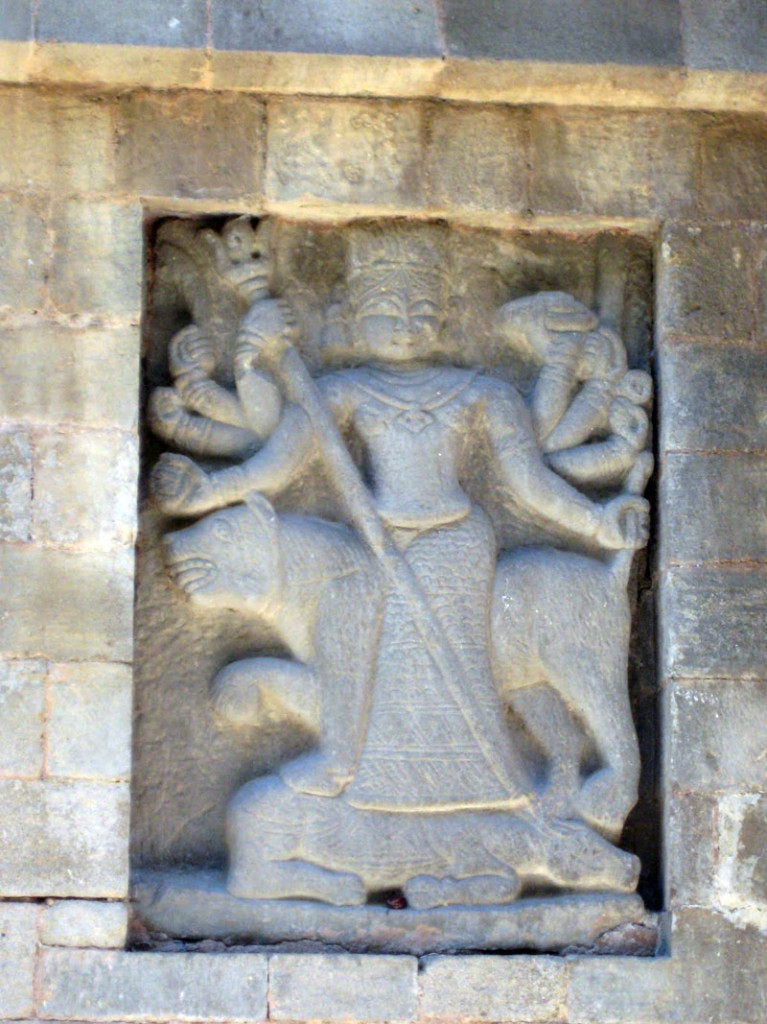
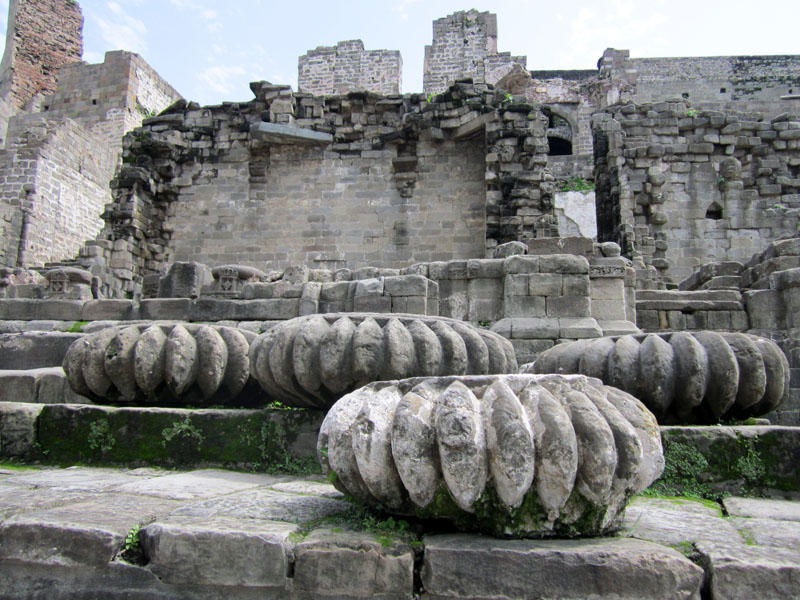
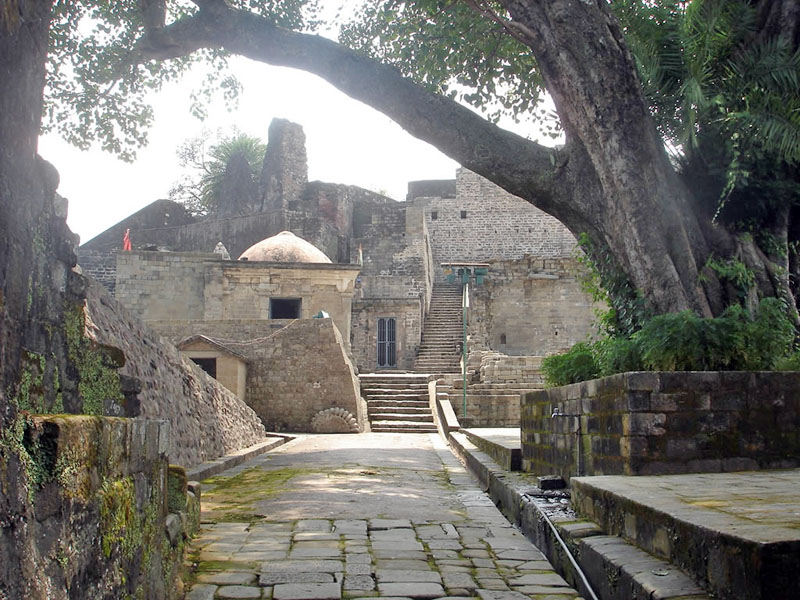
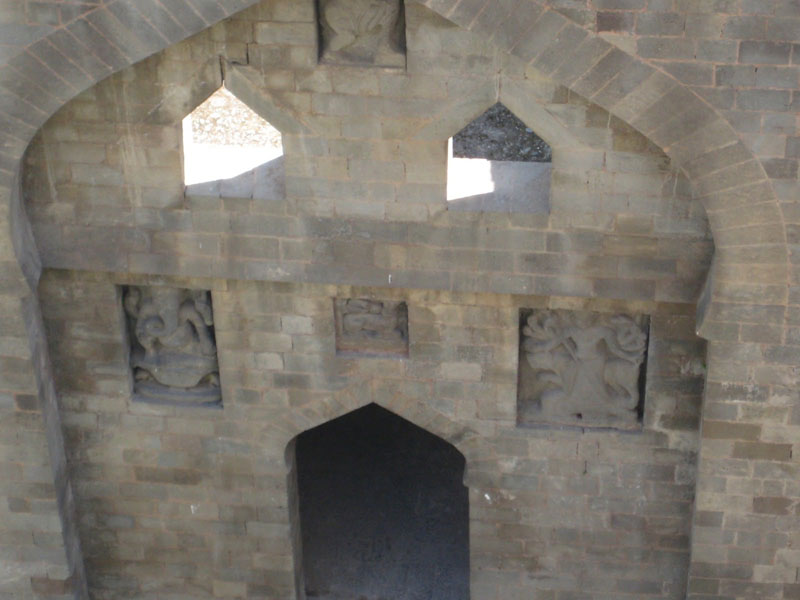
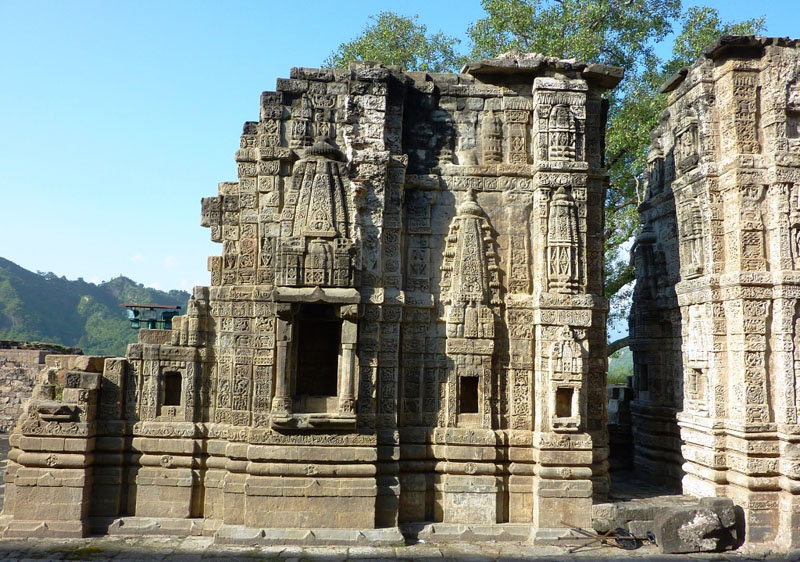
The Darsani Darwaza, which is now flanked by defaced statues of River Goddesses Ganga and Yamuna gave access to a courtyard, along the south side of which stood the shrines Lakshmi-Narayana Sitala and Ambika Devi. In between these shrines is a passage that leads up to the palace. It is one of the most beautiful forts in India.

Location:
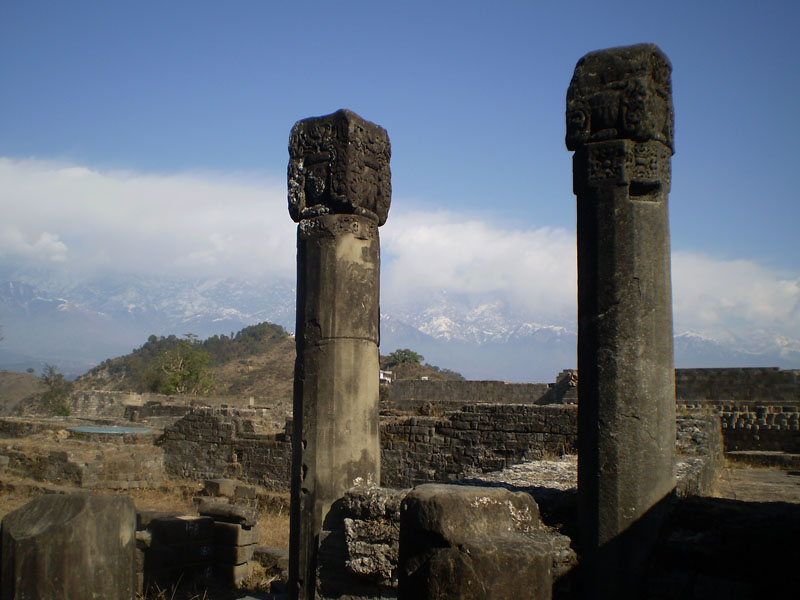
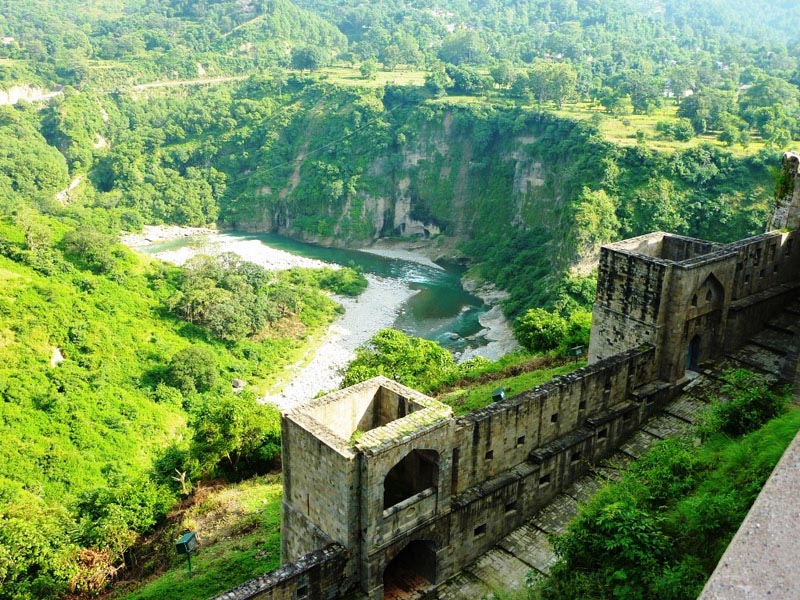
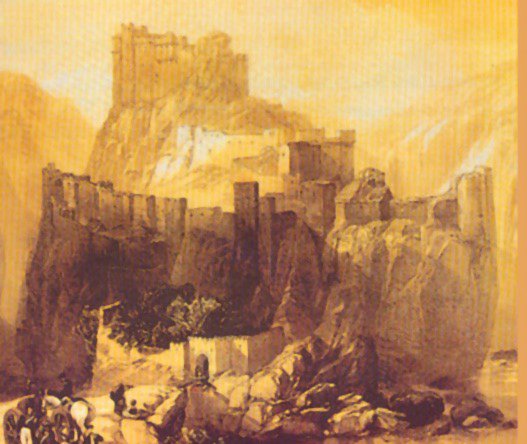
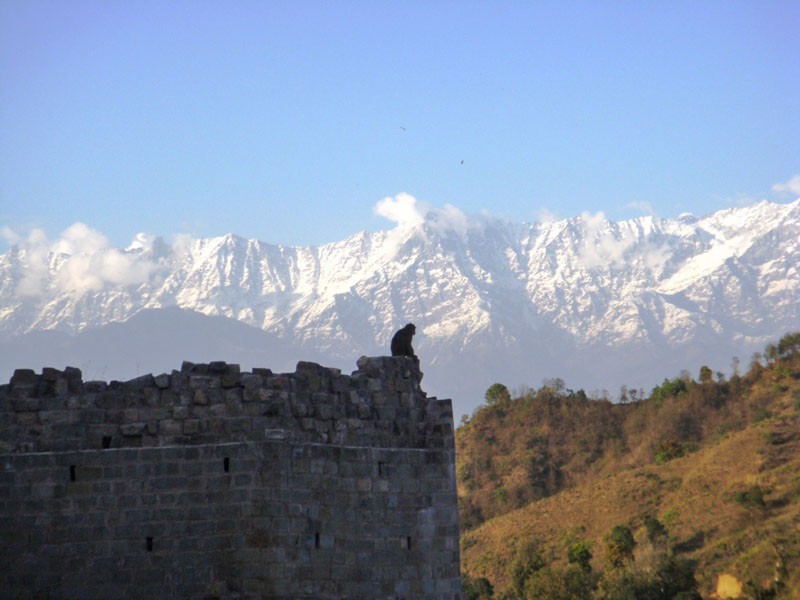
The fort is right next to Kangra town. The fort stands on a steep rock in Purana Kangra (translates to Old Kangra) dominating the surrounding valley, built strategically at the “Sangam” confluence (places where two rivers meet) of Banganga and Majhi rivers. It is said that Kangra belongs to one who owns the fort.

Also near to old Kangra is the famous Jayanti Mata temple on a hill top. The Temple was built by the General of the Gorkha Army, Bada Kaji Amar Singh Thapa. Also close to entrance is a small museum which exhibits the history of Kangra fort. Adjoining the Fort is the Maharaja Sansar Chand Katoch Museum run by the Royal Family of Kangra. The Museum also provides audio guides for the fort and the museum and has a cafeteria.

~ Tourist Link
You may also like

Search the website

Like us on Facebook

Get daily updates via Email

Enter your email address:

Recent Posts

Purushottam Maas — The Month No Deity Would Claim, and the Lord Who Made It Supreme

Every month of the Hindu calendar has a lord — except the rare thirteenth, the Adhika Maas, born an orphan and shunned as the “impure month.” The Puranas tell how this rejected month went in grief to Bhagavan Vishnu, who claimed it, gave it His own name — Purushottam — and made it the most fruitful month of all. The origin story, the teaching, and what it means for Purushottam Maas 2026 (May 17 – June 14).

Padmini Ekadashi 2026 — The Ekadashi Even the Devas Descend to Keep

Padmini Ekadashi 2026 — The Ekadashi Even the Devas Descend to Keep

The rarest Ekadashi of the entire Hindu calendar is three days away. The Padma Purana preserves a conversation between Bhagavan Krishna and Yudhishthira about a single Ekadashi the great Rishis spend lifetimes waiting for — Padmini. The Vrat Katha of Queen Padmini of Mahishmati, the lotus teaching, and why May 27, 2026 is the morning Vaishnavas across Bharata are preparing for.

Varada Chaturthi 2026 — The Rare Ganesha Day of Purushottam Maas

Varada Chaturthi 2026 — The Rare Ganesha Day of Purushottam Maas

Once every 2.5–3 years — when the rare 13th month of Adhika Maas opens — a thirteenth Vinayaka Chaturthi appears. The Mudgala Purana calls it Varada Chaturthi, the “boon-giving” Chaturthi, and holds it as the most fruit-bearing Ganesha day of the entire calendar. Today, Wednesday May 20, 2026, is that day.

Padmini Ekadashi 2026 — The Rare Ekadashi That Comes Only in Purushottam Maas

Padmini Ekadashi 2026 — The Rare Ekadashi That Comes Only in Purushottam Maas

Padmini Ekadashi 2026 falls on Wednesday, May 27 — the Shukla Paksha Ekadashi of Adhika Maas, the rarest Ekadashi in the entire Hindu calendar (it appears only every 2.5–3 years). The Padma Purana conversation between Bhagavan Krishna and Yudhishthira, the Vrat Katha of Queen Padmini, complete vrat vidhi with jagrana, mantras, and the lotus symbolism that gives the Ekadashi its name.

Ganga Dussehra 2026 — The Day Maa Ganga Came Down to Bhagiratha

Ganga Dussehra falls on Monday, May 25, 2026 — commemorating the day Maa Ganga descended from Vaikuntha to the earth through the millennia-long tapasya of King Bhagiratha. The full account from the Valmiki Ramayana, snan vidhi, dana traditions, mantras, and the teaching of sustained sincerity.

css.php