It is wrong to say that only food water and shelter are the basic needs of a human being. For a social animal like us, having an identity too happens to be a basic need. And the fact of the matter is that humans, not just have one, but multiple identities. With multiplicity, prioritization becomes necessary. So our first identity is that of a living being. Then we are human beings. After this, the third identity that we have, comes from the land we are born on, i.e., our motherland. Having this identity gives us a sense of satisfaction and also a sense of pride when we can relate ourselves to the glorious history of our land. But a person who is denied to this identity of land is like a tree whose roots have been cut. Something like this happened 67 years ago.
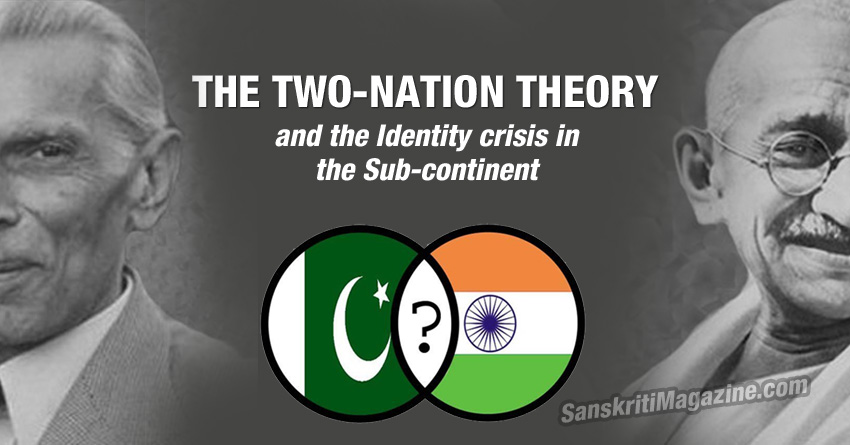
Based on M.A Jinnah’s two nation theory, my motherland was cut into two unequal pieces. While India lost a portion of land to Pakistan (and Bangladesh), the people residing in the latter lost something more profound. They lost their right of being an Indian. The partition was done in the name of “safeguarding” Muslims. But in reality, it was a great disservice done to the Indian Muslims by Jinnah, for the sake of his own political ambitions. Indians were given a choice, to either be a part of India or to be a part of the newly formed “sanctuary for Muslims”. And those who chose to stay, are the most fortunate ones. They have their roots intact and they retain all the rights to proudly claim their Indian ancestry.
The idea of a separate nation, to lure a large section of Muslims, later came out to be nothing more than a fool’s paradise for those who failed to realize the fact that religion alone cannot be the basis of one’s identity. The concept in itself was misleading. For faith is a subject of one’s free will, while, one’s nationality by birth is beyond human control.
The synthetic identity given to the citizens of this, so called, sanctuary, slowly started giving them a sense of discomfort. Eventually, a large section of those, who were not Indians anymore, started looking for an alternate identity either on linguistic basis or on the basis for their ethnicity. This slowly growing instability showed its first major symptom with the segregation of Bangladesh from the Dominion of Pakistan in 1971. People of East Pakistan slowly realized that they were Bengali first, and the idea propagated like a forest fire by the winds of an ongoing identity crisis, leading to the formation of a new nation on linguistic basis, which was still better then the idea of a nation based on religion.
Following the same trend, there is a wave of nationalism growing amongst the Balochs, the Pashtuns and the Sindhis of Pakistan, who reject the idea of Pakistan and demand for Baluchistan, Pakhtunistan and Sindhudesh as their respective separate nations. The partition of India, the formation of Bangladesh, the Baloch, the Pashtun and the Sindhi nationalist movements should be collectively seen as a chain reaction, triggered by the two-nation theory. And not to miss, the innumerable human lives lost and the most inhuman and barbaric incidents of human-right violations attached to each of these events. If we try to calculate the total death toll caused by this chain-reaction, the result comes out to be really horrific and shocking. So, it wouldn’t be wrong to say that the Indian-Subcontinent has suffered a lot because of the two-nation theory. But the worst part is that the suffering has not ended yet.