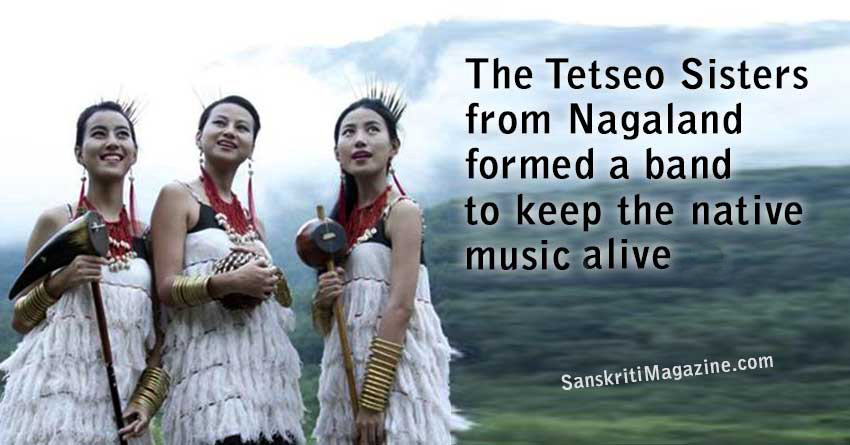
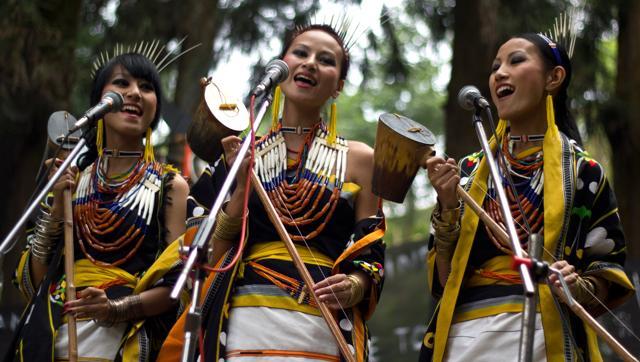
Four sisters formed a band and travelled the country to spread the music of their ancestors. Meet Tetseo Sisters, Nagaland’s young cultural ambassadors.
The Tetseo sisters, a four-member band from Kohima, Nagaland, is comprised of Alüne (Lulu), Kuvelü (Kuku), Mütsevelü (Mercy) and Azi Tetseo. Their musical legacy has transcended time: their ancestors sang and danced at festivals to ensure that the values of their culture are passed down through generations. In fact, Mercy recollects she would get goosebumps when her grandmothers and aunts would perform. Hailing from Nagaland, where music is an integral part of the local culture, it is hardly surprising, then, that the girls formed their own band in 1994.
A CULTURAL HOTSPOT
Inhabited by 16 major tribes and sub-tribes, Nagaland is a land of folklore, says Mercy. For instance, a traditional song, O Rhosi, is about being thankful for good health and youth. The word ‘rhosi’ comes from a wild flower with the same name that grows throughout the year in the Phek District of Nagaland
Other popular songs from the tribe include stories about a beautiful woman whom the villagers were smitten by. “Our songs could be about overtures of love, pounding rice, lifting heavy loads, weaving, hunting, historical accounts of events or warriors. Some are without lyrics and contain only vocals, others have lyrics that are either fixed or can be improvised based on the poetic skill of the singers,” says Mercy (33).
For the sisters, their musical journey started when they put together a song for a cultural festival at school. “Our mother taught us a song and it became our first performance when I was 12,” says Mercy. “We never took professional lessons for singing. We just took vocal training so that we could sustain our voices.”
The sisters sing Li (folk songs) in their native language Chokri, from Chakhesang, a tribe in Nagaland. What’s interesting, however, is that they weave in English and Hindi with their native tongue. “Music does not require a language. People connect with the harmonies and melodies.” For accompaniment, they use native instruments such as tati (one-string instrument), khro khro (gourd shaker filled with beads), drums and bamhum (wind instrument made with bamboo) as part of their compositions.
EMBRACING UNISON
Despite being cultural ambassadors for their state, the sisters have had to face their share of regional stereotypes. “Sometimes when we check in a hotel while travelling for shows, we’re asked to show our passports because people don’t believe we’re Indians,” says Mercy, adding that once, at an airport, someone told them that they were standing in the wrong immigration queue that was meant for Indian citizens. “People are shocked when they hear us speak fluent Hindi. We laugh it all off. However, I do feel that it would be great if we look past the nationality or race of a person and treat each other with dignity and grace.”
GUIDE TO NAGALAND
•Nagaland is a dry state.
•Christianity is the major religion in the state.
•However, Diwali is big here, and celebrated with as much enthusiasm as it is in other parts of the country.
•The Nagas love their pork, chicken, fermented bamboo shoots, axone (soya beans boiled, fermented and either smoked or sun dried), raja mircha chutney (made by king chilli, ranked the world’s hottest chilli), local rice, momos and galho (a dish with rice, meat and vegetables).
•Naga dance is more about footwork and less about hand movements. Men from the community dance in groups with great enthusiasm.
•If you plan to visit the state, don’t miss the World War II Cemetery and the War Museum in Kohima. They were built in honour of those who lost their lives during the Second World War, in the battle of Kohima between the British Empire and Japanese troops.
— By Mercy Tetseo