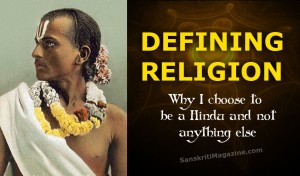
Defining Religion: Why I choose to be a Hindu
Who are you? How do you define yourself? I am a Hindu, which to me means the inheritor of the oldest and the highest spiritual

Who are you? How do you define yourself? I am a Hindu, which to me means the inheritor of the oldest and the highest spiritual
Hinduism contains numerous references to the worship of the divine in nature in its Vedas, Upanishads, Puranas, Sutras, and its other sacred texts. Millions of
Celebrated on Shukla Ekadashi, 11th day of the waxing moon of Margashirsha month (November-December) in the Hindu calendar, Gita Jayanti (birthday of ‘Bhagavad Gita’) is the day when
Perhaps a modern expression equivalent to the word Sudra, compatible with its original essence, is the word alien (newcomer, outsider or stranger to the tribe).

The holy town of Vrindavan will be home to a unique and world’s tallest Lord Krishna temple which will be built at an estimated cost
Brahmamuhurta is the morning period between 3.30 a.m. and 5.30 a.m. It is suitable for meditation. After a good night’s sleep, the mind is refreshed,


Bhadrapada begins today in North India, opening a lunar month that moves from the midnight

The 12 Jyotirlingas of Lord Shiva — where each stands, its sacred story, and how to make the Dwadasha Jyotirlinga pilgrimage in person or in spirit this Shravan.

The Rudrabhishek is the abhishekam said to please Lord Shiva fastest. What it is, the meaning of each sacred substance, the Sri Rudram, and how it is performed at home this Shravan.

Shravan runs July 30–Aug 27 in 2026, with four Sawan Somwars (Aug 3, 10, 17, 24). Why the whole month belongs to Mahadeva — the churning of the ocean, the poison He drank, and how to keep the Sawan vrat.

Thiruvonam 2026 falls on Wednesday, August 26 — the crown of Kerala’s ten-day festival. The Bhagavata story of King Mahabali and the Vamana avatar, and why Onam is a homecoming, not a defeat.

