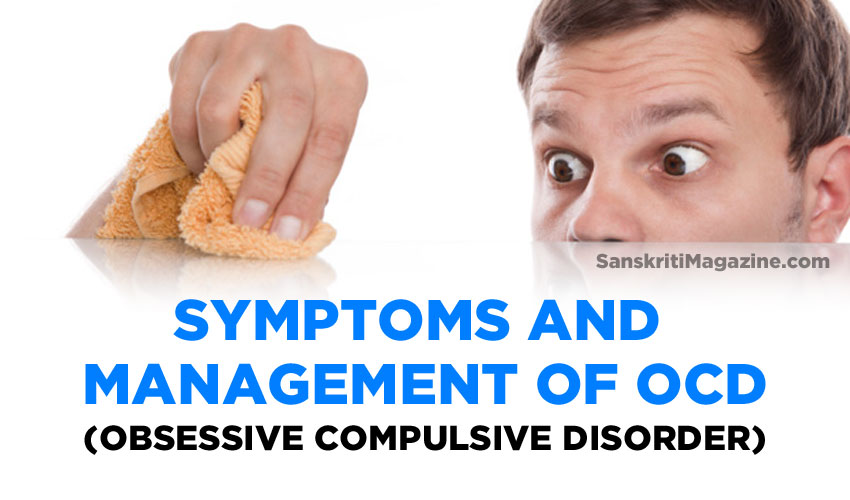
You’ve probably heard about a troubling set of emotional health symptoms that indicated Obsessive Compulsive Disorder, often referred to as “OCD.”
OCD is considered a type of anxiety disorder, so people who have OCD usually feel nervous and anxious, at least occasionally.
It is a disorder that many people have to some degree or another, but for many it can be quite debilitating.
Do you have these signs of possible OCD?
1. Repeating a particular behavior.
Although this symptom sounds innocent enough, those with OCD tend to do something over and over again with a ritualistic fashion. Here are some examples:
- Switching the light switch on and off a specific number of times before settling down to go to sleep.
- Checking and re-checking that your doors are locked at night even though you know you’ve already checked them several times.
- Counting to yourself the number of steps you take from one place to another.
- In essence, you’re compelled quite strongly to do and re-do certain actions. It may feel like it’s out of your control. These repetitions are referred to clinically as “compulsions.”
2. Having thoughts that you can’t get rid of.
Commonly called, “obsessions,” obsessive thoughts seem to keep popping up and staying in your mind. No matter what you try, you can’t seem to turn off your thinking. Obsessions might keep you up at night or prevent you from being as productive as you could be.
3. Realizing that your obsessions and compulsions are unusual.
Even though what you’re experiencing is a normal part of an emotional illness, you can see that it is out of the realm of normal behavior.
4. The obsessions and compulsions aren’t caused by medications or an illness.
It’s quite important for mental health clinicians to rule these things out before diagnosing anyone as having OCD.
- In order to receive a diagnosis of OCD, your obsessions or compulsions must be disruptive to your day and consume at least one hour daily of your time to manage them. Your functioning in normal activities, like social outings, work, or academic pursuits will be disrupted by your symptoms.
These items can help to alleviate your symptoms of OCD:
1. Medication in the form of SSRIs.
There is a group of antidepressants called, “SSRIs” that are often prescribed for those experiencing OCD. SSRI stands for, “selective serotonin reuptake inhibitor.” A common list of SSRIs includes Anafranil, Celexa, Effexor, Lexapro, Paxil, Prozac, and Zoloft. This specific type of medication can sometimes be helpful to reduce the OCD tendencies.
2. Medication-Tricyclic antidepressants.
Doctors usually begin with trying an SSRI, but in the event the SSRIs don’t work to reduce your OCD symptoms, a doctor will likely try a class of drugs formulated several years ago called, “tricyclic antidepressants.”
3. Therapy.
In general, many believe that simply talking with an expert about how you feel and the choices you make can reduce your level of anxiety. Getting control of your anxiety is the main key to reducing or arresting OCD and therapy can help you do it.
4. Cognitive Behavioral Therapy.
This type of mental health therapy helps you to think rationally about your thoughts and then adjust your behaviors accordingly.
- With cognitive behavioral therapy you’ll learn how to manage your anxiety and make a choice to refrain from your troubling thoughts (obsessions) and behaviors (compulsions).
5. Thought-stopping.
Thought-stopping is a technique you’ll learn to use on your own to dissipate your repetitive thoughts. In thought-stopping, you train yourself to recognize the disruptive thoughts as soon as they begin.
- This technique helps get a handle on disruptive thoughts before they’re out of control.
- When you recognize the troublesome thoughts are intervening into your normal life, you imagine a large red stop sign and say, “Stop!” You then replace the stop sign image with something more pleasant, like a beach with the tide coming in or a gentle rain shower. Thinking of this scene will help to subvert the troublesome thoughts.
If you or someone you love experiences the challenging symptoms of OCD, recognize that there are some incredibly effective treatments to get you back on a more peaceful journey. Fortunately, you can return to normal functioning again.