By Damien McElroy, Foreign Affairs Correspondent
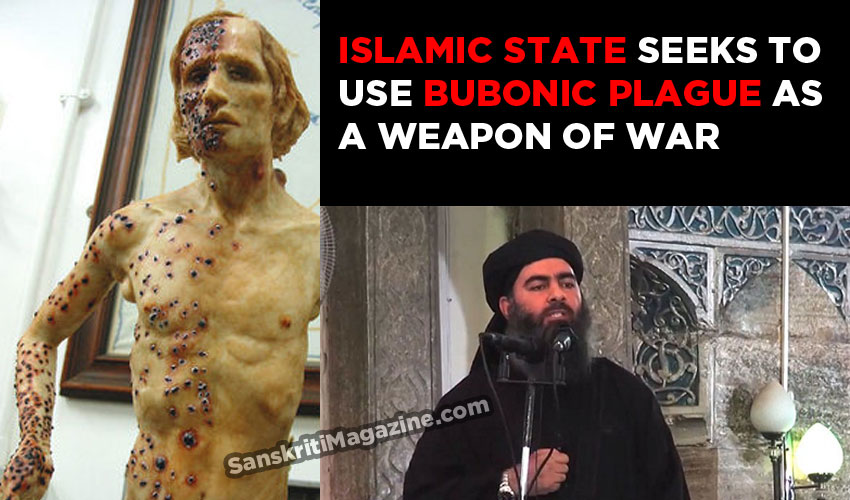
ISIL terrorists in Syria and Iraq have carried out research into the production of biological weapons, compiling a manual of how to make a device and sharing a religious edict that sanctions the use of weapons of mass destruction against civilians.
The computer seized from a Tunisian chemistry student contained a 19-page manual to learn how to turn the bubonic plague into a weapon of war. The text boasts that biological and chemical weapons are a highly effective means of targeting enemy populations, according to the Arab television channel al-Aan, which obtained the computer from a Syria rebel group.
“The advantages of biological weapons is the low cost and high rate of casualties,” an extract of the closely-typed document shown on the channel said. “There are many methods to spread the biological or chemical agents in a way to impact the biggest number of people. Air, main water supplies, food. The most dangerous is through the air.”
The manual explores a variety of means to spread “chemical or biological agent” over a wide area – including rockets and missiles, suicide missions in cars, and contamination of air-conditioning systems.
The laptop revelations came as Islamic State issued more recordings of massacres by it forces including the beheading of a captured Kurdish peshmerga soldier. An Islamic State video entitled “A message in blood to the leaders of the American-Kurdish alliance,” showed 15 peshmerga dressed orange jumpsuits that it warned would be killed in retaliation for Kurdish support for US intervention in Iraq.
The UN said yesterday that three million people had been made refugees from the conflict in Syria and Iraq.
The Syrian civil war has seen as many as seven documented chemical weapons attacks, involving the use of sarin, chlorine and ammonia gas against residential areas. Investigations by human rights groups have found that the Syrian regime had deployed weapons from the country’s stockpile.
However, experts have warned that the group of extremist Islamist groups makes a chemical weapons attack by terrorists highly likely. Hamish de Bretton-Gordon, a former commander of British nuclear, biological and chemical weapons protection forces, said that the Islamic State has shown interest in using chemical weapons already.
That the group had sought a fatwa from an Islamic scholar, which was also on the computer, shows Islamic State had, unlike al-Qaeda, decided that chemical weapons were a legitimate option on the battlefield.
“Al-Qaeda thought that biological weapons were beyond the pale but Islamic State don’t have similar quandaries, especially since the Assad regime has used them and people have seen how effective they are,” he said.
“It is difficult – but not impossible – to get people to ingest biological spores, while the chemical stuff that Islamic State mentions shows they have the intent to co-opt these weapons.”
Islamic State seized control of al-Muthanna, the storage facility that houses Iraq’s stockpile of chemical weapons, in July.
Mr Gordon subsequently warned the material at the facility could be used by Islamic State to make an improvised chemical weapon. The laptop shows it is actively seeking ways of making chemical and biological bombs.
Al-Aan said the owner of the manual, which it only identified as a Tunisian called Mohammad, had studied physics and chemistry at a university in his homeland until 2011.
The documents recommended targeting confined spaces with large gatherings of people, including underground train systems, football stadiums or shopping complexes.
A separate file on the laptop contained a letter from an Islamic religious expert, Sheikh Nasir al-Fahd, who is currently languishing in a Saudi Arabian detention centre for terrorist sympathisers. The edict, or fatwa, tells believers that Muslim fighters can use chemical or biological weapons against the “infidel”.
“Looking to the American aggression against the Muslim people and their lands during the past decades, you will conclude that it’s permissible (to attack with weapons of mass destruction) under the
principal of reciprocity. Some brothers calculate the number of Muslim casualties and they found it more than 10 millions killed by America, directly and indirectly, the lands which were burnt by their bombs are uncountable,” the fatwa said.