by Shubamoy Das
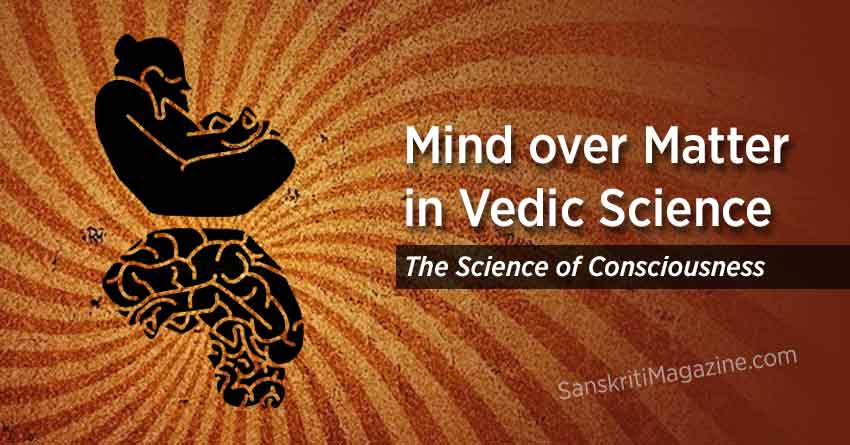
What is mind? No matter!
What is matter? Never mind!
Even as scientists all over the world are making concerted efforts to understand the human mind and the human consciousness, a plethora of provocative questions still remain unanswered. As someone said, if we could satisfactorily explain the workings of our minds, our brains would be so simple and underdeveloped that we wouldn’t be able to understand anything! This is a definite limitation of the conventional sciences. And here’s where people take recourse to spirituality, imagination and the occult.
Vedic Science Has the Answers!
Professor Ashok Sharma, a former Indian professor of Applied Physics, who was also a scientist at Harvard University, has formulated some path-breaking theories and postulations based on the ancient Vedic Sciences that give us some powerful insights into the gray regions of the human mind, and help us understand our consciousness.
Even after treading for long in the realm of science, Prof Sharma feels that science fails to understand consciousness as an independent entity.
He says, “Science cannot integrate a non-physical entity, like consciousness, into its conceptual framework, and views human personality as a non-conscious physical system.”
What is Consciousness?
Consciousness, according to Prof Sharma, is a non-physical entity, which is essentially different from the four basic entities of space, time, energy and matter of the conventional science. Consciousness does not have any physical attribute or property or action, but is endowed with autonomous will power of creation, retention and annihilation of the knowledge of an individual or that of the universe.
Quoting the Upanishads (Shvetashwar, 6/19), he says that consciousness itself is non-differentiable, inactive, placid, indescribable and non associative:
“Nirajanam Nishkriam Shantam Nirvadyam Niranjanam”
But again, consciousness manifests itself in the form of knowledge.
Sharma’s Formula
In the light of the above discussion, Prof Sharma has put forward a formula, where consciousness is represented by a symbol Ψ, which is a set of concepts of knowledge. In the normal state of consciousness, an individual human mind or a conscious system is capable of the finite set of concepts of knowledge I, i.e.,
Ψn = I,
which he defines as Ego, soul, Atman or Karan Sharir.
However, the field of the non-physical entity of consciousness can be expanded to infinity, so as to cognize the total infinite set of concepts of knowledge G, i.e.,
Ψ∞= G,
which he variously defines as God, Parmathma or Brahman.
Yoga & Meditation
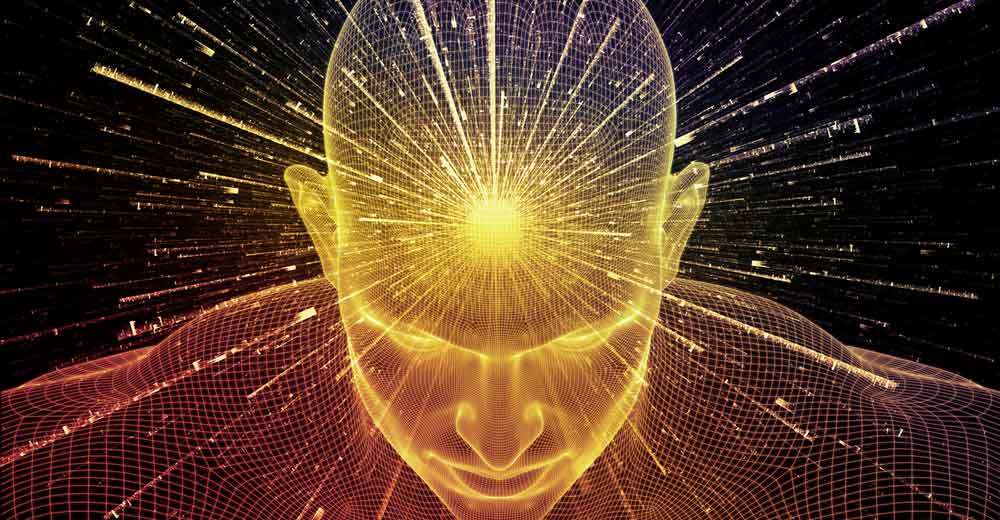
Prof Sharma points out that consciousness is endowed with autonomous will power, and the techniques of Yoga and meditation must be considered as the methods of realization of the self and the development of the will power (Sankalpa Shakti) for the expansion of the field of consciousness Ψ.
Bridging the Gap
Sharma quotes Prof Wigner – “The very study of the physical world leads to the conclusion that the concept of consciousness is an ultimate reality and, all the possible knowledge, concerning objects can be given as its wave function” – and concludes that the gap between Vedic and scientific systems of knowledge has been considerably reduced and scientists have started realizing the necessity of integration of consciousness with the conceptual structure of science.
In Summary
The basic conceptual structure of Prof Ashok Sharma’s “Science of Consciousness” can be summarized as a set of the following propositions:
 The element of consciousness (Chetan Tatva) is the fundamental entity, which is non-physical, inactive, placid, indescribable and non-associative, but endowed with autonomous will power (Swasankalpa Shakti) to create, retain and annihilate all concepts of knowledge of self and the universe, which can be represented by the symbol Ψ. The concept of consciousness is, essentially, analogous to the vacuum states of the relativistic quantum field theory, except for its autonomous will power.
The phenomena of existence of the world are, essentially, the existence of the concepts of knowledge of the phenomenal world in the unified field of consciousness. In view of the non-physical nature of the consciousness, the concept of the unified field of consciousness must be clearly distinguished from the unified field of the physical fields.
The stimulus-response function of the conscious system of human personality is due to the association of consciousness, with physiological brain, so as to provide the operation of mind, ‘Ideation Body’ or Karan Sharir aka causal body. In the normal state of consciousness Ψn, an individual is ignorant about his full potentialities and depends on the knowledge gained through the sensory perception for the expansion of the field of consciousness of knowledge. Since, in the normal state of consciousness, an individual has the capacity of the cognition of a limited set I of the concepts of knowledge, it can be defined as Soul, ‘Ideation Body’, Atma or Karan Sharir, represented by, Ψn = I.
The field of consciousness can be expanded by the development of the capability of non-sensory intuitive cognition of knowledge through the techniques of Yoga and meditation, so as to attain the super-conscious state, in which an individual has direct intuitive revelation of knowledge. The final state of Yogic attainment is to have the consciousness of the infinite set of knowledge of the universe, i.e., Ψ∞ = G, which can be interpreted as the realization of God or Brahman.
The Future of Science!
Prof Sharma has been working on the conceptual development of the Science of Consciousness, Social System Science and Social Engineering in New Delhi, India. He hopes that the heritage of the Vedic system of knowledge should be viewed as the future extension of the present non-conscious science, as the science of consciousness.
Need of the Hour
“There is an urgent need to reinterpret the Vedic texts in modern terms – a task which is now possible with the availability of computers and the recent developments in the fields of cognitive sciences, artificial intelligence and theories of knowledge representation”, says Prof Sharma, adding, “However, such an effort requires a concerted effort of the enlightened community of Indians.”