Why do people practice only one religion? How difficult is it to follow multiple religions? The great religions of the world constitute a huge reservoir of spiritual and philosophical wisdom, and there is no reason why one should confine oneself only to one of them.
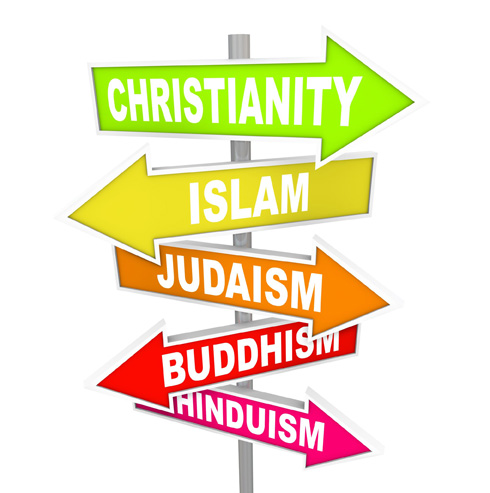
Practising Multiple Religion Is Not Uncommon
In Nepal, for instance, many people practise both Hinduism and Buddhism; while in Japan, the well-known saying goes that people are born into the Shinto tradition, get married as Christians, and die as Buddhists. The Chinese naturally practice more than one religion simultaneous – Confucianism, Taoism, and Buddhism. In most Southeast Asian nations it is normal to practice Buddhism and Hinduism at the same time.
The French Hindu Monk
The Hindu-Christian interaction over the past century has been an extremely interesting one. This is highlighted in a remarkable book entitled Ascent to the Depth of the Heart, which is the spiritual diary of Swami Abhishiktananda (1910 – 1973). A Benedictine monk, born in France as Henri le Saux, he came to India in 1948 and stayed here until his passing away in 1973. He was profoundly impressed by Hinduism, particularly by the advaita philosophy of the Upanishads.
Theological Differences Don’t Matter
In the great seer, Ramana Maharshi, he found his guru; and though he remained a Catholic till the end of his life, his remarkable spiritual experiences testify to the fact that theological differences vanish when spiritual realization dawns. For instance, Hinduism believes in multiple lives until one attains liberation, while Christianity postulates only one life on earth. Despite such theological differences between Hinduism and Christianity, at a deeper level, dissimilarities become insignificant. As is well known, Sri Ramakrishna Paramahamsahad no theological problem when, in the course of his amazing sadhana, he encountered Jesus Christ. For Abhishiktananda too, his experience of the all-pervasive Brahman was overwhelming even while he held on to his belief in Jesus Christ as a unique savior.
Harmony in Dichotomy
Indeed, the dichotomy between a vast impersonal consciousness and devotion to a personal deity is found within every religious tradition. In Hinduism, the two have always been sought to be harmonized. This is particularly the case in the Upanishads, which are the high watermark of Hindu philosophy. The Ishavasya Upanishad is an outstanding text on the synthesis between the One and the Many. In a recent study of American liberal religion, Crossing and Dwelling Thomas Tweed touches a similar chord while defining the open nature of religions: “Religions are confluences of organic-cultural flows that intensify joy and confront suffering by drawing on human and superhuman forces to make homes and cross boundaries.”
The All-Embracing Religion
In conclusion, Hinduism, of all religions, makes it conducive for us to believe in the coexistence of multiple religions. Hinduism’s all-embracing quality not only makes its possible for its followers to accept a variety of beliefs and practices, but also creates the warmth that helps them welcome followers of other faiths and reap the benefits of its ancient heritage.
~S. Das