It uses a fruitful combination of online portals supported by on-site focus discussions.
In September 2015, member states of the United Nations adopted the 17 Sustainable Development Goals (SDGs) as the basic framework for improving the well being of the planet’s citizens. SDG4 proposes equal and inclusive education for all. It is an ambitious goal, and its success is closely linked to the effective implementation of SDG16 which focuses on the promotion of peaceful and inclusive societies and most relevantly, on building effective and accountable institutions at all levels. For these goals to be realised, it is critical that all stakeholders, in particular, the students be made part of the process right from the start.
The government of India is ahead of the curve. The ministry of human resources and development (MHRD) initiated the New Education Policy (NEP) at the beginning of 2015 and unlike previous such exercises, a bottom-up approach was formulated. A combination of an online portal supported by on-site focus discussions was implemented in an attempt to reach out to as many stakeholders as possible.
The UNESCO Mahatma Gandhi Institute of Education for Peace and Sustainable Development (MGIEP) provided support to the MHRD through a dedicated reaching-out programme to the youth of India. The results offer revealing insights into how the country’s youth view education and their suggestions to improve it.
The desire to be a changemaker resonated deeply across the youth of the nation, as our researchers discovered. To ensure that we solicited inputs from a representative sample of India’s youth, UNESCO MGIEP’s research team met with stakeholders from diverse fields, regions, and backgrounds with a focus on higher education. While the online survey administered reached 6,017 young people from every state, our team conducted 34 focus groups across five regions of India involving 331 young people from a range of rural, semi-urban, and urban centres.
As a majority of our programmes are centred around the youth – ages between 18 and 28 – and there seems to be a dearth in the available research on higher education, particularly in this region, we felt that by focusing on this area of the NEP, we would be able to make the most effective contribution.
Fortunately, the decision to do so was met with enthusiasm from the participants of the study, cutting across regional disparities. Whether it be in the form of speaking for longer than stipulated times at focus groups or drafting notes beforehand for the sessions, the respondents displayed eagerness to be part of the exercise and explained how vital it was their voices be heard. The story of a young woman from a village in the south is a case in point. Her biggest challenge had been to fight for her right to attend college like her peers, but once she had enrolled, she realised her own potential to affect change on a wider scale.
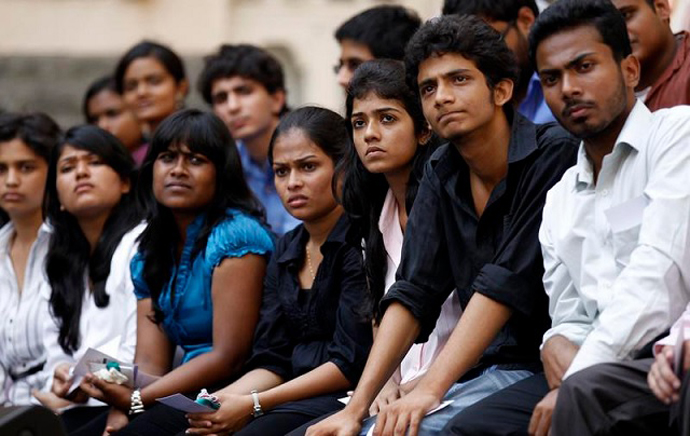
“I want to change the system itself; it is common opinion in society that women should be homemakers and protect their husband, children… I want to change the system, that’s why I want to educate myself,” she said with determination.
Although almost all students unequivocally spoke of the positive impact of their decision to pursue higher education, they were also quick to express their concerns over issues related to teaching methods, inclusion, infrastructure, and attention from faculty members. Most were of the opinion that the voice of the students should be solicited by means of well-structured feedback mechanisms. This, they felt, could be effective in addressing sensitive issues related to corruption, harassment, as well as dissatisfaction with teaching quality.
To make the study more inclusive, UNESCO MGIEP held special focus groups with gender and sexual minorities, students with disabilities, and students from rural areas and the northeast. This helped address the issues related to the marginalised groups highlighted by the MHRD. A heart-warming pattern noticed across such sessions was that of students from outside of these groups expressing solidarity with their peers.
And they took their demands for inclusivity a step further by highlighting the acute need of infrastructure to support inclusion. While young female students raised safety concerns by demanding secure facilities, visually-impaired students pointed out the lack of accessible signboards and physically-challenged students made a strong case for ramps at the educational institutes.
Here too, these concerns were not always raised by students from the communities themselves; an observation that reveals how much importance students place on inclusive and diverse education systems.
Generally, students envision their learning institutes to be spaces conducive to exploration, free dialogue and development of values and ethics. They want stronger support systems, fairer mechanisms for obtaining their rights, and more opportunities to engage with faculty members on a personal level. Over 52 per cent of youths surveyed felt that their suggestions for change were not heard by the authorities. And a more sobering result that highlights an urgent need for attention is that 60 per cent of students felt that no action would be taken even if they were given the chance to submit their concerns and grievances.
The fact that over 6,000 students took a survey which required over 20 minutes of their time clearly suggests that higher education is something India’s youth value and care about deeply. This reaffirms our belief that as a nation, the authorities owe it to them to create thoughtful, meaningful, positive interventions to improve colleges and universities.
On the occasion of Good Governance Day, UNESCO MGIEP congratulates the MHRD for its bottom-up approach of inviting feedback for the revision of the New Education Policy. We are convinced that the Indian higher education system has the potential to continue to reach out to young people in deeper and more meaningful ways.
The full report and the executive summary will be released at MGIEP’s Talking Across Generations (TAG 2106) event on February 15, 2016 at the India Habitat Centre, New Delhi.
(Note: This study was conducted by Dr Mathangi Subramanian, Gauri Khanduja, Deepika Joon and Piyali Sarkar, all of whom are staff members at UNESCO MGIEP. The author would also like to thank Joint Secretary, Mr Rakesh Ranjan and Officer on Special Duty, Dr Shakila Shamsu, for their ongoing support.)
(Article Written By Mr.Anantha Kumar Duraiappah, Published in Daily0 . )
The author is director, UNESCO Mahatma Gandhi Institute of Education for Peace and Sustainable Development (MGIEP)..