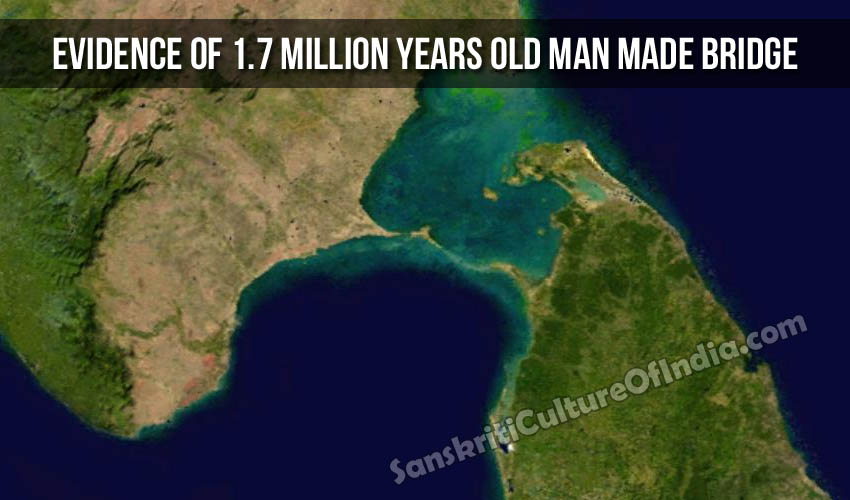
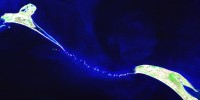
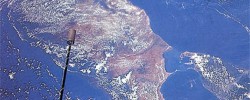
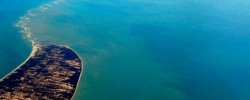
The NASA Shuttle has imaged a mysterious ancient bridge between India and Sri Lanka. The bridge was purportedly passable on foot until 1480 AD when a cyclone moved the sand around.
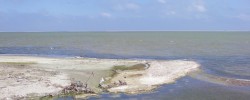
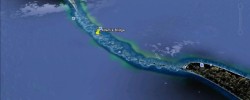
This recently-discovered bridge has been found to be made of a chain of limestone shoals. Its unique curvature and composition by age reveals that it is man made. The bridge currently named as Adam’s Bridge (most popularly known as Ram Setu) is about 18 miles (30 km) long.
This bridge starts as chain of shoals from the Dhanushkodi tip of India’s Pamban Island and ends at Sri Lanka’s Mannar Island. Water between India and Sri Lanka is only 3 to 30 feet (1 to 10 meter) deep. Owing to shallow waters, this bridge presents a problem in navigation as big ships cannot travel in the shallow waters of the Pamban channel.
This information is a crucial aspect for an insight into the mysterious legend called Ramayana, which was supposed to have taken place in tretya yuga (more than 1,700,000 years ago).
In this epic, there is a mentioning about a bridge, which was built between Rameshwaram (India) and Srilankan coast under the supervision of a dynamic and invincible figure called Rama who is supposed to be the incarnation of the supreme.
This information may not be of much importance to the archaeologists who are interested in exploring the origins of man, but it is sure to the spiritual gates of the people of the world to have come to know an ancient history linked to the Indian mythology.
The Row About Ram Setu:
1. The UPA Government announced the launch of the Sethusamudram Shipping Channel Project (SCCP) in 2005 to create a shipping channel between the Palk Bay and the Gulf on Mannar between India and Sri Lanka.
2. The project would include dredging across the Ram Setu or Adam’s Bridge, believed by Hindus to be a bridge built by Lord Ram to journey to Lanka. This bridge is said to be one of the most important religious sites for Hindus, and plays a significant role in the Ramayana.
3. The Supreme Court had, in 2007, restrained the UPA Government from going ahead with the project, and suggested that the Government examine an alternative route that does not dredge the Ram Setu.
4. The shipping channel is proposed to be 30 metres wide, 12 metres deep and 167 kilometres long.
5. Janata Party President Subramaniam Swamy had called for the Ram Setu to be conferred the status of national monument. Swamy also contended that the demolition of Ram Setu will amount to a criminal offence under section 295 IPC.
6. The Sethusamudram project drew the ire of Hindus across the country, who see it as a disrespect to Hindu religious beliefs.
7. Following national outrage over the project, Hindu groups formed the ‘Save Ram Sethu’ campaign in 2007 to create awareness, and to stop the Government from continuing the project.
8. The Sethusamudram project has also drawn widespread opposition from environmental activists, who argue that it will cause a great deal of damage to local habitation and marine life.
9. Besides environmental hazards, the SCCP was found to be economically unviable, as suggested by a report prepared by environmentalist RK Pachauri. The recommendation was rejected by the Government.
10. The BJP has warned the UPA Government against the demolition of Ram Setu, and said that it will not tolerate any tampering with the historical bridge.