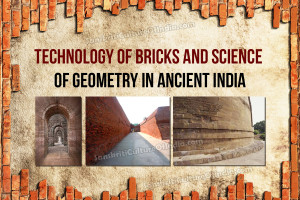
Technology of Bricks and Science of Geometry in Ancient India
The Sanskrita equivalent for brick is ‘Istaka’ or ‘Istika’, which was primarily constructed for the use in an altar. ‘Medhatithi’ was the maker of bricks.

The Sanskrita equivalent for brick is ‘Istaka’ or ‘Istika’, which was primarily constructed for the use in an altar. ‘Medhatithi’ was the maker of bricks.
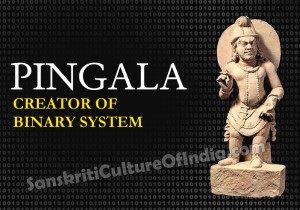
Pingala (Devanagari: पिङ्गल) is the author of Chandaḥśāstra (Chandaḥsūtra), the earliest known Sanskrit treatise on prosody. Very less historical knowledge is available about Pingala, though
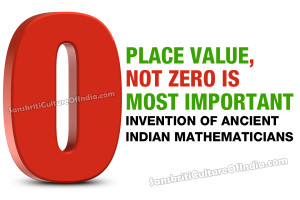
The greatest contribution of India to mathematics is Zero, is what you often hear. But that is plain wrong. Zero was a natural by-product of
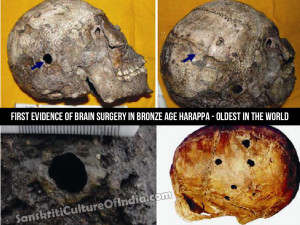
Human Skull with World’s Oldest Successful Brain Surgery in India: Scientists discovered the world’s oldest known case of a successful human brain surgery after unearthing
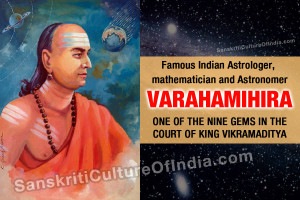
Varahamihira (499-587 CE): Varahamihira was one of the renowned Indian astronomer, mathematician, and astrologer. He was honored with a special decoration and status as one
Quite often I find that conversations, with people from various walks of life, on ancient Indian mathematics slide to “Vedic mathematics” of the “16 sutras”


The 12 Jyotirlingas of Lord Shiva — where each stands, its sacred story, and how to make the Dwadasha Jyotirlinga pilgrimage in person or in spirit this Shravan.

The Rudrabhishek is the abhishekam said to please Lord Shiva fastest. What it is, the meaning of each sacred substance, the Sri Rudram, and how it is performed at home this Shravan.

Shravan runs July 30–Aug 27 in 2026, with four Sawan Somwars (Aug 3, 10, 17, 24). Why the whole month belongs to Mahadeva — the churning of the ocean, the poison He drank, and how to keep the Sawan vrat.

Thiruvonam 2026 falls on Wednesday, August 26 — the crown of Kerala’s ten-day festival. The Bhagavata story of King Mahabali and the Vamana avatar, and why Onam is a homecoming, not a defeat.
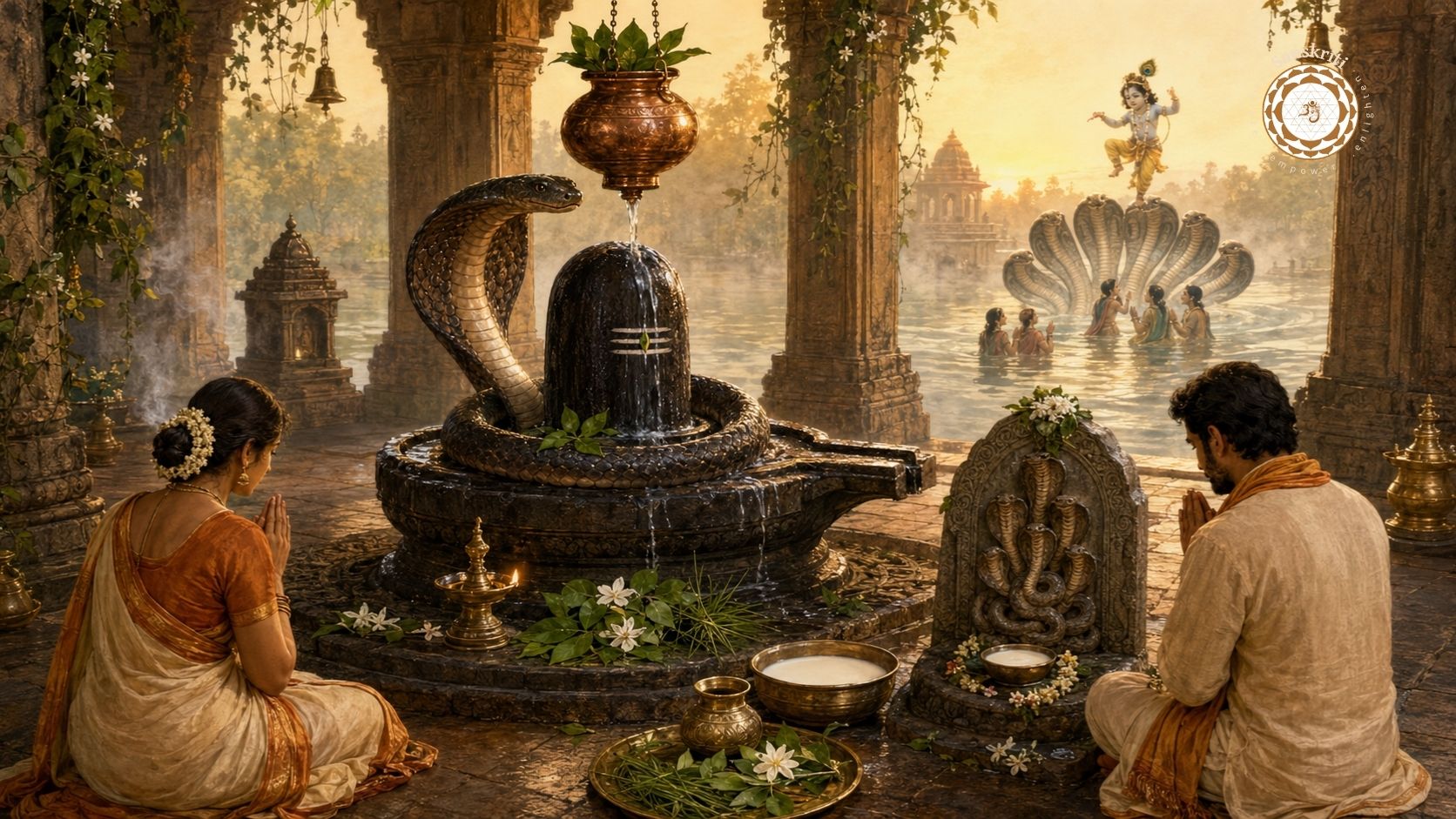
On Monday, August 17, 2026 — a Shravan Monday — Hindus offer milk and prayers to the serpent. The stories of Shesha, Vasuki, Kaliya and Astika, and the puja vidhi for Nag Panchami.

