Tantroktam Devi Suktam
To listen to the audio, please click here: Devi Suktam Hymn to Aparajita (the Undefeated), Tantroktam Devi Suktam is recited at the end of Devi

To listen to the audio, please click here: Devi Suktam Hymn to Aparajita (the Undefeated), Tantroktam Devi Suktam is recited at the end of Devi

Sustainability is a ‘buzz’ word in present scenario. In today’s global environment every country is focusing on sustainable development. Sustainable Development implies meeting the need
One day, the head of a village approached the Buddha and asked him, “Is a Buddha compassionate to all living creatures?” Buddha replied, “Yes.” The
In economics, if you give something, you will have less. If you have ten rupees and you give five to somebody you cannot still have ten

When we use words like feminism, patriarchy, religion and mythology, even god, or goddess, we need to constantly remind ourselves that these words originated in western

All human beings want freedom from suffering here and now. Is this possible? Everyone is fully engrossed in physical longings, the cause of suffering in


The 12 Jyotirlingas of Lord Shiva — where each stands, its sacred story, and how to make the Dwadasha Jyotirlinga pilgrimage in person or in spirit this Shravan.

The Rudrabhishek is the abhishekam said to please Lord Shiva fastest. What it is, the meaning of each sacred substance, the Sri Rudram, and how it is performed at home this Shravan.

Shravan runs July 30–Aug 27 in 2026, with four Sawan Somwars (Aug 3, 10, 17, 24). Why the whole month belongs to Mahadeva — the churning of the ocean, the poison He drank, and how to keep the Sawan vrat.

Thiruvonam 2026 falls on Wednesday, August 26 — the crown of Kerala’s ten-day festival. The Bhagavata story of King Mahabali and the Vamana avatar, and why Onam is a homecoming, not a defeat.
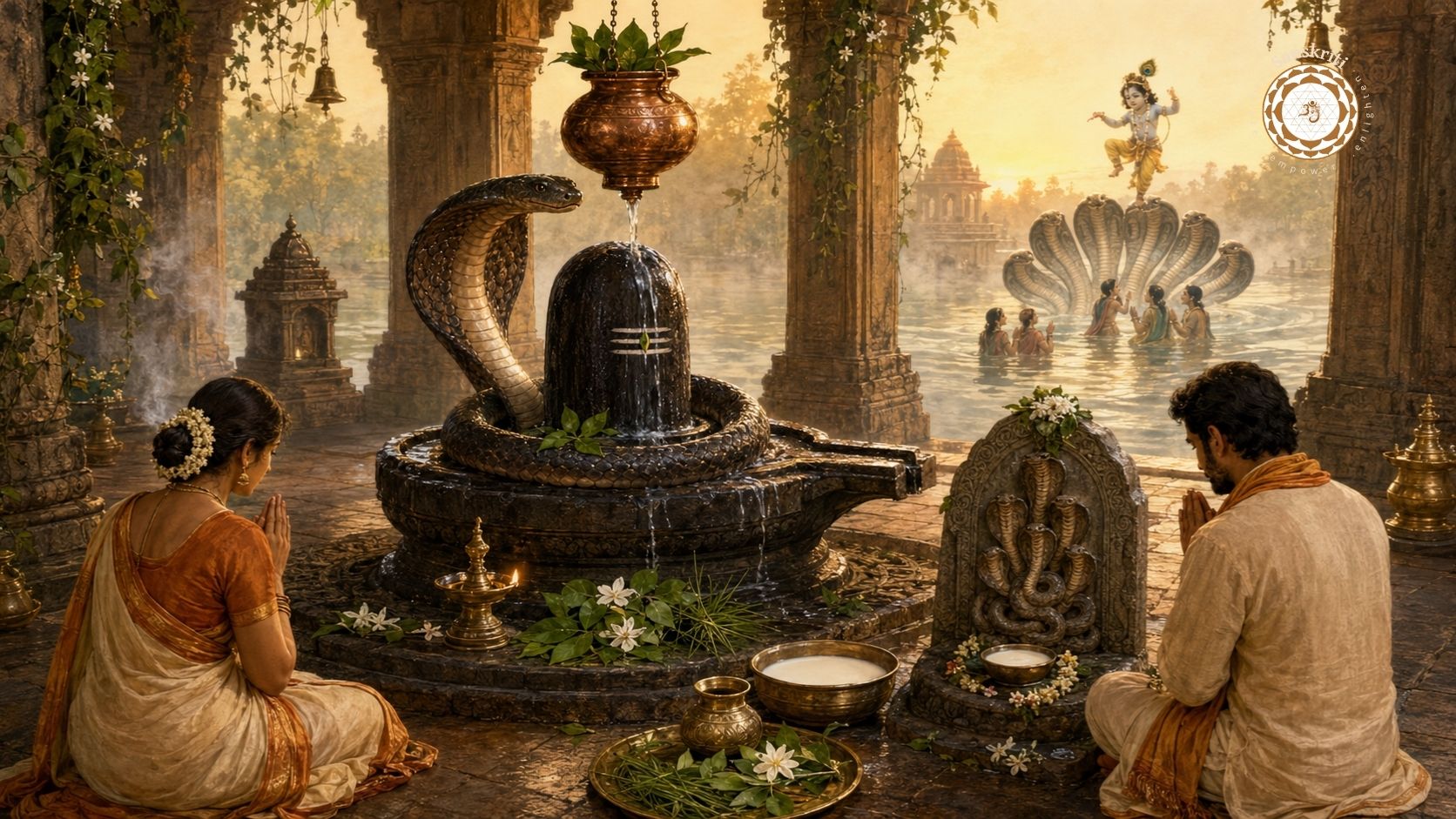
On Monday, August 17, 2026 — a Shravan Monday — Hindus offer milk and prayers to the serpent. The stories of Shesha, Vasuki, Kaliya and Astika, and the puja vidhi for Nag Panchami.

