
Bhairav: The Fearsome incarnation of Lord Shiva
Bhairav or Bhairon is an incarnation (avatar) of Lord Shiva. Lord Bhairav is widely worshipped by tantriks and yogis to gain various siddhis. Bhairon is regarded

Bhairav or Bhairon is an incarnation (avatar) of Lord Shiva. Lord Bhairav is widely worshipped by tantriks and yogis to gain various siddhis. Bhairon is regarded

[hr] Usually, when we think about productivity, images of well-organized e-mail inboxes and color-coded folders come to mind. But these things alone aren’t enough to

[hr] More than 11,000 yoga fanatics got their downward dog on at the Crossroads of the World on Saturday. The yogis unrolled their mats in

[hr] Empathic ability allows you to read and understand people’s energy. This ability may be genetic, passing from generation to generation. You may share this

In the yogic culture, the summer solstice which falls in the month of June marks the beginning of Dakshinayana, which means in the Earth’s sky, the

[hr] Foreign funding of NGOs, especially under the garb of ‘development aid’, seems to be posing a grave threat to the country. Intelligence officials examining


The 12 Jyotirlingas of Lord Shiva — where each stands, its sacred story, and how to make the Dwadasha Jyotirlinga pilgrimage in person or in spirit this Shravan.

The Rudrabhishek is the abhishekam said to please Lord Shiva fastest. What it is, the meaning of each sacred substance, the Sri Rudram, and how it is performed at home this Shravan.

Shravan runs July 30–Aug 27 in 2026, with four Sawan Somwars (Aug 3, 10, 17, 24). Why the whole month belongs to Mahadeva — the churning of the ocean, the poison He drank, and how to keep the Sawan vrat.

Thiruvonam 2026 falls on Wednesday, August 26 — the crown of Kerala’s ten-day festival. The Bhagavata story of King Mahabali and the Vamana avatar, and why Onam is a homecoming, not a defeat.
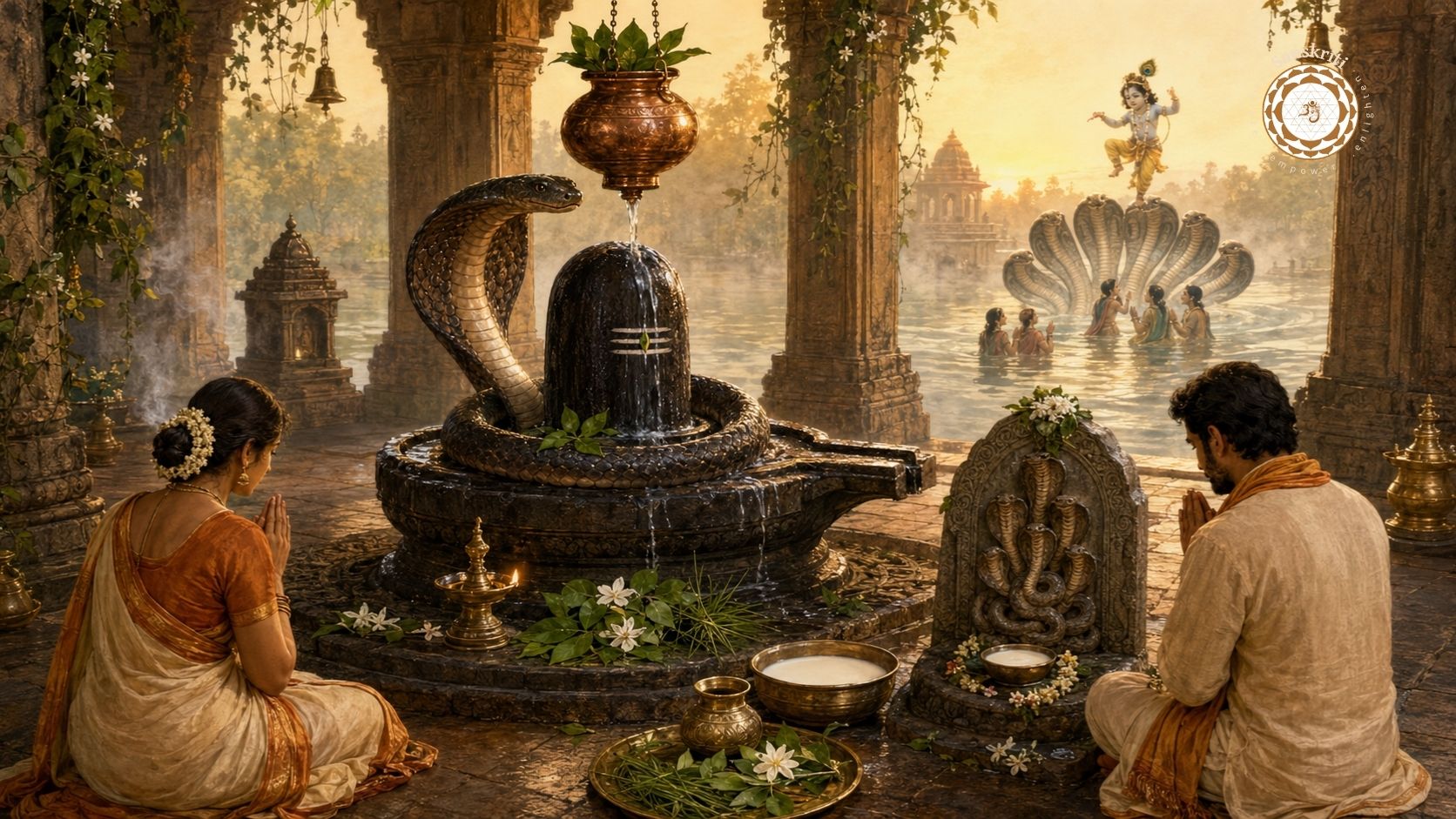
On Monday, August 17, 2026 — a Shravan Monday — Hindus offer milk and prayers to the serpent. The stories of Shesha, Vasuki, Kaliya and Astika, and the puja vidhi for Nag Panchami.

