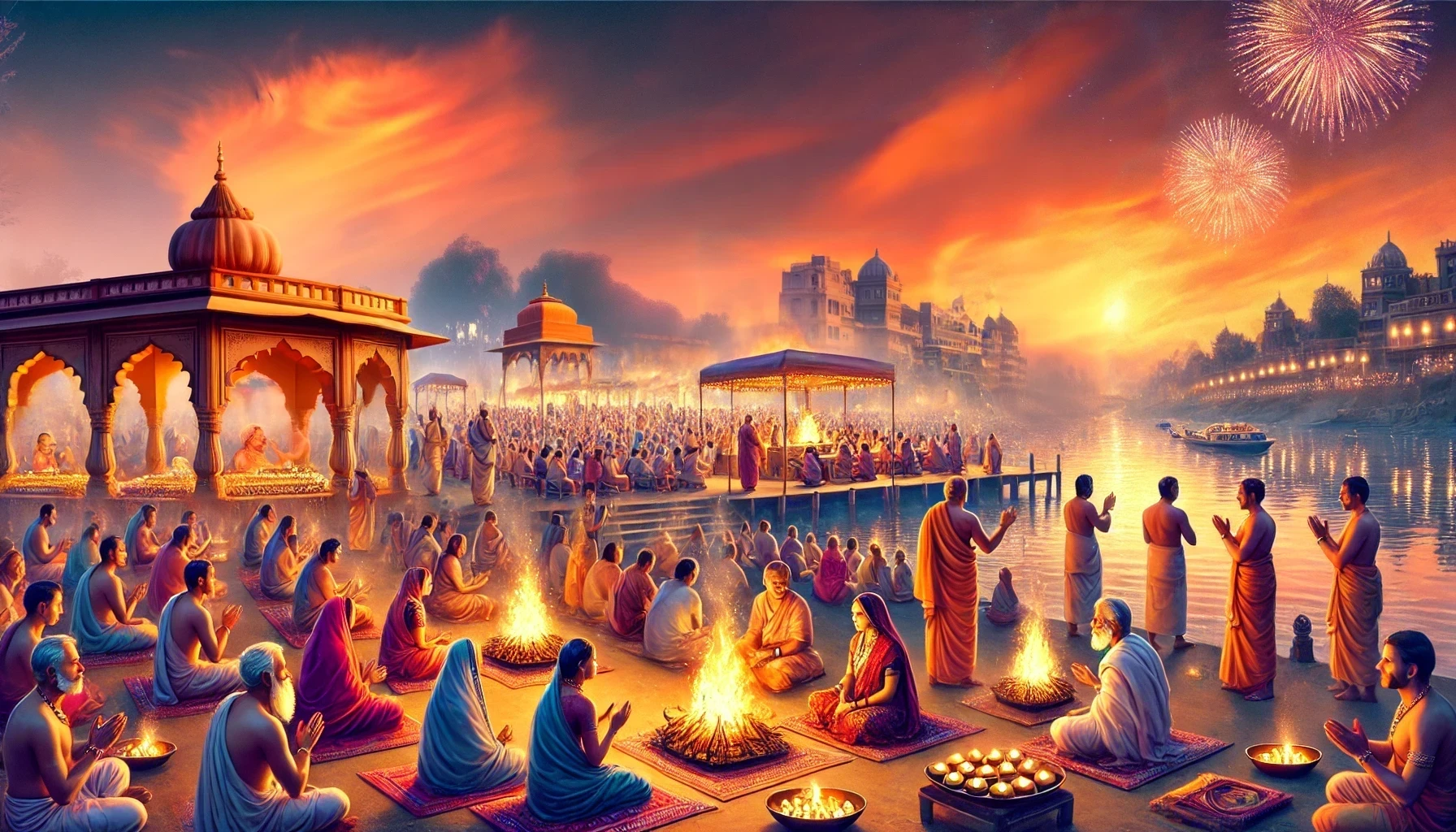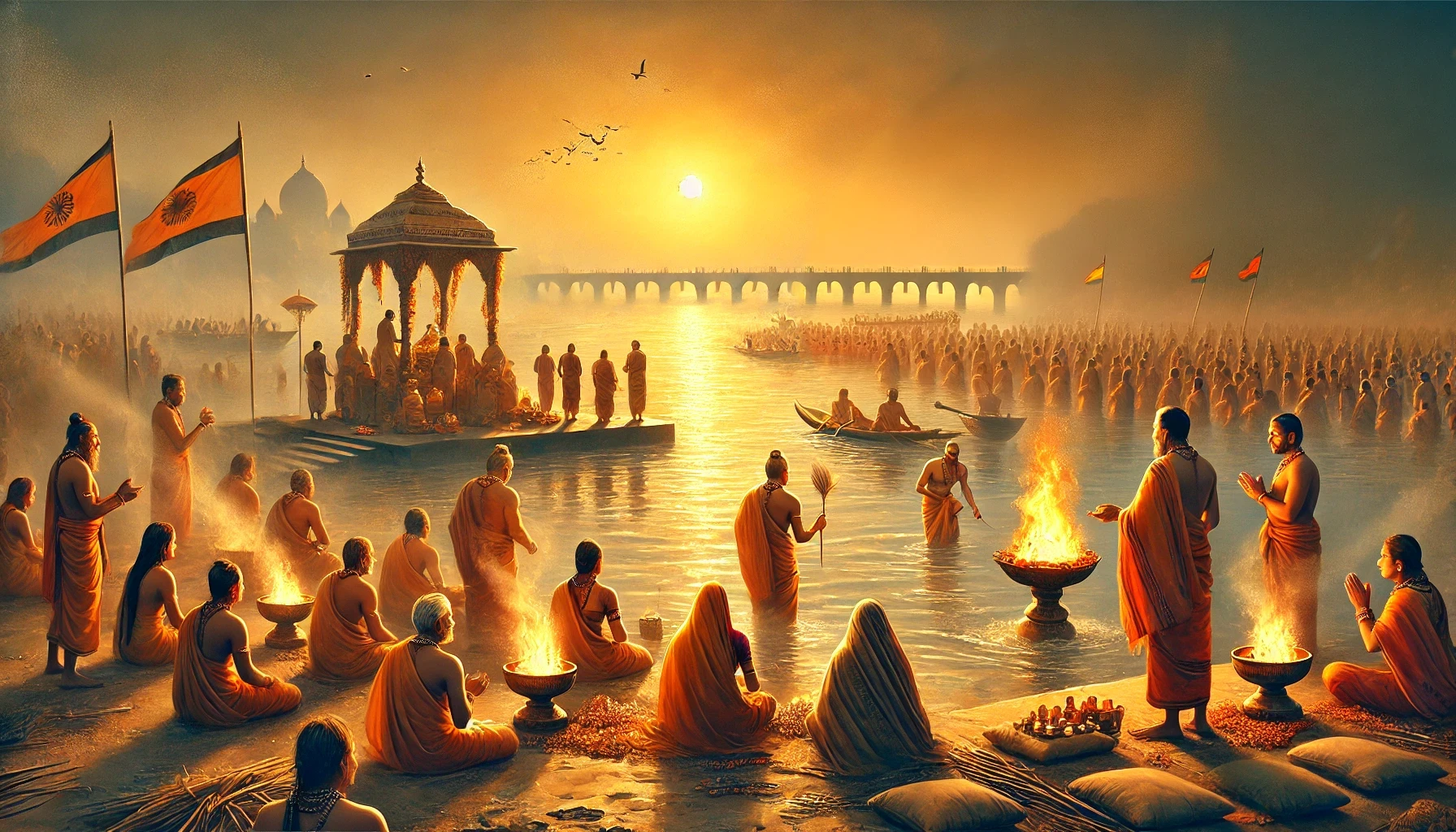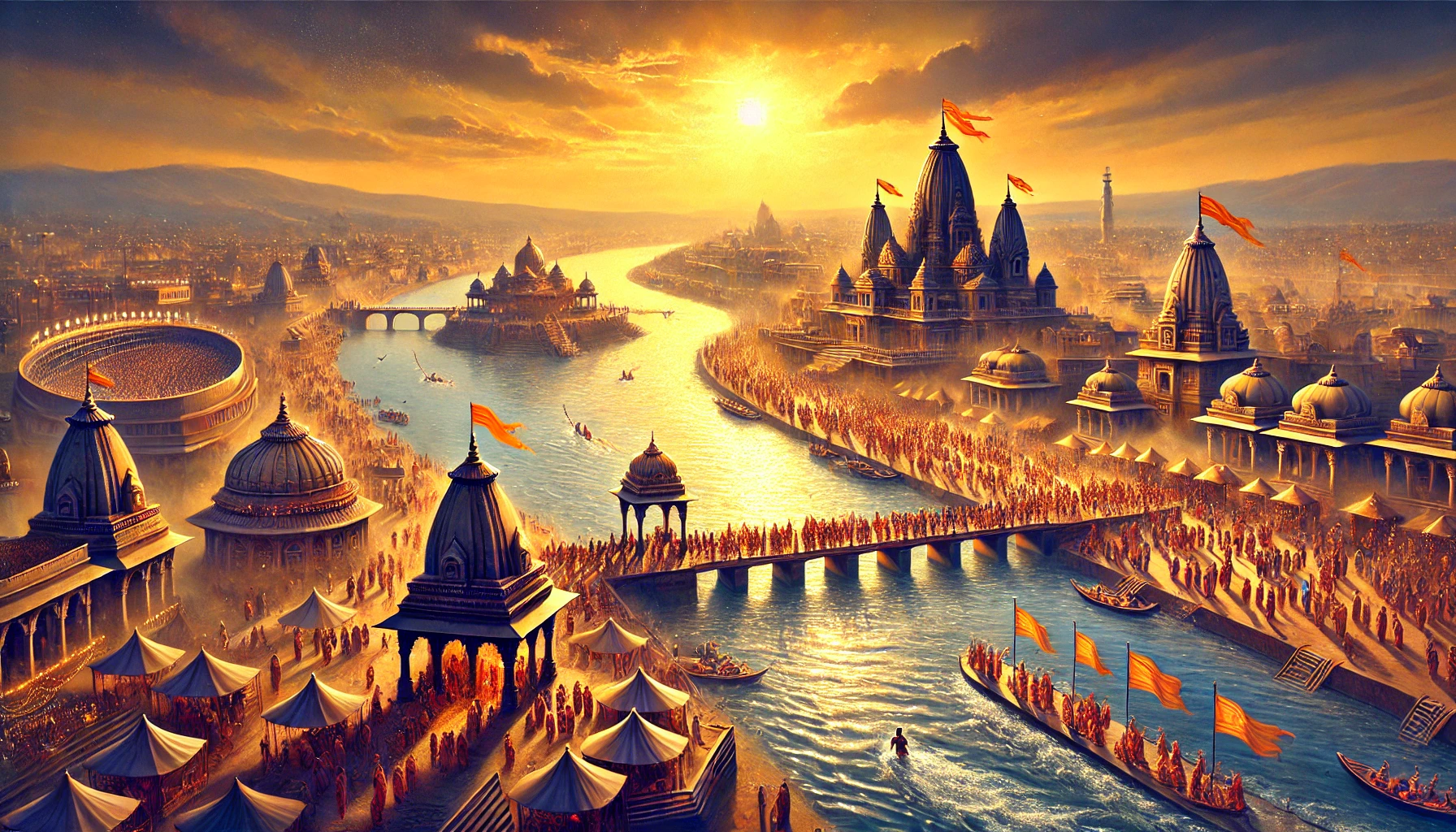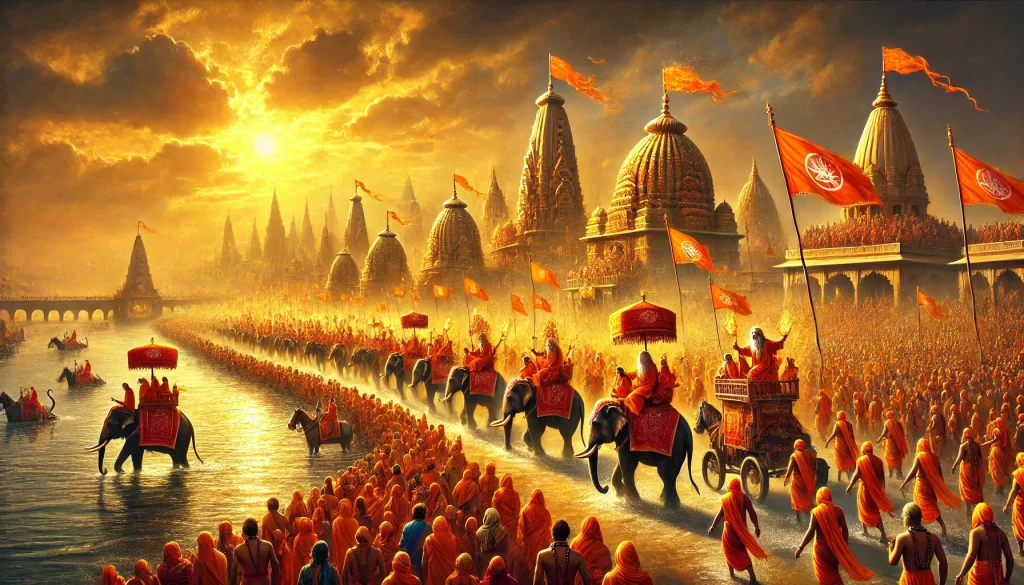
The Akhadas (or Akharas) are the sacred warrior-monastic orders that uphold the spiritual traditions of Sanatana Dharma and play a central role in the Kumbh Mela. Established centuries ago, these renunciate groups of sadhus and ascetics are deeply connected to Hindu spirituality, discipline, and selfless devotion.
At Maha Kumbh Mela 2025, the Akhadas lead the grand Shahi Snan (Royal Bath), marching with an unmatched aura of power, faith, and asceticism. But what is the history of Akharas? Why were they created, and what is their role in modern-day Hinduism? Let’s dive into the rich history, significance, and practices of these spiritual warriors.
What Are Akharas?
The word Akhara (अखाड़ा) means a training ground or arena, originally referring to a space for spiritual and physical training. Akhadas are communities of sadhus, saints, and ascetics who follow strict spiritual disciplines, practice austerity, and dedicate their lives to the service of dharma.
These monastic groups were originally formed to protect Hinduism, both physically and spiritually, during periods of external invasions. Over time, they evolved into centers of learning, devotion, and warrior asceticism.
The Origins of Akharas
The origins of Akhadas can be traced back to the 8th century when Adi Shankaracharya, the great Hindu philosopher and reformer, established the first Akharas to unite renunciates and safeguard Sanatana Dharma.
During that era, Bharat faced threats from foreign invaders, and Hindu monks needed to defend temples, scriptures, and spiritual traditions. To prepare them, Adi Shankaracharya introduced the concept of martial ascetics (Yati-Sampradaya), trained in both Vedic wisdom and warfare.
Since then, Akhadas have been an inseparable part of Hindu spiritual and martial traditions, ensuring the preservation of ancient scriptures, rituals, and sacred practices.
Types of Akharas at Kumbh Mela
Akhadas are broadly divided into three main sects, based on their spiritual traditions:
1. Shaiva Akharas (Followers of Lord Shiva)
These Akharas primarily worship Lord Shiva and follow intense ascetic practices. The famous Naga Sadhus belong to these Akharas.
- Juna Akhara – The largest and most influential Akhara, known for its Naga Sadhus.
- Mahanirvani Akhara – One of the oldest Akharas, with strong Tantric influences.
- Atal Akhara – A Shaiva Akhara with a deep focus on renunciation and meditation.
- Niranjani Akhara – A historically significant Akhara, blending asceticism with knowledge.
2. Vaishnava Akharas (Followers of Lord Vishnu)
These Akharas follow Lord Vishnu and his avatars (like Rama and Krishna). They engage in bhakti (devotion), meditation, and spiritual discourses.
- Shri Digambar Ani Akhara
- Shri Nirvani Ani Akhara
3. Udasi Akharas (Followers of Guru Nanak’s Teachings)
These Akharas were founded by Guru Nanak’s followers and focus on a blend of Vedantic and Sikh traditions.
The Role of Naga Sadhus
Perhaps the most fascinating and mysterious figures at Kumbh Mela are the Naga Sadhus, the fierce ascetic warriors of Shaiva Akharas.
Who Are Naga Sadhus?
- They are naked ascetics, covered in ash, symbolizing their complete renunciation of worldly life.
- They practice severe austerities, living in remote caves and forests, surviving on minimal food.
- Many are highly trained warriors, originally trained to defend temples and dharma from foreign invasions.
- Their participation in the Shahi Snan is the most spectacular sight of Kumbh Mela, as they march toward the river with war cries of “Har Har Mahadev!”
The presence of Naga Sadhus at Kumbh Mela is a reminder of India’s ancient traditions of extreme tapasya (penance) and spiritual strength.
The Grand Procession of Akharas at Kumbh
One of the most majestic events of the Kumbh Mela is the Shahi Snan procession led by the Akharas. It is a sight of unmatched devotion and discipline, featuring:
- Naga Sadhus on foot, carrying tridents and conch shells.
- Saints riding elephants and horses, waving saffron flags.
- The rhythmic sound of dhols (drums) and Vedic chants filling the air.
- A display of spiritual power, with each Akhara marching in a strict sequence.
This royal entry of Akharas into the river is a deeply sacred moment, and lakhs of pilgrims wait for hours just to witness it.
Life Inside an Akhara
Akhadas are not just warrior groups but also centers of intense spiritual training. Life inside an Akhara follows strict rules:
- Early morning meditation and yoga.
- Recitation of Vedas and Upanishads.
- Training in martial arts like Kalaripayattu.
- Serving the community and mentoring new sadhus.
Akhadas are self-sufficient communities, ensuring that their members remain disciplined, devoted, and self-realized.
The Modern Relevance of Akharas
Even in today’s world, Akhadas continue to play an important role in preserving Hindu traditions. They engage in:
- Spiritual teaching and community service.
- Promotion of Vedic education.
- Reviving ancient temple practices.
- Guiding youth toward dharma and self-discipline.
In a time where modernity often disconnects people from traditions, Akharas serve as living symbols of India’s spiritual heritage.
The Akhadas of Kumbh Mela are not just monastic groups but pillars of Hindu spiritual and warrior traditions. Their role in protecting, preserving, and propagating Sanatana Dharma is invaluable.
At Maha Kumbh Mela 2025, as the Akhadas march for the Shahi Snan, their presence will once again remind the world of the eternal power of dharma, discipline, and devotion.
Stay connected with Sanskriti Magazine for more exclusive insights on Kumbh Mela 2025!