The holy dip (Snan) at Triveni Sangam is the most iconic ritual of Maha Kumbh Mela 2025, but this grand festival offers far more than just spiritual cleansing. Kumbh Mela is a celebration of devotion, knowledge, culture, and service, providing countless ways for pilgrims and visitors to immerse themselves in the divine experience.
From listening to spiritual discourses and witnessing grand aartis to serving humanity through charity, Kumbh Mela is a spiritual journey beyond the sacred waters.
Let’s explore the various sacred activities at Kumbh Mela that offer spiritual fulfillment, divine blessings, and cultural enlightenment.
1. Spiritual Discourses (Pravachan) and Satsangs
Listen to the Wisdom of Saints and Gurus
Kumbh Mela is a spiritual knowledge hub, where some of the greatest saints, yogis, and spiritual leaders deliver pravachans (discourses) and satsangs (spiritual gatherings).
💬 What to Expect:
- Teachings on Sanatana Dharma, Vedas, and Upanishads.
- Guidance on meditation, self-realization, and detachment.
- Discourses on the importance of karma, bhakti, and moksha.
These sessions are open to all and offer an opportunity to deepen spiritual understanding and seek guidance from enlightened masters.
2. Darshan of Akharas and Sadhus
Meet the Mystical Ascetics of Kumbh
A visit to the Akhadas (monastic orders) is a unique way to witness Hindu spiritual traditions firsthand. Each Akhada follows its own sectarian traditions, philosophies, and rituals.
🚩 Key Experiences:
- Meeting Naga Sadhus – The warrior monks who practice extreme renunciation.
- Observing ascetics engaged in meditation and penance.
- Learning about monastic life, dharma, and ancient traditions.
This spiritual interaction allows pilgrims to gain insights into the world of renunciation and yogic discipline.
3. Yajnas, Havans, and Maha Aartis
Participate in Fire Rituals and Grand Aartis
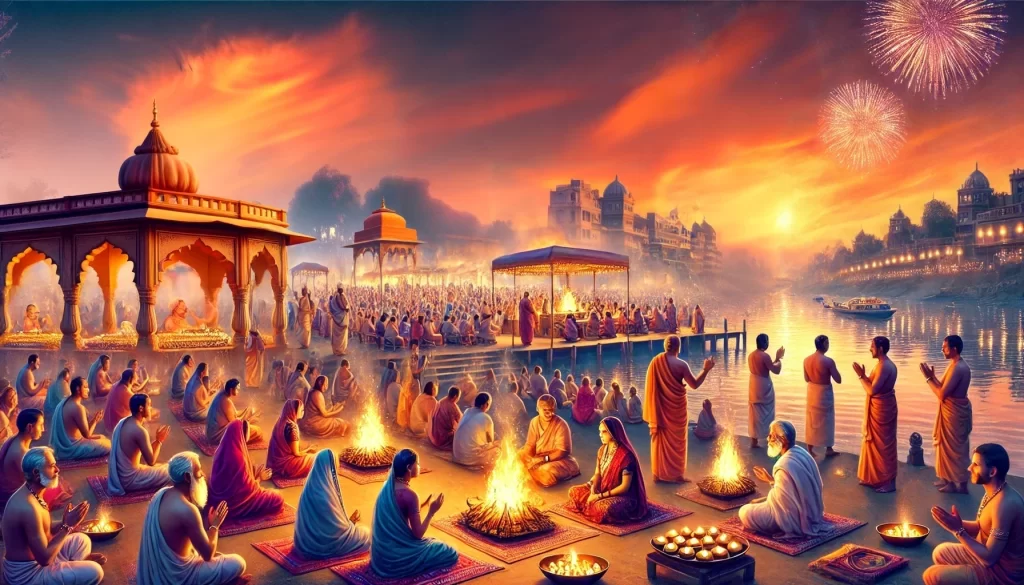
At Kumbh Mela, Yajnas (fire rituals) and Havans are performed daily by Vedic priests and saints to invoke divine blessings.
🔥 Spiritual Fire Ceremonies Include:
- Maha Mrityunjaya Havan – Seeking protection from negative energies.
- Navagraha Yajna – Offering prayers to the nine planetary deities for cosmic harmony.
- Rudra Abhishek – Dedicated to Lord Shiva for health and well-being.
The grand Ganga Aarti on the riverbanks, with its mesmerizing chants, lamps, and incense smoke, is an unforgettable sight that fills the heart with devotion.
4. Pind Daan and Ancestral Offerings
Honor Your Ancestors at Triveni Sangam
Pind Daan and Tarpan are ancient Hindu rituals performed at Triveni Sangam to offer peace to departed ancestors.
🕉️ Spiritual Benefits:
- Frees ancestors from worldly bondage (Pitra Moksha).
- Removes ancestral doshas (karmic debts).
- Brings blessings of prosperity and happiness.
During Kumbh, priests guide devotees in performing these sacred rites, ensuring that ancestral souls attain salvation.
5. Donating and Serving (Seva and Daan)
Experience the Joy of Giving
Charity (Daan) and Seva (selfless service) are highly meritorious acts at Kumbh Mela.
🙏 Ways to Serve at Kumbh Mela:
✅ Anna Daan (Food donation) – Distributing free meals (Bhandara) to saints and pilgrims.
✅ Vastra Daan (Clothing donation) – Providing warm clothes to the needy.
✅ Helping the Elderly and Sick – Volunteering at medical camps and aid centers.
It is believed that acts of charity at Kumbh multiply one’s good karma and bring divine blessings.
6. Spiritual Walking and Pilgrimage (Parikrama)
Walk the Sacred Path of Devotion
Parikrama (spiritual circumambulation) is a sacred practice where devotees walk around the holy Kumbh site, stopping at important temples and Akharas.
🚶♂️ Sacred Places to Visit on Parikrama:
- Akshayavat (The Immortal Banyan Tree) – Believed to be blessed by Lord Vishnu.
- Bade Hanuman Mandir – Home to the only reclining Hanuman idol in India.
- Alopi Devi Temple – A revered Shaktipeeth dedicated to Goddess Sati.
Walking these paths is believed to purify the soul and strengthen one’s connection to the divine.
7. Attending Cultural Programs
Witness Traditional Art, Dance, and Music
Kumbh Mela is not just a religious festival—it is a cultural extravaganza showcasing:
🎭 Classical dance performances (Kathak, Bharatanatyam).
🎶 Bhajans, Kirtans, and Devotional Music Concerts.
📖 Storytelling of Hindu epics like Ramayana and Mahabharata.
These cultural programs add a vibrant and artistic dimension to the spiritual atmosphere.
8. Experiencing Kumbh Through Photography and Documentation
Capture the Grand Spirituality of Kumbh
For photography enthusiasts, Kumbh Mela is a treasure trove of breathtaking moments.
📸 What to Capture:
- The Shahi Snan procession of Naga Sadhus.
- Mass gatherings of devotees and saints.
- The grand Ganga Aarti and temple rituals.
Photographing Kumbh Mela is a spiritual experience itself, as each frame captures devotion, culture, and timeless traditions.
9. Exploring Religious and Vedic Literature
Seek Knowledge from Sacred Texts
Many stalls and ashrams at Kumbh Mela offer:
📚 Vedic scriptures, Upanishads, and Puranas.
📖 Books on Yoga, Ayurveda, and Bhakti.
🛕 Guidance on spiritual growth and self-realization.
It is the perfect place to explore ancient wisdom and bring home a piece of eternal knowledge.
10. Meditation and Yoga at Kumbh Mela
Find Inner Peace Amidst the Spiritual Chaos
Many ashrams and spiritual organizations conduct:
🧘♂️ Guided meditation sessions for mental peace.
🕉️ Yoga workshops on pranayama, asanas, and mindfulness.
🌿 Ayurvedic healing camps for holistic well-being.
Kumbh Mela is a unique blend of devotion and self-discovery, where meditation helps one connect deeply with their inner self.
Kumbh Mela is far beyond just a holy dip—it is an unparalleled spiritual experience filled with learning, devotion, service, and self-realization.
Whether you choose to listen to spiritual discourses, witness grand aartis, participate in seva, or meditate in divine energy, every moment at Kumbh brings one closer to spiritual awakening.
Maha Kumbh Mela 2025 is an opportunity to transform not just the body, but the soul itself.
Stay connected with Sanskriti Magazine for more insights on Kumbh Mela!