“Why do good people suffer or why do bad things happen to good people?”This question seems to be very common these days. It seems as though good people get the brunt of all suffering, while evil-doers enjoy life. But if we observe closely, we see that everyone undergoes suffering in some form. Keeping this in mind, our question becomes meaningless. Just because a person is good does not mean there would be no suffering in his/her life.
But what do we mean by ‘good’? In Sanskrit, ‘sadhu’ is the word used for a good person. Sadhu comes from the word ‘saadh’, meaning ‘to accomplish’. If we work for ourselves and achieve great things, there is nothing laudable about it, but if we help others to achieve their goals, then it is an accomplishment. If someone is good to you and you reciprocate, that is common courtesy. But if someone is harming you, and despite that you continue to wish that person well without expecting anything in return, it is real goodness. A sadhu bathing in the river saw a drowning insect. He saved it from drowning and was stung in return. Again, the insect fell back into the river and the sadhu pulled it out of the water and placed it under a shady tree. On seeing this, a person asked the sadhu, “Why did you do that?” He replied, “The insect did not give up its nature, so why should I?”
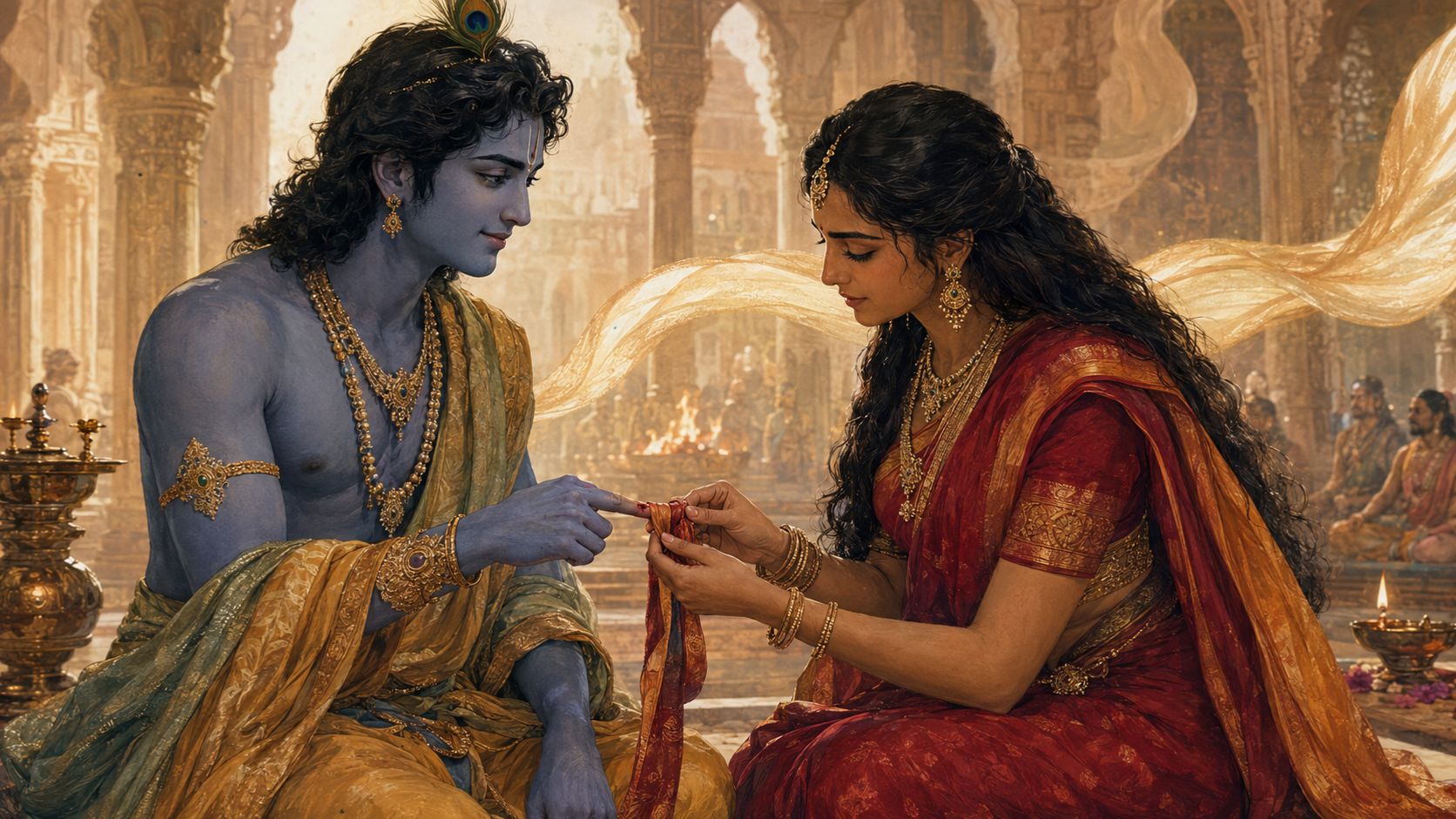
How can we achieve this goodness in our lives? To reach any target, we must first have a goal. Similarly, for achieving goodness, we must have a standard of goodness which is known to us, because only then can we rise up to the required levels. As long as we see differences in the world around us, true goodness will not manifest. This can be achieved only when we become aware of our oneness with others. An example will illustrate this point better. Every organ of my body is part of one whole. If the finger goes into the eye, there is instant forgiveness, because of the complete identification with the finger.
Now that we know what is good, let us see what suffering is. Objective suffering befalls all people, good or bad. Situations leading to suffering could have their roots in past actions. Objectively, the existence of pain or any other physical handicap cannot be denied, but the degree of sorrow this leads to is entirely subjective. Riches or positions of power do not guarantee happiness. People become miserable over small matters. If a person claims that he is good and is suffering, while the dishonest person is flourishing, we can be very sure that the person is not good. For a good man, the real suffering is to do something against his convictions. Suppose a pure vegetarian is faced with a situation of remaining hungry or eating beef, the chances are that the former option would be more acceptable.
All our spiritual practices cannot eliminate suffering, but they protect the mind and make suffering acceptable, just as on a rainy day, we cannot stop the rain, but can protect ourselves from getting wet with an umbrella. Bhagavan Krishna says, “A good person never suffers.” By some logic we feel that suffering and enjoyment is related to past actions. If we observe at the subtle level, we find immediate results of our actions. The moment a good thought enters our mind, we feel elation, and similarly a wicked thought causes agitation.
Real suffering is when we lose our goodness. Compromising with goodness is the greatest suffering. Even though superficially it may appear that evil doers are flourishing, it should not be an excuse to compromise. The problem arises when one does not have an ideal or when one is not able to live up to one’s ideal. But the greatest problem is when one believes that the ideal is not worth living up to and has lost its utility. Remember, a good man will stand by his convictions, because “If you do not stand for something, you will fall for everything.”
~ Swami Tejomayananda, President, Chinmaya Mission