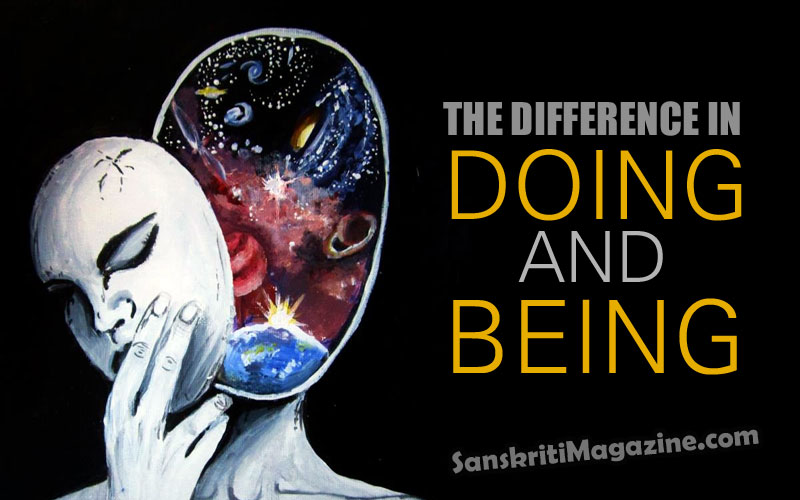
The simple art of passive observation is something that is becoming a rarity. In today’s world we are many times obsessed with ‘doing’ something. In the car, we are either driving, listening to music, reading or talking on our cell phones. Or we are thinking about yesterday and tomorrow with our minds totally absent from the here-now. An experiment was conducted where instead of always trying to do something, the passenger in the car was instructed to just look outside the window and observe. No thinking, no worrying, no communicating, just observing. The result was amazing!
 The daily route to work taken more than one thousand times over the years revealed many surprises unnoticed before. The observation yielded new alleys, lanes, signs, trees, structures and other things never before seen. The simple but not easy task of eliminating all thoughts from our minds during the observation also yielded strange results. Suddenly from the silence within came forth a form of communication with the Divine hitherto heard but rarely. A feeling that asked, ‘Have you never observed these things before? You pass by here every day but have seen these never before. They have been here all along, but you have seen them not.’
The observer then realises that though he had travelled on this route perhaps thousands of times earlier, he had never noticed so many of the things he saw that day. The fact that he could even hear the Divine voice talk to him could also be an indication of the same phenomenon — that sometimes the mind has to be still from the thoughts of yesterday and the hopes or worries of tomorrow and just be in the here-now. The Divine voice itself could be calling out to us all the time but perhaps could never be heard because of this same lack of observation of what is. Our minds are now caught in a virtual web that comprises constant communication with other people, constant bombardment with information, constant worrying or thinking about yesterday or tomorrow but very often never with just being in the here-now.
But there is another aspect of the experiment that needs mentioning. After a few minutes of observation and the hearing of the Divine voice, it continued further, “All these things you see — love them and you love me!” God wants us to see the world and observe it. From that will come the lessons that need to be learnt and the love that needs to be loved.
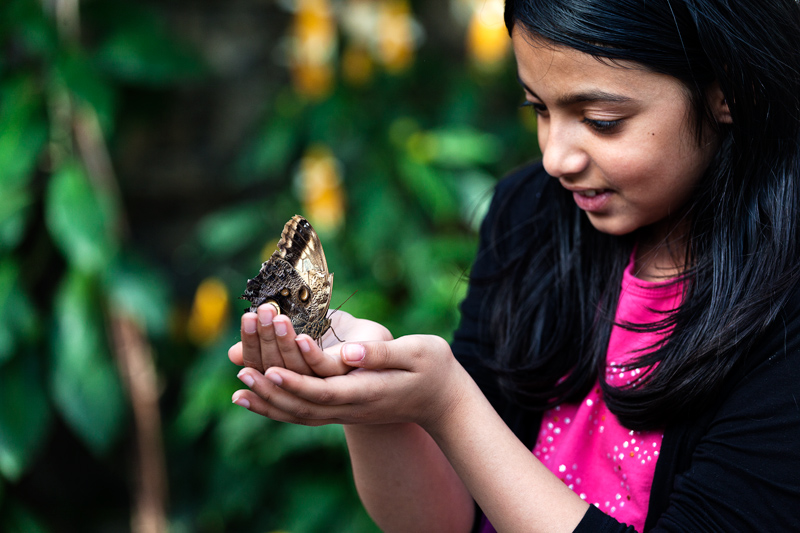 With all this constant race and pursuit of material things, we forget the simple things. The butterflies and flowers, the leaves swaying in the trees, children playing in the park, the setting sun, the wind blowing through your hair, the joy of seeing a baby laugh or simply sit in the rear seat of a car and observe the world as it passes by…. there are so many things you will notice if you just look and see. It is not a ‘waste of time’, for at the end of the day, what are we really here in this world for? Sure, it is important to do also. It is important to work and play and laugh and cry and love and hurt, but it is also very important to process all that information. It is important to feel the moment. It is important to live in the here-now and just be! After all, we are all human beings not human doings.
~By Prashant Solomon