Why are we not able to progress quickly?
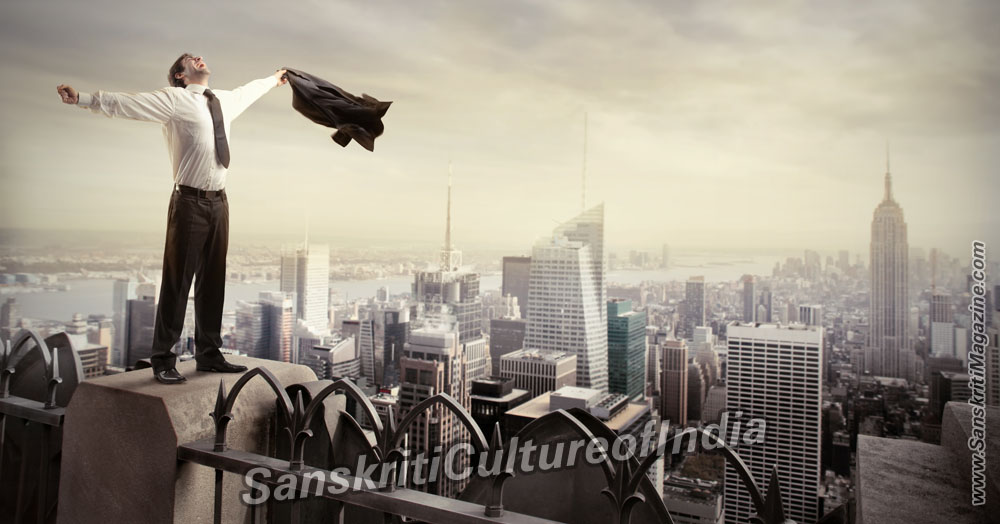
The reason why people do not progress quickly is that they are loaded with a pile of external opinions and thoughts.
If you go for a walk in the morning and someone asks you where you are going, you reply cheerfully that you are taking a walk. How cheerful your face looks.
At 10 or 11 am, if you are going the same route and someone asks you the same question, you answer dispiritedly: “I am going to office.” You no longer exude cheer. Why? Because your mind is full of all kinds of ideas – “I have to do this, I have to do that…” – you are burdened with the sense of doership. This is not the way. Go to the office or your shop, but plan your day in such a way as if you were a prince at play. You should take all your duties as if they are acts of amusement.
You may think, “If I take my work like pastime, my business will suffer.” You’re wrong. If you free yourself from anxiety and stress, you will work better. Why should you worry? You have seen the events of the past, you are seeing the present and you will also see what will come to pass in the future. At the most, you will die, and die you must some day or the other. Don’t be afraid of death; don’t try to save yourself from death, and don’t try to escape it either. Invite and welcome troubles with a challenging and playful curiosity. Then they will lose their severity.
Many people are in perpetual fear of being insulted. Insult is far better than the fear of insult. Death is preferable to the fear of death. Criticism is better than the fear of criticism. Fear fans the fire of distressing thoughts; it diminishes your energy. So live life free of fear, worry and stress.
Poet Milton’s wife would chide him when he set out to walk with the aid of a walking stick. “Every day you go for a walk, but what do you seek to gain from this? You can’t even see properly now.”
Milton would reply, “Birds sing, winds play about and caress me. In that fresh morning air, when the dawn comes tearing the nocturnal darkness apart, it brings an untold beauty. I go to see that beauty.”
His wife would say, “But you don’t have vision. How can you see beauty?” Milton would reply: “Beauty is not seen with external eyes. The eyes that see beauty are within us.”
Similarly, to analyse our life there is no need of the external eye; we need the internal eye. To see how calm or happy we are, or what is the state of our mind in adverse circumstances, we don’t need external vision. We don’t require external eyes to see if we behave with equanimity in the face of troubles and insults.
We require the internal eye to see whether we are influenced by praise and respect or we remain untouched by them. This insight to make life joyful and free is available only from satsanga and company of saints who have awakened to their real Self; and is perfected through the practice of developing the ‘witness’ attitude . Therefore, instead of carrying the burden of the sense of doer or enjoyer, one should seek refuge in the enlightened ones and comprehend their witness absolute, eternal, pure, knowledge personified real Self free from all bondage.
~ Rishi Prasad